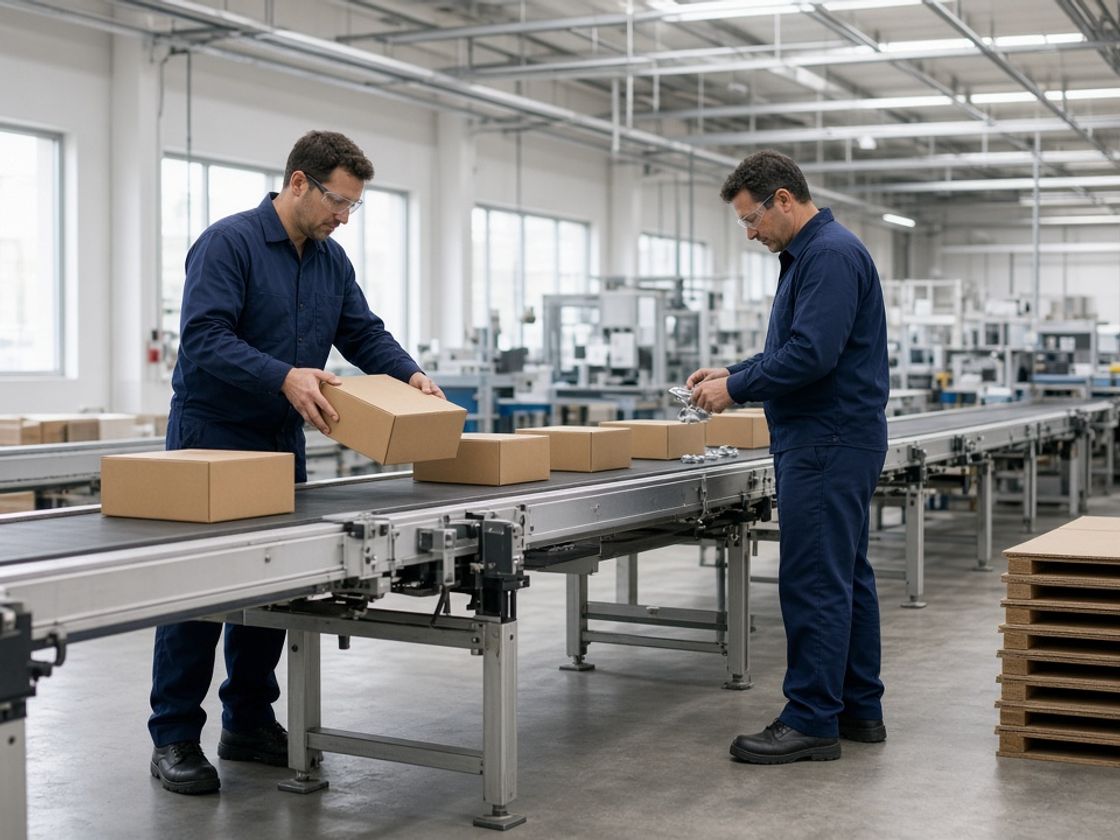
Typical duties
- Load raw materials and components onto the line
- Feed products into machines and conveyors
- Inspect product and remove faulty items
- Pack finished goods into cartons and onto pallets
- Complete line clearance before each changeover
- Rotate between stations as the supervisor directs
- Keep the work area clean, safe and clear
- Record counts, batch details and faults on the shift sheet
Skills, licences & tickets
- Comfort with repetitive work on your feet
- Willingness to learn several stations
- Following written work instructions
- Attention to detail on quality checks
- Basic manual handling and safe lifting
- Reliable attendance and punctuality
A production worker does the hands-on tasks that keep a manufacturing line running. This production worker job description explains the duties, the skills employers expect and how pay works, so you can decide whether factory work suits you.
It is one of the most common entry points into manufacturing in Melbourne. The work is practical, the training happens on site and many people use it to move into machine operator, quality or leading hand roles.
What does a production worker do?
The title covers a wide range of line work. One shift might start on loading, move to inspecting product after a break and finish on packing and palletising. The supervisor decides who goes where, so flexibility is part of the job.
A production worker is different from a machine operator, who sets up and runs a machine, and from a process worker, who prepares and handles product through a process. A production worker is the general hand across the line, and often fills the gaps between those roles.
A typical shift
- Start with a safety briefing and the day's production targets.
- Load materials and feed the line at the first station.
- Inspect product as it passes and pull out faults.
- Rotate to packing and stack cartons on pallets at the end of the line.
- Clear the line and clean the area before the next product or shift.
Skills and tickets employers look for
Production work rewards people who turn up, follow instructions and keep a steady pace. Steel-cap boots, long trousers and any site-supplied protective gear are standard. A forklift licence is a bonus where you move pallets, and WorkSafe Victoria explains how forklift safety rules apply on site. Our skills matrix guide shows how employers track which stations each person can cover, which is why learning more stations helps.
Pay, hours and employment types
Production work is offered as casual, part-time, full-time and permanent, often across day, afternoon and night shifts. Which award applies depends on what the site makes. The Manufacturing Award summary lists labourers and factory hands in manufacturing and associated industries, while food and drink sites commonly fall under the Food, Beverage and Tobacco Manufacturing Award. Many sites also have an enterprise agreement.
There is no single official pay figure for the general production worker title, because ANZSCO has no matching occupation. Packing, assembly and process work are classified separately, so use the group that fits your tasks. Most awards add a 25 per cent loading for casual work, as the Fair Work guide to casual employment explains.
How to become a production worker
You do not need a qualification to start. Employers want a clean work history, safe habits and good attendance. A clear resume that lists the machines, line tasks and shifts you have worked helps, and the production worker resume template gives wording to copy. Once you know a few stations you can move toward machine operator, quality or leading hand roles.
Related Resources
- Production worker resume template
- Production QA resume template
- Manufacturing and production labour hire in Melbourne
- Skills matrix for manufacturing and warehouse teams
- Warehouse and factory interview preparation pack
- Manufacturing Award summary from Fair Work Ombudsman
Frequently Asked Questions
What is the difference between a production worker and a process worker?
A production worker is a general hand across the line, covering loading, inspecting, packing and clearing. A process worker is more tied to preparing and handling product through a process, such as weighing, mixing and trimming.
Do I need experience to get a production worker job?
Not always. Many employers train new starters on site. Reliability, safe work habits and a willingness to learn several stations count most.
Is production work physically demanding?
Yes. You will stand for most of a shift, repeat tasks and lift or move materials. Employers expect you to follow manual handling rules and ask for help with heavy loads.
Can a production worker move into other roles?
Yes. Learning more stations leads to machine operator, quality, forklift or leading hand roles.
Learn the Line, Grow From There
Production work rewards people who turn up and pick up new stations quickly. When you are ready, see current factory roles on the job board or submit your CV so recruiters can match you to production shifts.