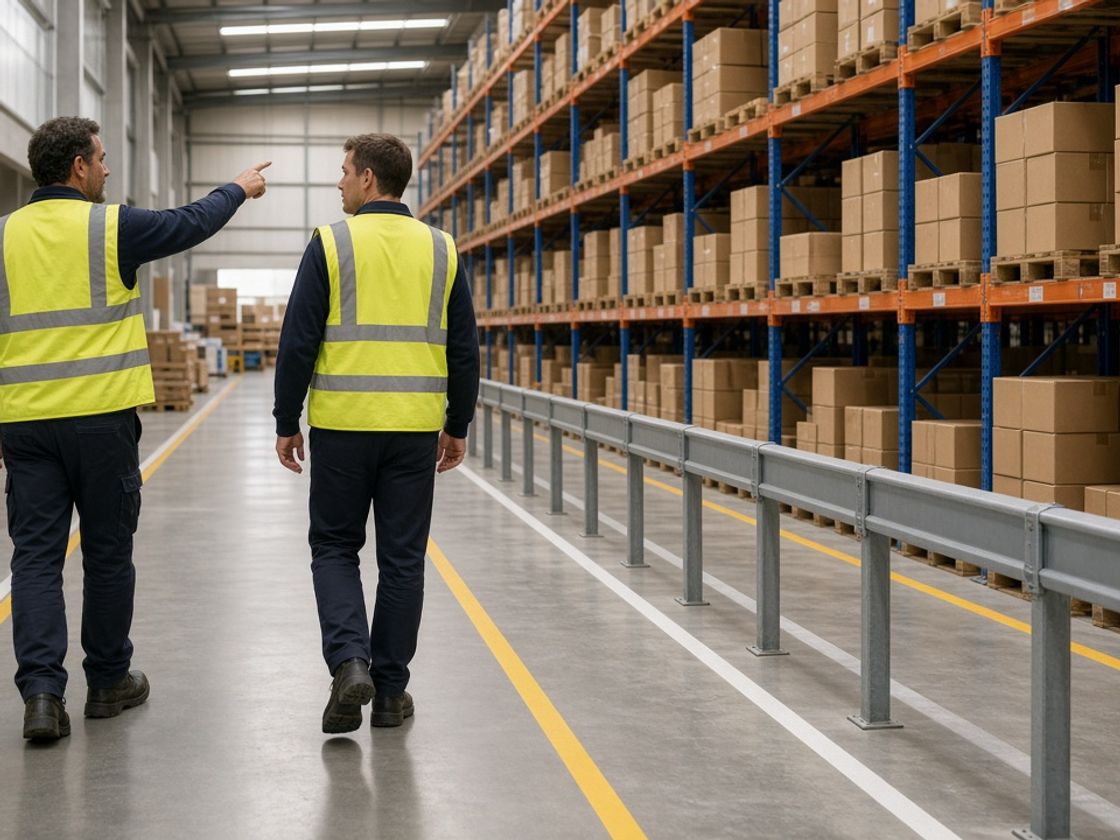
A pick and pack warehouse is laid out in the order goods move: stock arrives at receiving, waits in storage, sits ready at pick faces, is checked and packed at benches, then leaves from dispatch. Once you can see that route, the floor stops looking like a maze. You know where you will spend your shift, where forklifts run and where the day's deadline sits.
This guide is for new starters and new supervisors. It walks the floor zone by zone and explains the words you will hear on your first shift.
The Zones of a Pick and Pack Warehouse
Safe Work Australia's traffic guide for warehousing describes the same chain of activities that shapes the floor: receiving and unloading goods, moving them onto pallets for storage, storing them, picking products from shelves to fill customer orders, and loading orders onto vehicles. Each activity tends to get its own area.
Receiving
Receiving sits at the loading docks. Trucks are unloaded, pallets are checked against what was ordered, and stock is recorded, often with a handheld RF scanner. Forklifts and pallet movers are busiest here, so it is rarely a place for pick packers to cut through.
Bulk Storage
Full pallets go into tall racking, often called reserve or bulk storage. Forklift drivers put stock away and bring it down when lower shelves run low. Some sites reach the upper levels with order-picking forklifts, which carry the driver up to the shelf.
Pick Faces
A pick face is the shelf or bay where items are taken for orders, usually at a height you can reach from the floor. Pick faces are refilled from bulk storage, a job called replenishment. Where products sit on the pick face matters, and the post on slotting fast movers near the pick path explains how sites decide that.
Pack Benches
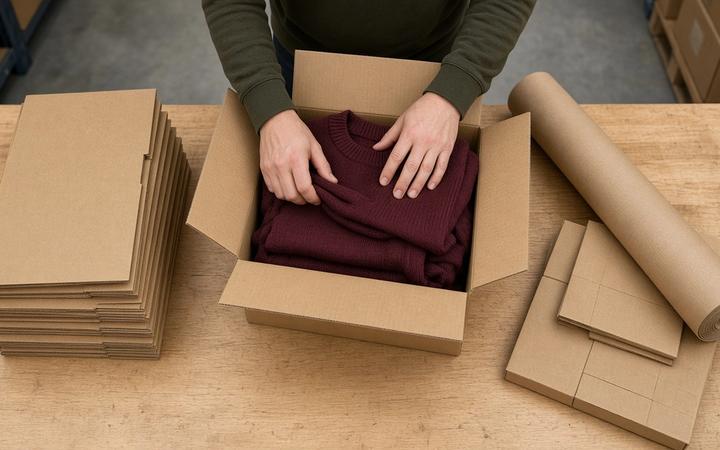
Pack benches are workstations where picked items are checked, packed and labelled. A bench often holds cartons or satchels in several sizes, void fill, tape, a scale and a label printer, with picked orders arriving in totes or on trolleys. On some sites the same person picks and packs; on others, pick packing is split between two crews.
Dispatch
Dispatch is the staging area near the outbound docks. Packed orders are sorted by carrier or route, stacked onto pallets, wrapped and loaded. The glossary on Chandler's warehousing page also mentions cross-docking: goods that arrive are sent straight back out, spending little or no time in storage.
Pick Paths and Location Labels
Every pick face has a location label, often built from the aisle, the bay and the shelf level. Your scanner or pick list gives you a location and an item, and you confirm both before you take anything. Learning to read the label quickly is the first real skill in warehouse picking and packing.
Sometimes the location is empty or the item is damaged. Do not grab a lookalike from a nearby shelf. Report it the way the site shows you, often through the scanner, so the stock records stay accurate and a supervisor can decide what happens to the order.
The pick path is the order in which you visit those locations. Many systems sort a pick list so you walk the aisles in one direction instead of doubling back. Sites also differ in how orders reach the floor: one order at a time, several orders in one trip, or groups released at set times. The guide to batch picking versus wave picking crews covers those methods for anyone moving into a lead role.
Where People and Forklifts Meet
The layout is also a safety plan. WorkSafe Victoria says forklifts can cause serious injuries and deaths when they hit or crush pedestrians, and that these incidents usually happen where there is no physical separation between forklifts and people.
That is why many floors have painted walkways, barriers, gates at crossing points and zones where pedestrians may not enter. Safe Work Australia lists separate marked walkways, pedestrian exclusion zones and site maps showing traffic flow among the controls to consider, and says site induction should include the traffic management plan. Where forklifts work near people, WorkSafe advises limiting their speed to walking pace, 5 to 7 km/h.
On your first day, ask where the walkways and crossing points are, which areas are forklift-only, and what to do if a forklift is working in your aisle.
The Dispatch Cut-Off
Most pick and pack floors work towards one or more dispatch cut-offs: the last time an order can be released and still make a carrier's collection. As the cut-off nears, the pressure moves from the aisles to the pack benches and dispatch.
For a newcomer, the practical point is that the floor gets busier late in the shift and supervisors may move people from picking to packing. Supervisors planning that late peak can work it back from the truck using the guide to dispatch cut-off times and pack bench planning.
Who Works in Each Zone
Different roles cluster in different zones of a picking packing warehouse:
- Pick packers: pick faces, pick paths and pack benches.
- Storepersons: receiving, put-away, dispatch and keeping stock records accurate.
- Forklift drivers: docks and bulk storage, holding the LF or LO class of high risk work licence that matches the forklift.
- Team leaders: moving across zones to keep orders flowing towards the cut-off.
The pick packer roles page says a pick packer selects goods from shelves and gets them ready to ship, and that the job goes by other titles, such as order picker and warehouse picker. The warehousing services page lists the roles placed in this setting, from storemen and pick packers with RF scanning experience to forklift drivers and dispatch officers.
Employers who staff these zones through an agency think about the floor from the other side, and the article on pick packer labour hire for fulfilment shows what they plan for in a new starter's first weeks. If you are ready to try warehouse pick and pack work yourself, the pick packer guide has a short application form.
Related Resources
- Pick packer role overview
- Warehousing and logistics recruitment
- Batch picking compared with wave picking
- Planning pack benches around a cut-off
- WorkSafe forklift hazards and controls
- Safe Work Australia warehouse traffic guide
Common Questions About Pick and Pack Warehouse Layouts
1. What Is a Pick and Pack Warehouse?
It is a warehouse that fills individual customer orders by picking items from shelves and packing them for delivery, rather than only moving full pallets. The floor is usually split into receiving, bulk storage, pick faces, pack benches and dispatch, arranged so goods move in one direction from the inbound docks to the outbound docks.
2. What Is a Pick Face?
A pick face is the shelf position where items are picked for orders, usually within easy reach from the floor. Each one has a location label that your scanner or pick list points you to. Pick faces are refilled from bulk storage when they run low, and that task is called replenishment.
3. Why Are Forklifts Kept Apart From Pickers?
Because collisions between forklifts and people cause serious injuries. WorkSafe Victoria says these incidents usually happen where forklifts and pedestrians are not physically separated. Sites use walkways, barriers, gates and exclusion zones to keep the two apart, and Safe Work Australia says site induction should cover the traffic management plan.
4. What Does Dispatch Cut-Off Mean?
It is the latest time an order can be released to the floor and still be packed in time for a carrier's collection. Many warehouses have more than one each day. As a cut-off approaches, packing and dispatch get busier, and team leaders may move pickers to the benches to help finish orders.
5. How Do I Learn a New Warehouse Layout Quickly?
Walk the floor in the order goods move, from receiving to dispatch, and ask how the location labels are built. Learn the walkways and forklift-only areas first, then practise reading labels on your pick path. Asking a team leader to show you one full order from pick to truck also helps.
Learn the Map Before the Pace
Speed comes with time, but the layout comes first. Know the zones, read the location labels, stay on the walkways and understand that the floor builds towards the dispatch cut-off. With that map in your head, picking and packing gets easier from the first week.