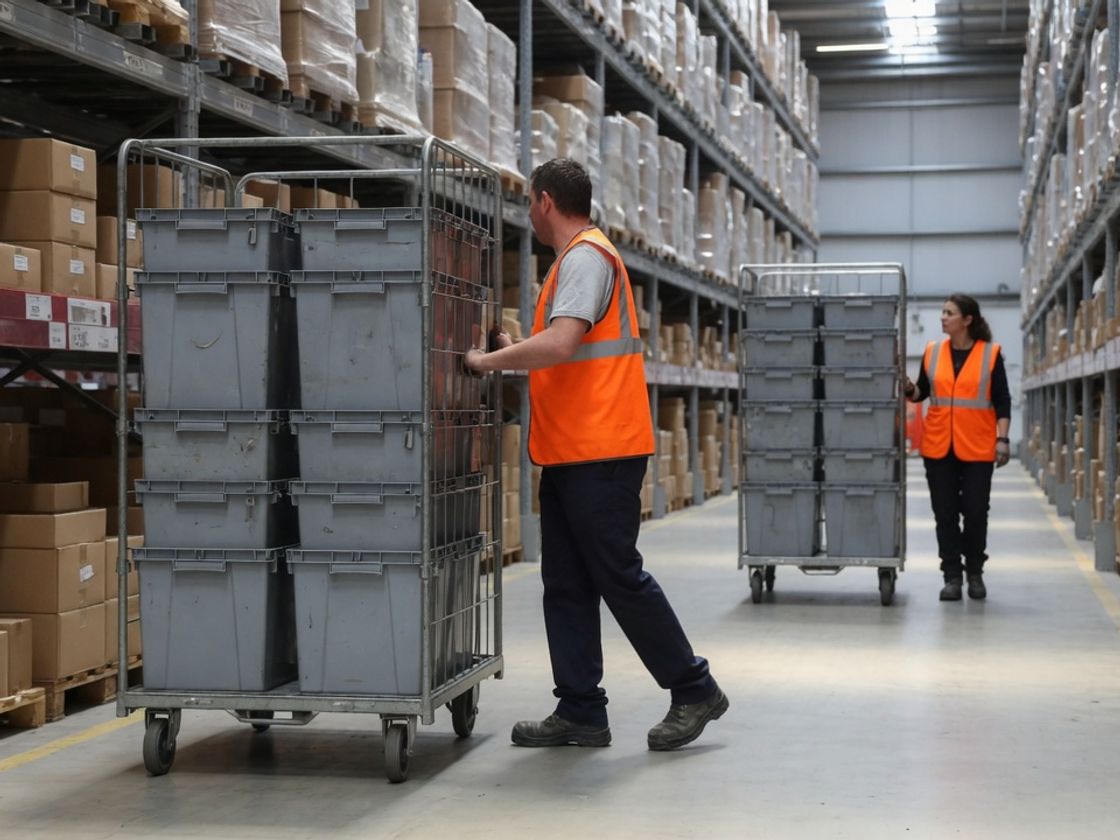
Batch picking vs wave picking is a choice about how orders are grouped, released and walked, and each choice asks something different of the people on your floor. This guide is for warehouse supervisors in Victoria who are choosing a pick method or changing the one they have. It gives a decision rule built on your own orders, a worked example, and what each method needs from the crew.
Three ways to pick the same orders
Batch, wave and zone picking each change how orders reach the floor and who handles them.
- Batch picking. One picker collects an item for several orders in a single trip, then the items are split into their orders at a bench or into compartments on a cart.
- Wave picking. Orders are held and released to the floor in groups at set times, such as ahead of each carrier collection, and each wave is picked and packed as a unit.
- Zone picking. Each picker stays in one area of the warehouse. Orders pass from zone to zone or are brought together at the end.
The baseline is discrete picking: one picker walks one order from start to finish. The three methods can be combined. A separate piece on slotting covers where each product lives, and this one covers how orders are released and picked once products have a home.
Use your order profile to choose
Pull a week of orders and answer four questions.
- Lines per order. Orders with only a few lines suit batch picking, because a full walk for each one can waste most of the trip.
- Overlap. Count how many orders in a day ask for the same product. Batching is most likely to pay where several orders want the same item at the same time.
- Cut-offs. If carriers collect at fixed times, release orders in waves that finish before each collection. With a single collection, a wave may add little.
- Size of the floor. A large floor with many aisles suits zone picking, because each person walks a smaller area.
As a rule of thumb, many small orders with overlap point to batch picking, fixed collection times point to waves, and a large floor points to zones. Long orders that differ from each other are often best picked one at a time. A separate piece on dispatch cut-off times plans one late-day peak backwards from the truck.
Example: one order profile, two picking methods
Here is an example with illustrative numbers. A Victorian online retailer ships 200 orders a day. Of those, 150 are single-line orders spread across 30 products, so on average 5 orders want each product. The other 50 orders have 8 lines each, 400 lines in total, with little overlap. Carriers collect at 1 pm and 4 pm.
Picked order by order, the 150 single-line orders mean 150 separate walks to a shelf. Batched by product, they mean about 30 stops, one for each product, followed by a sorting step at the bench. The 50 larger orders gain little from batching, so they are picked one order at a time or by zone.
Waves then match the two collections. Orders due on the 1 pm truck go out first as wave one. If wave one holds 300 lines and there are 3 hours to the cut-off, the crew as a whole has to clear 100 lines an hour. Divide that by what one picker clears an hour with that method on your floor, counted in the same units and taken from your own scan records, to get the number of pickers. Then add the people who sort and pack.
What each method needs from the crew
- Batch picking. It needs pickers who can read a pick list in product order and keep labelled totes straight, plus sorters at the bench. The sorting must keep pace with the picking or a queue of unsorted items builds up.
- Wave picking. It needs someone who owns the release: what goes into each wave, when it goes out and what happens to anything that cannot be picked. Pickers and packers work in step, so cover for absences matters on the day, and the crew needs a plan for the gap between waves.
- Zone picking. It needs pickers who know their zone's locations well and a station that brings the zones' totes together. One zone short of people holds up every order that passes through it.
Staffing follows the same arithmetic in each case: lines to pick, divided by what your crew clears in the hours available, plus the sorting and packing time the method adds.
Chandler Personnel's warehouse labour hire in Victoria and wider warehousing and logistics staffing are where to look for extra cover on heavy days. Experienced pick packers still need to be shown your method, because totes are labelled and sorted differently from site to site. Every new starter also needs a ramp-up period whichever method you pick, and the post on pick packer ramp-up covers that.
Where the errors move to
No method removes errors. Each one moves them to a different step, and your checks should move with them.
- Batch picking: the sort. An item goes into the wrong order's tote, or a unit is left over at the end. Count what is left at the bench against the batch list before the next batch starts.
- Wave picking: release timing. A wave released too late cannot finish before the collection. One released too early leaves finished orders waiting and takes up floor space.
- Wave picking: the short pick. One missing item can hold a whole wave. Decide in advance who pulls short lines onto an exception list so the rest can move on.
- Zone picking: the hand-off. A tote waits at the edge of a zone, or an order reaches the bench with a tote missing.
Sorting and carrying also change the manual handling load. WorkSafe Victoria's injury hotspots guidance for warehousing and storage lists order picking among the lifting and repetitive bending tasks, and suggests mechanical aids, job rotation or work variation, and training in how to use the aids.
Change method without a bad week
Choose one zone or one order type, run the new method there for a week and keep the rest of the floor as it is.
- Measure the same two things both ways. Count wrong or missing items found at the pack stage, and note what time the zone finished each day.
- Compare like with like. Use the same days of the week, because Monday and Friday orders rarely look alike.
- Brief the crew first. Walk each person through the new pick list, the totes and the sort step before the first shift.
Chandler Personnel runs site inductions on behalf of clients, so a client can ask the provider to cover the chosen pick method for the zone in the site induction. If your orders come from online sales, the post on e-commerce fulfilment recruitment covers the hiring side of that work.
Related Resources
- Warehousing and logistics staffing
- Warehouse labour hire in Victoria
- Pick packer ramp-up
- Pick packers
- E-commerce fulfilment recruitment
- WorkSafe warehousing injury hotspots
Common Questions About Choosing a Pick Method
1. What is the difference between batch picking and wave picking?
Batch picking is about the trip: one picker collects the same item for several orders, then the items are sorted into orders. Wave picking is about timing: a set of orders goes to the floor together, usually ahead of a collection. Many sites use both.
2. Which picking method is best for a small warehouse?
Let your orders decide. If most orders have only a few lines and several want the same product, batch picking is likely to save the most walking. If you ship once a day, waves may add little, and a small floor may not need zones. Long, varied orders are often best picked one at a time.
3. How many pickers do I need for batch picking?
Divide the lines to pick by the hours to the cut-off to get the lines needed each hour. Divide that by what one picker clears an hour with that method on your floor, taken from scan records. Then add sorters, because the sort has to keep pace with the picking. Check the result by running one zone for a week.
4. Does wave picking need a WMS?
Not always. A small site can release waves by hand from printed pick lists, with a supervisor deciding what goes into each wave. As volume grows, tracking which orders are in which wave, and which lines are short, gets hard by hand. That is when a warehouse management system that tracks waves starts to help.
5. How long does it take a new picker to learn batch picking?
It depends on the person, the pick list and how clear your sort step is, so measure it on your own floor. Put the new starter in a trial zone beside an experienced picker, check their sorted orders for the first shifts, and widen their work when the checks come back clean.
Pick the method your orders call for
The best pick method is the one that matches your orders and your cut-offs, with a crew sized and briefed for it. Start with a week of your own orders and the four questions on lines, overlap, cut-offs and floor size. Then run the new method in one zone for a week and compare errors and finish time with the old one. Decide on the rest of the floor once you have both sets of results.