Pick Packer Labour Hire: Staffing Fulfilment Lines Without Losing Accuracy
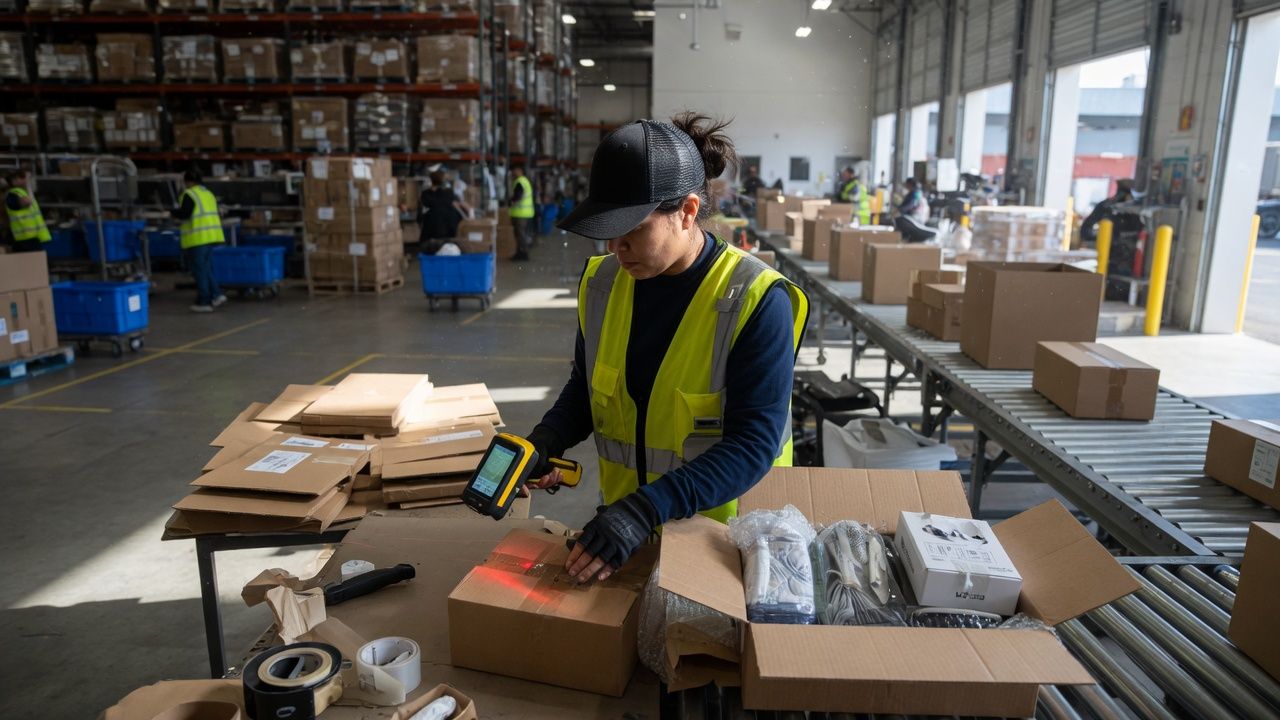
Fulfilment managers know the squeeze. Peaks come early morning and again before close. Pick packer roles have to absorb the volume, but every shortcut that speeds the line one hour costs accuracy on the next hundred orders. A warehousing and logistics recruitment partner that simply drops bodies onto a line does not solve the real problem, which is ramp-up speed without the mis-pick spiral.
This guide sets out the numbers that matter to a 3PL manager or plant lead. You will get productivity benchmarks for manual, RF and voice picking, a week-by-week ramp-up table for new starters, and the induction content that compresses the learning curve. It closes with a trial-to-permanent pathway that keeps both quality and cost under control, and a checklist for briefing an agency so the next crate of workers matches the profile you actually need.
Key Takeaways
- Manual picking averages 60 to 80 lines per hour per picker; RF raises this to 90 to 120, voice to 130 to 160.
- New starters peak at roughly 50% of target rate in week one and reach 85% by week four with structured induction.
- Each 1% error rate above target adds an average cost of 8 to 12 dollars per order in returns, reshipment and support time.
- A two-day bench induction plus one-week buddy pairing cuts early errors by about one third.
- Brief the agency with a single-page profile checklist and a paid trial day before committing to volume blocks.
Why Line Productivity Drops at the Gate
Warehouses run on two levers: lines per hour and accuracy percentage. Push speed, and the error rate follows it up the wall. The industry split for picking productivity in mid-volume fulfilment is well documented. Operators across warehouse recruitment in Australia tend to track these bands:
- Paper list - Lines per hour: 60 to 80; Error rate: 1.0 to 3.0%; Capital per worker: Low
- RF scanner - Lines per hour: 90 to 120; Error rate: 0.5 to 1.5%; Capital per worker: 500 to 1,500
- Voice pick - Lines per hour: 130 to 160; Error rate: 0.2 to 0.5%; Capital per worker: 1,500 to 3,000
Those bands are the ceiling. A new starter on RF runs at about half that, which is why most accuracy falls off a cliff in week one, not because the process is broken, but because the picker does not yet know where things live.
Ramp-up by week for pick pack operations
The ramp-up is not linear because location knowledge compounds. Week two is the inflection. The table below reflects observed baselines across three Melbourne fulfilment operations using agency labour hire for pick packer roles.
- 1 (induction only) - Rate vs target: 45 to 50%; Typical accuracy: 92 to 94%; Supervision load: 1:4
- 2 (mapped zones) - Rate vs target: 65 to 70%; Typical accuracy: 94 to 96%; Supervision load: 1:6
- 3 (full aisle) - Rate vs target: 75 to 80%; Typical accuracy: 96 to 97%; Supervision load: 1:8
- 4 (independent) - Rate vs target: 85 to 90%; Typical accuracy: 97 to 98%; Supervision load: 1:10
That four-week shape is the reason a labour hire partner that only guarantees bodies, without owning the induction, is a cost, not an asset.
What New Starters Actually Need to Stop Learning
The fastest pick packers do not think. They move to pattern. Getting there means three induction blocks that agencies rarely teach unless you ask for them.
Zone mapping and location shorthand
Pick accuracy is location accuracy. A starter who memorises bay, level and bin coordinates in their assigned zone within the first two days drops errors sharply. The bench induction should give each new person a two-colour map of their zone, a cheat sheet of the shorthand used on scanners, and a 20-minute walk with a supervisor who calls out five high-velocity SKUs by their bin.
Scanner workflow and exception handling
RF scanners mis-pick when the operator scans ahead before looking. The right first-day drill is a 30-piece mock wave where every barcode is scanned only after the location is confirmed. Train the exception path first: short pick, damaged barcode and quantity mismatch. Workers who know the exception flow do not invent a third way, which is where downstream accuracy falls over.
Batch versus zone picking ramp-up
Batch picking multiplies the early error cost because one walk services many orders. Zone picking isolates the error but extends training. For new starters, assign a single zone for the first week and keep batch work to supervised runs of no more than eight orders. As competence builds, widen the zone and add batch waves of four to six orders. The ramp table above assumes zone-first, batch-later.
The Cost of Each Percentage Point Off Target
Operations that run at 98% accuracy think they are doing well until they add up what the missing 2% costs. On a 5,000-line day at 2 dollars average pick value, 2% is 100 orders touched twice. Industry data puts the end-to-end cost of a mis-pick, including return, inspection, repack and customer support, at 8 to 12 dollars per order once the line is moving.
That makes accuracy a productivity lever. Spending one hour of supervisor time to coach a new starter on the exception screen pays for itself if it keeps accuracy above 96% in week one. The labour hire model only works when supervision is priced in, not when it is assumed away.
How to Brief an Agency So It Sends the Right Profile
Agencies ship what they are told. A two-bullet brief produces two-bullet results. The profile the warehouse needs for pick packer roles is narrow and checkable, so write it down.
Use this single-page brief and hand it to every labour hire contact. Ask the agency to confirm in writing that every worker sent on day one matches these points.
- Previous pick pack or warehouse shift - Required: Yes; Verification method: Recent payslip or agency reference
- RF scanner or voice-pick experience - Required: Yes, with dates; Verification method: Training certificate or supervisor call
- Available for full shift, including overtime windows - Required: Yes; Verification method: Availability form signed on arrival
- Casual, no gap longer than four weeks - Required: Yes; Verification method: Engagement letter from agency
Pair this brief with a paid trial day. Pay for eight hours of pick pack work at the going casual rate, run the worker through one supervised wave, then measure lines per hour and accuracy against the week-one baseline above. If the worker clears 95% of target lines at 96% accuracy, convert them to the agency's casual bench. If not, pay for the trial and walk away. Only after that gate passes should you request staff for the line.
Trial-to-Permanent Without the Risk
The trial-to-permanent pathway in a Labour Agreement or direct hire only becomes fair value when the agency carries the ramp-up cost for the first six weeks. The structure that works: the host pays the agency a placement fee plus the weekly casual uplift, and the agency pays the worker the same hourly rate as a direct employee. The host keeps a right of first refusal at week four, and a conversion fee that falls linearly to zero by week ten.
This pricing removes the incentive to rotate low-performers in and out. The agency wants the worker to hit baseline by week three, because that is when the conversion clock starts. It also keeps your approach to e-commerce recruitment for fulfilment operations consistent across the floor, the briefing sheet and the payroll ledger.
Related Resources
- Pick Packer Roles at Chandler Personnel
- Warehousing and Logistics Recruitment
- Warehouse Recruitment Australia
- Request Staff - Chandler Personnel
- Mastering E-commerce Recruitment for Fulfilment Operations
- Chandler Personnel Contact
Frequently Asked Questions
How many pick packer roles should one supervisor cover during week one?
A trained supervisor can credibly watch four new starters during week one before accuracy drifts. After week two, when zone familiarity is set, the span widens to six to eight.
What is a realistic pick rate for a casual starter on RF scanners?
Sixty to eighty lines per hour in week one is the realistic floor. The RF advantage shows in week two, when the rate moves to ninety to one hundred lines per hour and accuracy improves to 95%.
Should we pay the agency differently for pick packers versus general warehouse labour hire?
Yes. Pick packers carry an accuracy liability. Build the briefing checklist, the trial day payment and the conversion fee into the rate card so the agency has skin in the outcome.
How does batch picking change the training plan?
Batch picking needs an extra week of supervisor pairing because one error contaminates multiple orders. Start new starters on single-order waves in their zone, then widen to batches of four after week two.
Can a temporary worker reach full accuracy by week four?
Full accuracy, defined as 98% and above, is usually reached in week four to five on the zone-first plan. Pushing it faster raises the error cost faster than it lowers the placement cost.
Conclusion
Labour hire for pick packer roles pays off only when the agency owns the early accuracy cost, not just the headcount. Hand the agency a written profile, run a paid trial day for every starter, and price the first six weeks for conversion. Request staff with a brief that matches your zone, your scanner type and your accuracy target.