
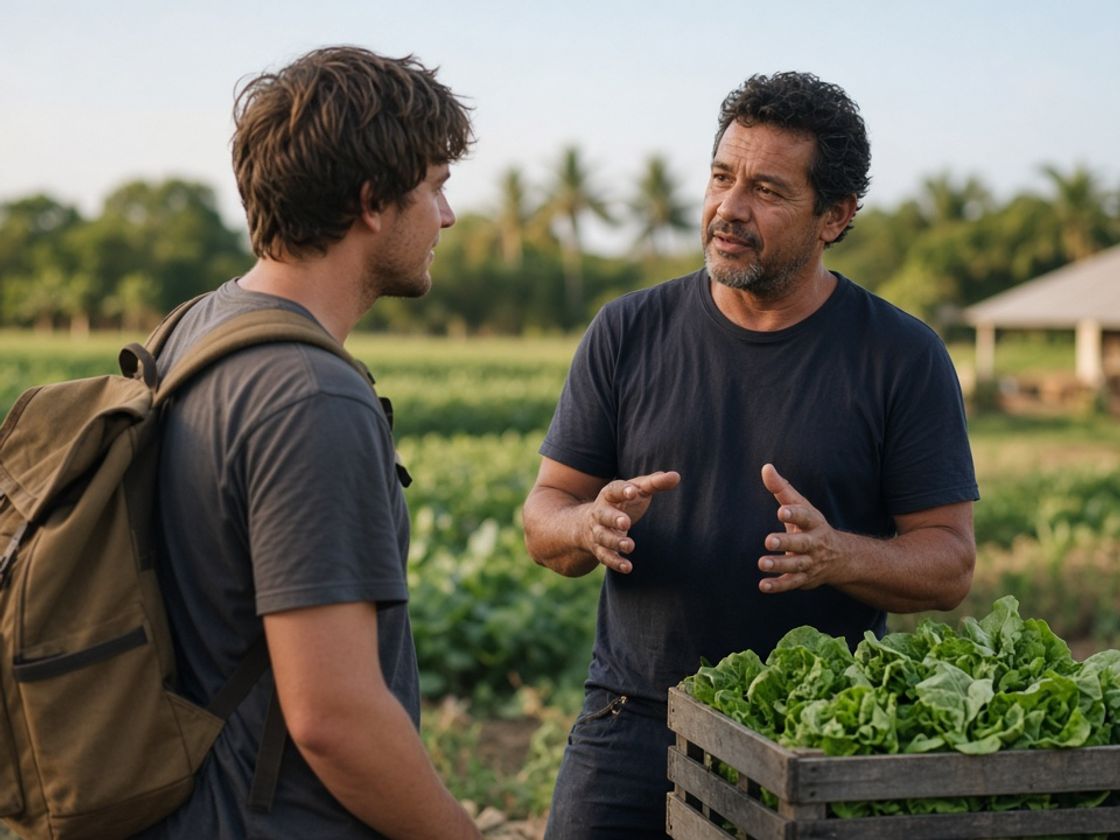
Farm jobs in Queensland for working holiday visa holders can include picking, cultivation and some packing. But a job on a farm does not automatically count as specified work toward another visa. The activity, postcode, visa subclass and dates all matter. New Home Affairs changes announced on 17 November 2026 make it especially important to check which application process applies before relying on the familiar “88 days” shorthand.
Find the task, not just a farm address
Home Affairs lists plant and animal cultivation activities such as fruit picking, crop cultivation and certain packing or immediate processing. It also distinguishes secondary processing, which may not qualify. A packing-shed role can have a different answer from a processed-food factory role. Read the subclass 417 specified-work guidance or the separate subclass 462 guidance for your own visa.
Ask the prospective employer for the actual daily duties, site postcode, employer name and dates. If the advert says “farm and packing work”, ask which produce is handled and whether packing is an immediate part of cultivation or a separate downstream process. The label on the advert is not a visa decision. Keep the description consistent with your timesheets and payslips.
Queensland includes many eligible areas, but “Queensland” by itself is not an eligibility category. Home Affairs publishes distinct postcode lists and industry rules; do not rely on a friend's experience in another district or subclass. A host can help by giving an accurate site address and duties, without promising that a government decision will count the placement.
The 88-day rule has a dated change
Home Affairs' 17 November 2026 announcement says that, from 1 March 2027, applicants for a second Working Holiday Maker visa will need 120 days of specified work rather than 88. Eligible specified work completed earlier continues to count toward the new requirement. The third-visa specified-work requirement is not changing. The same notice says a registration and invitation process opens on 1 December 2026 and applies from 1 March 2027, with a transitional direct-application route for eligible people who complete the required work and lodge by 28 February 2027.
Those are future application rules as of this article's 20 November 2026 drafting date, not rules already in force. Registration does not guarantee an invitation; an invitation does not extend an existing visa or guarantee a grant. The notice exempts UK passport holders from the new registration and invitation process. Separately, Home Affairs says UK passport holders applying on or after 1 July 2024 do not need specified subclass 417 work for a second or third 417 visa. A page about UK job pathways may help with work options, but it is not a substitute for checking that exemption against the visa held and passport used.
Under the currently published specified-work pages, 88 calendar days means the equivalent of three shortest calendar months, including eligible weekends or rest days during qualifying employment; it does not mean any 88 isolated calendar dates on a payslip. Home Affairs gives examples of full-time and staggered patterns, and unpaid days lost to seasonal weather cannot simply be counted. Do not assume two shifts on one day count as two days. Confirm your own pattern against the official minimum-period section.
Check pay and conditions before moving
Ask who employs and pays you, whether the work is hourly or piecework, the applicable award or agreement, expected hours, deductions and pay cycle. The Fair Work Ombudsman's horticulture pay and piecework guidance explains that pieceworkers covered by the Horticulture Award have a minimum wage guarantee for each day worked. It is not lawful to assume a piece rate removes every hourly floor. The appropriate classification and current rate depend on the actual work and employment arrangement.
Get the accommodation terms separately from the job offer: location, rent, room type, transport and what happens if work stops because of rain. A low advertised rent may be offset by long travel times; a promising harvest may have variable shifts. Ask for written pay, hours, travel and housing terms, and keep copies rather than relying on a verbal promise.
If a labour hire provider supplies the crew, Queensland's scheme requires users to engage licensed providers. That does not prove any particular supplier's licence status. Check the exact entity on the state labour hire register guidance and ask who will issue payslips. Chandler's farm labour hire article for hosts discusses employer-side supplier and crew checks; this guide remains about the worker's job and visa evidence.
Plan for heat, transport and changing work
Outdoor harvest work can involve sun, humidity, repeated lifting and long travel. Ask where drinking water, shade, rest areas and first aid are, how start times change in heat, and who to tell if you feel unwell. Queensland's heat guidance considers environmental conditions, workload and individual factors, not a single temperature threshold. Chandler's seasonal worker heat safety guide covers practical warning signs; a host must still assess the actual site.
Farm work can shift between fields, sheds and crops. Ask whether a new site has a different postcode or employer, and keep each change in your records. A worker who originally picks fruit may later move to a secondary processing line with a different eligibility position. Do not assume all shifts under one payroll description have identical visa status.
Chandler's article on seasonal agricultural staffing explains broader seasonal demand. For a live opening, use the job board and confirm the specific employer, tasks and site. A general article should never be read as an offer of a particular Queensland farm placement.
Build a record you can explain later
Keep the written offer, employer identification, site postcode, task description, payslips, bank payments, timesheets and roster changes. Note the dates you actually worked and paid leave or public holidays, rather than trying to reconstruct them months later. Ask for corrections promptly when a payslip or location is wrong.
Home Affairs assesses visa applications, not a blog, recruiter or host. When your facts are unusual, use official visa information or a properly authorised adviser. Do not book travel or rely on a claimed extension until the relevant visa is granted. The immediate practical step is to compare your current visa and proposed role with the latest Home Affairs rules before committing to a long placement.
Test an offer against the work calendar
A harvest start date is not the same as a guaranteed number of qualifying shifts. Ask how many days the employer expects to roster each week, what happens when weather stops picking, whether the job continues after the crop ends and whether a move to another farm is possible. Keep planning margin rather than assuming the shortest advertised season will satisfy a visa requirement exactly. Home Affairs' guidance addresses unpaid weather interruptions specifically.
For candidates using several employers, keep a separate record for each period of work. Record the legal employer, site location, ordinary days, payment evidence and tasks. If one day contains two shifts, it is still one calendar day for the relevant specified-work counting example on the current Home Affairs pages. Working fewer days each week may require a longer period to reach the equivalent minimum. A spreadsheet of shifts is useful, but only the underlying evidence can support it.
Hosts should not promise “visa days” in an advert unless they can substantiate both the tasks and location, and even then Home Affairs decides the application. State what the job is, its likely duration and the expected roster. Workers can then compare those facts against the current or announced rules for their own application date. This is a stronger basis for planning than a blanket guarantee attached to an unnamed farm job.
Related Resources
- Queensland farm labour hire guide
- UK job pathways
- Seasonal agricultural labour
- Seasonal worker heat safety
- Current job board
- Home Affairs WHM changes announced November 2026
- Fair Work horticulture pay guidance
Common Questions About Queensland Farm Work
1. Does every Queensland farm job count toward a second visa?
No. The subclass, activity, eligible postcode and period must meet Home Affairs requirements. A farm address or recruiter description alone does not decide eligibility.
2. Is 88 days still enough for a second WHM visa?
As of 20 November 2026, Home Affairs has announced a change from 88 to 120 days from 1 March 2027, with a transition for eligible applications lodged by 28 February 2027. Check the dated notice and your personal application timeline.
3. Do UK passport holders need specified farm work for another subclass 417 visa?
Home Affairs says eligible UK passport holders lodging a subclass 417 application from 1 July 2024 are exempt from the specified-work requirement. Check the exact passport and subclass conditions before assuming the exemption applies.
4. Does piecework mean there is no minimum pay?
No. For pieceworkers covered by the Horticulture Award, Fair Work describes a daily minimum wage guarantee. Check the award and classification for the actual job rather than relying on a verbal piece-rate estimate.
Check Eligibility Before the Harvest
Farm jobs in Queensland can provide valuable work, but a visa plan needs more than an advertised crop and an 88-day slogan. Verify the task, postcode, subclass and application date on Home Affairs' current pages. Then get written pay and housing details and keep records from the first shift.