Agriculture Seasonal Labour: Sourcing Harvest and Nursery Crews in Victoria
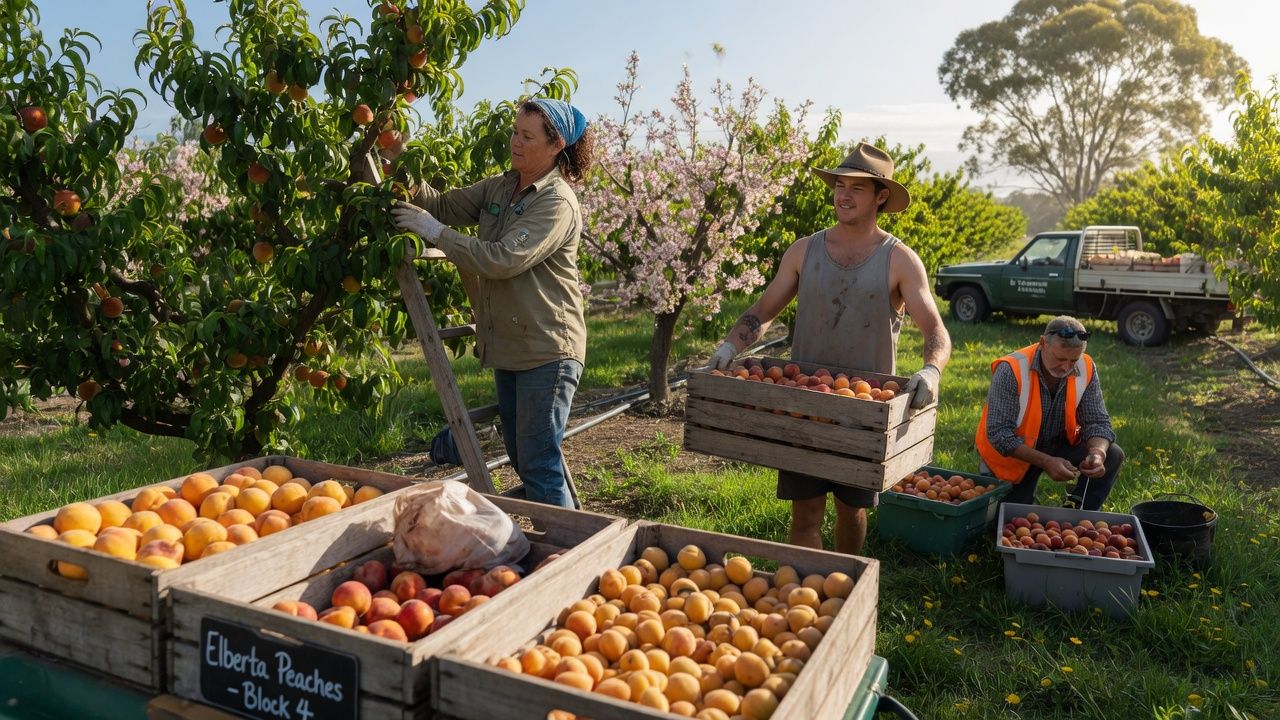
Harvest windows do not stretch. A peach lot hits its optimum in seven to ten days, and a nursery block needs hands for six weeks of pruning and potting. Labour hire operators in Melbourne serving horticulture live or die on whether they can match crew size to those windows without breaking piece rate rules or Victorian licence conditions. Request staff with a single crew number in mind, and the rest of this guide explains how to make that number land inside the law.
This is for Victorian growers, nurseries and packing sheds who need to hire seasonal workers for harvest and routine farm work. It covers crew sizing against picking windows, the two legal visa streams that bring workers to the shed, the piece rate and minimum wage rules under the Horticulture Award, and the licence checks that protect you from a six-figure penalty. Chandler Agribusiness in Springvale, at 1/2 Warwick Ave, Springvale VIC 3171, is the agriculture labour hire arm that carries this model through the season.
Key Takeaways
- Under the Horticulture Award, piece rates must let a competent worker earn at least 15% above the Level 1 hourly minimum, and every pieceworker has a daily minimum wage guarantee.
- Two legal streams bring seasonal workers to Victoria: Working Holiday Makers on 417 and 462 visas, and the PALM scheme from Pacific island countries and Timor-Leste.
- Crew sizing should be driven by the picking window in days, not the hectare count, with a 20% buffer for weather and ripeness spread.
- Any provider placing workers in Victorian horticulture must hold a current licence from the Labour Hire Authority, checked on its public register.
- Standard licence conditions now require horticulture providers to give workers a rights information sheet, avoid cash payments and supply PPE without charge.
Crew Sizing Against the Harvest Window
The mistake most growers make is sizing a crew to the hectare. The right question is how many picking hours the crop actually offers. Take a stone fruit block at 2.5 tonnes per hectare over a 3.5-day picking window. At 20kg per bin, one picker fills 8.8 bins per tonne, so one hectare needs 22 picker-days. That is the yield curve the crew must clear, not the area on a map.
Build the plan around three numbers: ripe-window days, productive hours per day, and effective bins per picker per hour. Effective bins per hour starts at about 0.6 for a new starter and reaches 1.0 for a competent picker. The buffer belongs in days, not workers. Add 20% to the window for rain, wind and uneven ripeness, and run the crew flat rather than over-staffing and watching workers stand idle while the piece rate collapses.
The Two Visa Streams That Bring Workers to the Shed
Seasonal workers in Victoria come through two legal channels. Working Holiday Makers hold a subclass 417 or 462 visa, are aged 18 to 30 (18 to 35 for some countries) and may work for the full 12 months, but a single employer is capped at six months unless an exemption applies. That exemption is what makes them reliable for harvest, because a grower who lodges a genuine position and shows the six-month rule would otherwise break the worker's visa can ask the Department of Home Affairs for a bridging arrangement.
The second stream is the Pacific Australia Labour Mobility scheme. It brings workers from nine Pacific island countries and Timor-Leste for short-term placements of up to nine months, or long-term placements of one to four years. For agriculture and select food manufacturing there are no postcode restrictions, so a provider can place PALM workers anywhere in Victoria. Seasonal recruitment of visa holders through an approved sponsor covers both streams, but the host must confirm the worker's visa condition 8547 exemption in writing before day one.
Seasonal hiring for a nursery needs the same discipline, as our nursery seasonal hiring guide sets out. Nursery work runs longer than harvest, so a 462 worker on a six-month exemption fits the pruning and potting season better than the 417 worker on a harvest-only stretch.
Piece Rates and the Minimum Wage Guarantee
The Horticulture Award 2020 sets the floor. The Level 1 adult minimum hourly rate is 23.46 dollars, which makes the casual minimum roughly 31.93 dollars including the 25% casual loading. A piece rate must allow a worker performing at the average productivity of a competent pieceworker to earn at least 15% more than that hourly minimum. For a casual Level 1 worker that means the piece rate has to clear about 36.72 dollars per hour at competent speed.
That 15% rule does not mean a new starter earns less until they are competent. The law is explicit: a pieceworker with less than 76 hours experience must be paid the same piece rate as a competent worker. There is no introductory or training rate. Where a new starter earns less in a day than the minimum wage guarantee their hourly rate multiplied by hours worked, the employer must pay the guarantee instead. The Horticulture Award summary on Fairwork.gov.au lays this out in plain terms.
Season Planning Timeline
Do not wait for the harvest to start the crew conversation. The pieces lock together in a six-month arc, and a missing licence check at the start becomes a six-figure penalty at the finish.
- January to February - Task: Confirm harvest window days, set crew size with 20% buffer; Owner: Grower
- March to April - Task: Lodge visa sponsor positions, collect WHM and PALM applications; Owner: Provider
- May to June - Task: Run inductions, set up accommodation and transport runs; Owner: Both
- July to September - Task: Harvest season, daily piece rate reconciliation; Owner: Grower and provider
- October to November - Task: Nursery potting and pruning, shift to hourly for routine work; Owner: Both
- December - Task: Debrief, calculate effective bins per hour, plan next season; Owner: Grower
Heat, Chemical Handling and the Induction Day
Induction is not paperwork, it is the moment piece rate stops being a gamble. Every worker must complete a heat stress and UV check-in before entering the shed. That means knowing the shade and water schedule, the signs of heat exhaustion, and a hard stop at 32 degrees Celsius wet bulb globe temperature. For chemical handling, the worker must hold a current ChemCert or equivalent, or work under a certified supervisor on a task-by-task sign-off.
The induction checklist runs one page. It covers rights information, the daily minimum wage guarantee, the piece rate being used, the 15% earning rule, the chemical tasks the worker is certified for, and the accommodation and transport plan. A worker signs that page on day one and keeps a copy. This is now a standard condition for horticulture providers licensed after 1 June 2026, and it is coming for existing licences from late 2026.
The Licence Check That Stops a Penalty
The check is a two-step call. First, ask the provider for their licence number in writing. Second, enter that number on the register and confirm the listed industry matches the work. If the register shows a condition about cash payments or subcontracting, ask for that condition in writing and confirm how the provider meets it. A provider licensed to supply labour hire in Melbourne will give you that number without delay.
Accommodation, Transport and the Daily Rate Split
Where a provider arranges accommodation, the standard conditions require it to meet basic habitability, be within a reasonable distance of the shed, and cost no more than the published accommodation component of the weekly rate. The transport leg is separate: pick-up and drop-off at the shed gate, with any meal break at the accommodation site, must be paid travel time if the worker is ready and willing to work. Where a worker is stood down by rain, the provider still pays the daily minimum wage guarantee because the worker was available for a full day's work.
This is where the brief you send when you request staff needs to be precise. The brief should state the accommodation option, the transport radius, the chemical certification required, and the visa type the worker holds. Without that, a provider ships a 462 worker who cannot be exempted from the six-month rule, or a PALM worker whose condition 8547 does not cover the task, and the shed stops.
Related Resources
- Labour Hire Melbourne
- Request Staff - Chandler Personnel
- Nursery Seasonal Hiring Guide
- Visa Holder Seasonal Recruitment
- Horticulture Award Summary | Fair Work
- Chandler Agribusiness
Frequently Asked Questions
Do seasonal workers have to be paid the same piece rate as experienced pickers?
Yes. Under the Horticulture Award, a pieceworker with less than 76 hours experience must be paid the same piece rate as a competent worker. There is no training or introductory rate. Where the piece earnings fall below the daily minimum wage guarantee for the hours worked, the employer pays the guarantee instead.
Can a Working Holiday Maker work harvest for more than six months?
Only with an exemption from the Department of Home Affairs. The default visa condition 8547 caps employment at six months with one employer. A grower who can show a genuine position and that the six-month rule would otherwise break the worker's visa can apply for a bridging exemption that allows the worker to stay for the full harvest.
What does the PALM scheme mean for a Victorian grower?
The PALM scheme brings workers from Pacific island countries and Timor-Leste for short-term placements of up to nine months or long-term placements of one to four years. For agriculture there are no postcode restrictions, so workers can be placed anywhere in Victoria. The grower must work through an approved sponsor, and the worker's visa condition 8547 must cover the task they are doing.
How do I check that a provider is licensed in Victoria?
Ask the provider for their licence number in writing, then enter it on the Labour Hire Authority public register at labourhireauthority.vic.gov.au. Confirm the industry classification covers agriculture. If the register shows conditions about cash payments or subcontracting, ask the provider how they meet each one in writing.
What heat and chemical rules apply to seasonal hirers?
Every worker must complete a heat stress and UV check-in before entering the shed, with a hard stop at 32 degrees Celsius wet bulb globe temperature and a documented shade and water schedule. Chemical tasks require a current ChemCert or equivalent, or direct supervision of a certified person with a task-by-task sign-off.
When should I start planning the next harvest crew?
Six months out. Crew sizing against the harvest window in days should happen in January to February, visa lodgement in March to April, and inductions in May to June. Waiting for the fruit to ripen before checking the licence number is too late.
Conclusion
Agiculture seasonal labour in Victoria works when three things line up: a crew sized to the picking window, a piece rate that pays at least 15% above the Horticulture Award minimum, and a provider whose licence is current on the Labour Hire Authority register. Chandler Agribusiness at 1/2 Warwick Ave, Springvale VIC 3171 carries these checks through each season, and the same discipline applies whether you labour hire Melbourne or run your own visa sponsorships. Request staff with a written brief that names the visa type, the piece rate, the accommodation and the licence check, then confirm the number on the register before the first box is picked.