
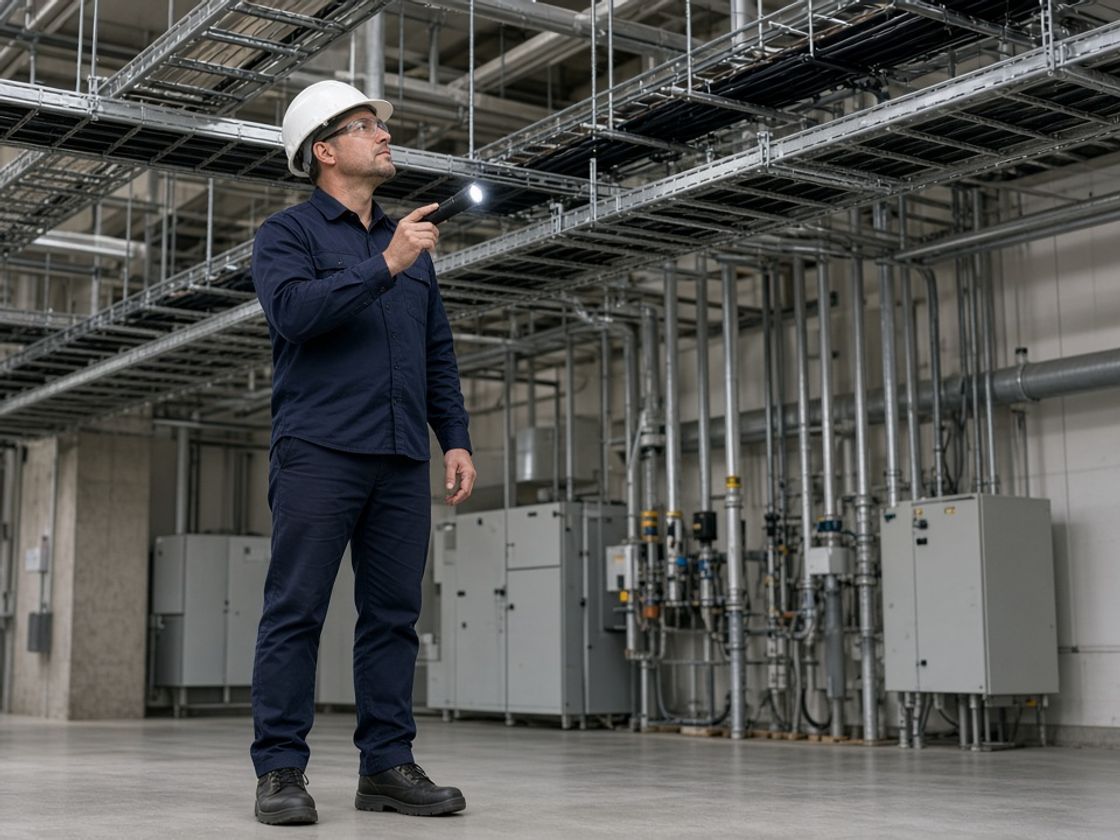
Electrician labour hire in Brisbane starts with one question: does the person arriving on your site hold the Queensland licence class that matches the job? It is illegal to do electrical work in Queensland without a licence, with only a few narrow exceptions, so the check comes before the induction and the first shift. This guide is for maintenance, plant and facilities managers who need to hire an electrician in Brisbane for a shutdown, a backlog or a gap in the roster.
There are two checks to make. One is the electrician's own electrical licence. The other is the labour hire licence of the provider that supplies them.
What electrician labour hire covers on Brisbane sites
Electrician labour hire means a provider supplies a licensed electrician to work for you, on your site, for a set period. Hosts usually need it for a defined gap: a planned shutdown, a backlog of motor and switchboard work, or leave cover. A maintenance electrician in Brisbane typically keeps motors, controls, switchboards and lighting running.
Hosts who want an outline of the day-to-day duties before writing a task list can read the electrician job description, though its licence and pay sections are written for Victoria. The wider picture is in the guide to labour hire in Brisbane.
Chandler Personnel provides labour hire and permanent recruitment to hosts across Queensland, and hosts can request an electrician in Queensland through the request-staff form.
What the Queensland licence classes allow
The Electrical Safety Office licence classes page lists six types of electrical work licence. The first five are:
- Electrical mechanic: the open licence. It covers all electrical work, including installing wiring, changing an overhead line and repairing any electrical equipment.
- Electrical fitter: covers equipment work, such as rewinding and repairing a motor, building and assembling a switchboard, and maintaining or repairing electrical equipment.
- Electrical linesperson: covers electric line work, including building or maintaining overhead lines and testing them.
- Electrical jointer: covers limited specialist cable work, such as jointing and terminating a high voltage cable.
- Restricted electrical work: limited to specific electrical work tied to another trade, such as refrigeration, plumbing or mechanical fitting. The need must be legitimate, and saving time or money does not count.
The sixth is an electrical work training permit, which allows supervised electrical work under specified conditions while the holder is being trained. The Electrical Safety Office lists wiring installation under the mechanic class and motor and switchboard work under the fitter class, so a fitter is not automatically the right person for new circuits.
Section 55 of the Electrical Safety Act 2002 allows only very limited unlicensed tasks, such as authorised testing of electrical equipment and learning electrical work as an apprentice or trainee. Victorian sites talk about A-Grade licences while Queensland uses the classes above, so the walkthrough on how Victoria handles A-Grade licence checks should not be applied here.
Checking a licence before the first shift
Every check below is something the host does, and all of it can be done when you place the request.
- The electrician's licence: ask the provider for the person's name, licence class and licence number, then match the person who arrives to those details.
- The class against the task: compare the class with your task list.
- The provider's labour hire licence: search the register by business name, ABN, address, industry or location, and keep a printed verification on file.
Section 56 of the Electrical Safety Act says businesses carrying out electrical work for others must hold an electrical contractor licence. WorkSafe Queensland points to an online electrical licence holder search for checking contractor licence numbers. Whether a labour hire provider that supplies electricians needs its own electrical contractor licence is a question for the Electrical Safety Office before you sign, rather than something to assume either way. The same applies to what the search can confirm about an individual electrician's class.
The second licence belongs to the provider. The Labour Hire Licensing Act 2017 commenced on 16 April 2018, and all labour hire providers operating in Queensland need a licence, including interstate providers that supply workers here. The Queensland labour hire licensing scheme states that users must only engage licensed providers, and that penalties apply for using an unlicensed one. A provider that has only applied does not qualify. Search the public register of licensed providers, and use the guide to a Queensland labour hire licence check for the steps.
Why the class must match the task
A licence number tells you the person is licensed. It does not tell you the licence covers the job in front of them. Write the task list first, then compare each line with the classes above.
- Motor and switchboard work points to the fitter class, or to a mechanic, since the mechanic licence is open.
- Installing new wiring points to the mechanic class.
- Overhead line work points to the linesperson class, and high voltage cable jointing to the jointer class.
- A restricted licence holder, such as a refrigeration tradesperson, is limited to work tied to that trade.
The same applies if the job changes during the shift. If a fitter is asked to add a circuit, the work may have moved outside what that class covers. The electrician should stop, the host should re-brief the task with the provider, and the class should be checked again.
Induction, isolation and supervision
WorkSafe Queensland states that working on a live power supply is generally not allowed in Queensland. That makes isolation part of almost every task, and isolation points, permits and lock-out rules belong to the host's site. Walk the electrician through them on day one.
In practice the host directs the daily task, because the host knows the plant and the people nearby. Agree in writing who gives the task instruction, who controls isolation, who signs off the work, and who receives fault reports. If you are unsure how responsibilities fall for your arrangement, ask the Electrical Safety Office or WorkSafe Queensland before work starts.
Apprentices need a separate decision. Learning electrical work as an apprentice or trainee is one of the section 55 exceptions, so an apprentice needs neither a licence nor a training permit while learning. Other people in training may hold an electrical work training permit, which carries conditions. Ask the provider which applies. A group training organisation that supplies an apprentice or trainee to a host is a labour hire provider under the Queensland scheme, so the register check applies there too.
Keep a list of every worker on your site, including hired electricians. The licensing scheme recommends this for users of labour hire.
Labour hire or a permanent electrician
Labour hire suits a defined gap with a clear end. A permanent electrician suits work that returns every week and depends on knowing your plant. The scenarios are covered in the guide on when temporary electricians make sense, so this section adds only the licensing view.
Whichever route you choose, the electrician must hold a class that covers the work. With labour hire you also check the provider each time you change provider. With a permanent hire the second check falls away. For that route, trades and services recruitment covers permanent placements.
Related Resources
- Electrician job description
- When temporary electricians make sense
- How Victoria handles A-Grade licence checks
- Queensland labour hire licence check
- Electrical Safety Office licence classes
- Queensland labour hire licensing scheme
Common Questions About Electrician Labour Hire in Brisbane
1. Is it illegal to do electrical work without a licence in Queensland?
Yes. WorkSafe Queensland states that it is illegal to do electrical work in Queensland without a licence. Section 55 of the Electrical Safety Act 2002 allows only very limited exceptions, including authorised testing of electrical equipment and learning electrical work as an apprentice or trainee. Businesses that carry out electrical work for others must also hold an electrical contractor licence.
2. What is the difference between an electrical mechanic and an electrical fitter?
An electrical mechanic holds the open licence and can perform all electrical work, including installing wiring. An electrical fitter is licensed for electrical equipment work, such as rewinding and repairing a motor, building a switchboard, and maintaining or repairing equipment. Match the class to your task list before you confirm a booking.
3. Can an apprentice work without a licence?
Yes, within limits. Learning electrical work as an apprentice or trainee is one of the limited exceptions in section 55, so an apprentice does not need a licence while learning. Other people in training may hold an electrical work training permit, which allows supervised work under conditions.
4. Where do I check an electrician's licence in Queensland?
WorkSafe Queensland offers an electrical licence holder search for checking the status of contractor licence numbers. For an individual electrician's class, ask the provider for the licence details and ask the Electrical Safety Office what it can confirm. Check the provider separately on the public labour hire register.
5. Does the host or the agency supervise a hired electrician?
In practice the host directs the daily task, because the host controls the plant, the isolation points and the schedule. Agree in writing who instructs, who isolates and who signs off, and ask the Electrical Safety Office if you are unsure how responsibilities fall.
Match the Licence Class to the Job
Electrician labour hire in Brisbane works when the host does the checks that only the host can do. Confirm the licence class against the task list, check the provider on the public register, and settle who directs, isolates and signs off before anyone picks up a tool.