Storeperson labour hire in Brisbane works when the booking describes the store, not only the job title. A storeperson receives, puts away, finds and dispatches stock, and the weight of each task changes between a trade counter, a parts store and a distribution centre. This guide is for supervisors who need relief or ongoing store cover and want the right person on the first shift.
It covers how a storeperson differs from a pick packer and a forklift operator, which duties need a ticket in Queensland, and what to say about stock accuracy. The posts on warehouse jobs in Brisbane and pick packer jobs in Brisbane cover the candidate side, so this guide stays with the host.
What storeperson labour hire covers in Brisbane
Storeperson labour hire means a labour hire provider supplies a worker to do store work for your business. Under the Queensland scheme your business is the labour hire user, also described as the host employer or client.
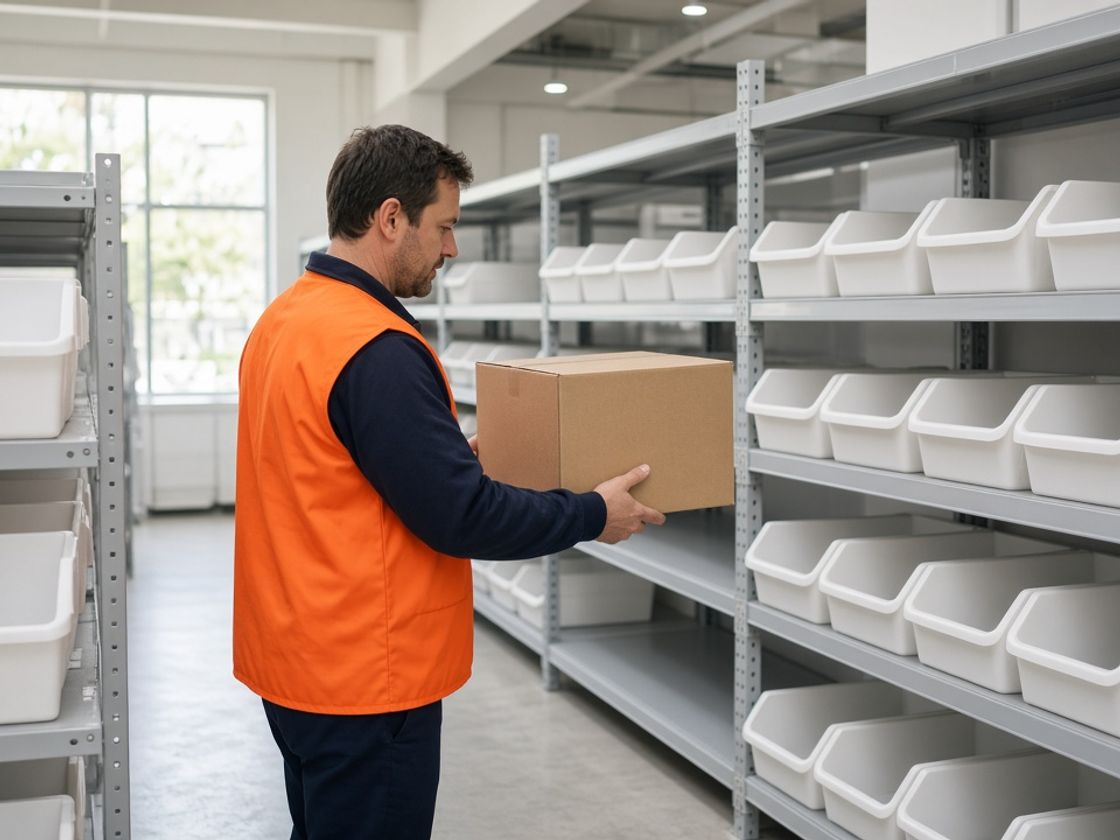
The work follows the flow of stock. Deliveries are checked against the paperwork, goods are put away in the right bays and racking locations, orders are picked, packed and loaded, and counts are taken with differences reported. The storeperson role page sets out the same cycle, and the warehouse job description templates give you a layout for your own duty list. For the wider set of roles, see Queensland warehousing labour hire.
One Queensland rule applies first. All labour hire providers operating in Queensland need a licence, and users of labour hire must only engage licensed providers. The Queensland labour hire licensing scheme pages explain this, and the public licence register lets you search by business name or ABN and print a verification. A provider that has only applied for a licence does not meet the rule, and penalties apply for using an unlicensed provider.
Storeperson, pick packer or forklift operator
A storeperson, a pick packer and a forklift operator can work in the same building, but each job is defined by something different.
- Storeperson: responsible for stock from receiving to dispatch, including put-away, counts and stock records. Picking is part of the job, and so is checking what arrives against the paperwork.
- Pick packer: works from a pick list or scanner to build orders at pace. Accuracy matters, but the role usually ends at the packed order.
- Forklift operator: moves pallets with powered plant and needs the licence class that matches the truck.
Titles overlap across sites, so write the duties rather than relying on the label. A booking for a warehouse storeperson who will also unload trucks by forklift is really two jobs in one.
Duties that need a ticket
The ticket question usually starts when a powered truck enters the job. WorkSafe Queensland states that there are two classes of licence needed for forklift related work.
- LF class: allows a person to use forklift trucks, but does not include order-picking forklift trucks.
- LO class: needed to operate an order-picking forklift truck, where the operator's control is part of the load carriage and lifts with it. These trucks are generally called stock pickers.
The WorkSafe Queensland forklift licence classes page adds that order-picking trucks can be turret trucks in narrow aisle warehouses. If your store runs narrow aisles, ask about the LO class.
The same page defines a forklift truck as a powered industrial truck with a mast and a load carriage fitted with fork arms that can be raised 900mm or more above the ground. It does not include a pedestrian-operated truck or a pallet truck. Other plant sits in separate high risk work licence classes, so do not assume an LF licence covers every machine in your store.
Write the ticket into the booking by task. "Forklift duties: yes, LF class, unloading inbound trucks for part of each shift" is clear, while "forklift preferred" is not. Ask to see the licence before the worker drives a truck on your site.
Stock accuracy and dispatch in the booking
Stock accuracy is a routine that your site defines. A storeperson from outside will follow the counting and checking method you brief, so brief it. These are checks the host sets and owns.
- Receiving: what is checked against the delivery paperwork, and what happens when a delivery does not match.
- Put-away: how locations are recorded, whether by scanner, system entry or paper.
- Counts: which counts the person will do, such as a section of racking, and who records differences.
- Dispatch: how outbound goods are matched to dispatch documents before loading, and who signs off.
- Stock adjustments: who is allowed to change a quantity in your records.
Say which system and devices you use, because a person used to handheld scanners will settle faster into a scanner-based store.
Also decide who the worker reports to when something does not match. The Queensland scheme's guidance for users of labour hire suggests maintaining a list of all workers on your site, and anyone a provider sends to your store belongs on that list.
Matching the person to the type of store
The same title fits very different days. Name which of these your store is, because each rewards a different strength.
- Trade counter: serves customers, finds items quickly by name and part number, and keeps the counter tidy. Manner and product knowledge count as much as lifting.
- Parts store: many small items, exact part numbers, parts issued against job or work order references, and careful returns. Attention to detail matters more than speed.
- Distribution centre: volume, scanning, pallets and dispatch cut-offs. Forklift duty is more likely, so the ticket question comes up early.
- Factory store: raw materials and finished goods that feed a production line. The storeperson supplies the line on time and keeps issue records clean.
Then add the shift pattern, the start time and whether the work is mostly lifting or mostly counter and screen work. When you request store staff in Queensland from Chandler Personnel, which provides labour hire and permanent recruitment for Queensland hosts, put those details in the request. Chandler also runs site inductions on behalf of clients, and whichever provider you use should be told what your induction covers.
Casual cover or a permanent storeperson
Casual cover suits stocktake, a staff absence, a delivery peak or a store move. Stocktake works well when the method is defined: the worker counts to your sheets or scanner list, and you review the differences.
A permanent storeperson suits a store with steady daily volume, where knowledge of your locations, customers and part numbers builds over months. Some hosts start with casual cover and move to a permanent hire once the fit is proven. Ask each provider how a move from casual to permanent works before the first shift, so the terms are clear on both sides.
Related Resources
- Queensland warehousing labour hire
- Storeperson job description
- Warehouse job description templates
- Warehouse jobs in Brisbane
- Request store staff in Queensland
- WorkSafe Queensland forklift licence classes
- Queensland labour hire licensing scheme
Common Questions About Storeperson Labour Hire
1. What does a storeperson do?
A storeperson receives, stores, picks and dispatches goods in a warehouse, factory store or distribution centre, and keeps stock records accurate. A typical shift includes checking deliveries, putting stock away, picking orders, counting a section of stock and loading outbound vehicles.
2. Does a storeperson need a forklift licence in Queensland?
Only if the job includes operating a forklift truck. WorkSafe Queensland lists the LF class for forklift trucks and the LO class for order-picking forklift trucks. A storeperson who only receives, counts and hand-picks is not doing forklift work, so state in the booking whether any truck driving is part of the role.
3. Is a storeman the same as a storeperson?
In practice, yes. Storeman is another title for the same stock, receiving and dispatch work, and some sites use it when advertising storeman jobs in Brisbane. The storeman resume template shows how candidates describe those duties, which helps when you read applications for a permanent role.
4. Can labour hire cover a store during stocktake?
Yes, provided you define the count method. Tell the provider whether the count is by sheet or scanner, which areas are covered, how long it runs, and who reviews differences. A defined section of stock and a clear reporting line give cleaner counts than a general request for stocktake help.
5. How do I brief an agency on stock accuracy?
List the checks as tasks: what is checked at receiving, how put-away locations are recorded, which counts the person will do, how dispatch documents are matched to goods, and who may change a quantity. Add the system and devices in use, and name the person who receives reports of differences.
Name the Duties, Then the Ticket
A good storeperson booking reads like a short duty list for your own store, with the stock checks and the forklift question stated plainly. Decide whether truck driving is part of the role, name the licence class if it is, and say what accuracy means on your site. Before the first shift, confirm on the public register that your provider holds a current Queensland licence.