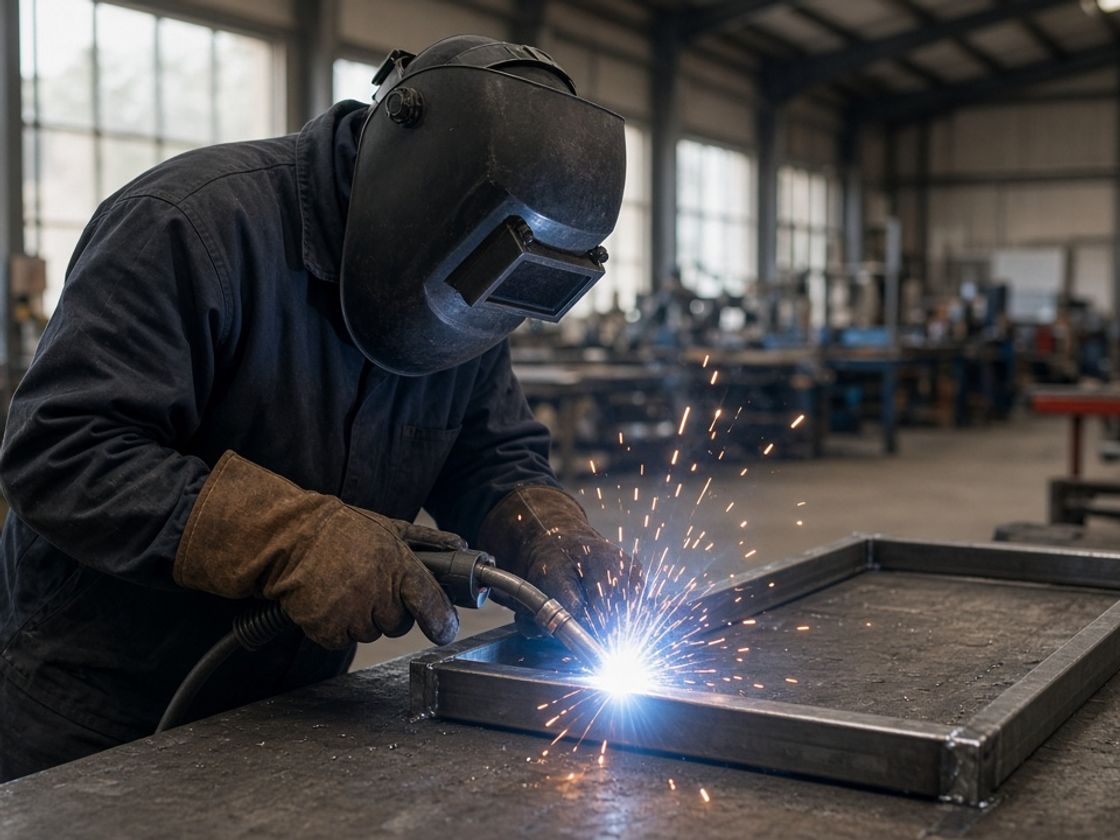
Typical duties
- Read drawings and weld symbols
- Prepare and fit up metal parts
- Weld using MIG, TIG or stick processes
- Grind and finish welds
- Inspect welds visually
- Repair damaged or worn metal parts
- Maintain welding equipment and consumables
- Follow hot work and fume safety rules
Skills, licences & tickets
- Certificate III in Engineering (Fabrication Trade) or equivalent
- Welding tickets or tests to the standard the job needs
- Reading drawings and weld symbols
- MIG, TIG and stick welding
- Safe hot work and fume control
- White card for construction sites
A welder joins metal parts using heat and filler material. This welder job description covers the welding processes, the tickets employers ask for and the pay, so you can plan your next step.
Welders work in fabrication shops, manufacturing plants, construction sites and maintenance crews. The job can mean building steel frames, repairing machinery or welding stainless steel for food and pharmaceutical equipment.
What does a welder do?
A welder reads the drawing, prepares and fits up the parts, then welds them using the process the job requires. After welding, the welder grinds and cleans the weld, checks it visually and corrects any defects.
Repair welding is common as well. Welders fix cracked frames, worn parts and damaged equipment so that machines can keep working.
Common welding processes
- MIG is fast and common for steel and aluminium fabrication.
- TIG gives precise, clean welds on stainless and thin material.
- Stick is used for outdoor, repair and heavy structural work.
Skills and tickets employers look for
Employers look for a trade qualification or a proven record, a clean weld finish and good safety habits. Many jobs ask for weld tests or coded welding tickets tested to a standard such as AS/NZS 2980. For construction sites, the white card from WorkSafe Victoria is required, and fume extraction and respiratory protection should be part of every shift.
Pay, hours and employment types
Welding work is offered casual, contract and permanent, with overtime common on busy jobs. Pay may be set by the Manufacturing award, the Building and Construction General On-site Award or an enterprise agreement, depending on the site.
Jobs and Skills Australia reports median full-time earnings of about $1,688 a week and $44 an hour in May 2025, in its structural steel and welding trades workers profile. That group includes boilermakers, so your own rate depends on your processes, tickets and site.
How to become a welder
The standard route is an apprenticeship in fabrication, which includes welding. Some people start as fabrication assistants or labourers, practise on offcuts and take a welding test later. The welder resume template shows how to list processes and tests.
Related Resources
- Welder resume template
- Trades and services recruitment in Melbourne
- Qualified trades resume template and guide
- Licence and ticket tracker
- Structural steel and welding trades workers profile from Jobs and Skills Australia
- Construction induction training from WorkSafe Victoria
Frequently Asked Questions
Do I need a welding ticket to get a welding job?
Many employers ask for a test or certification for the process and material. Some will test you on site, and entry level jobs may accept a basic record and a willingness to learn.
What is the difference between MIG and TIG welding?
MIG is a faster process suited to production work. TIG is slower and more precise, and is often used for stainless steel and thin material.
How long does it take to become a welder?
A fabrication apprenticeship usually takes about four years. Some people qualify faster through recognition of prior experience.
Is welding dangerous?
It carries real risks, including burns, fumes, eye damage and fire. Correct protective equipment, extraction and hot work procedures control those risks.
Tickets Open the Door, Clean Welds Keep It Open
Employers hire on proof, and they keep welders whose work needs little rework. When you are ready, check trade openings on the job board or submit your CV with your tickets listed.