Typical duties
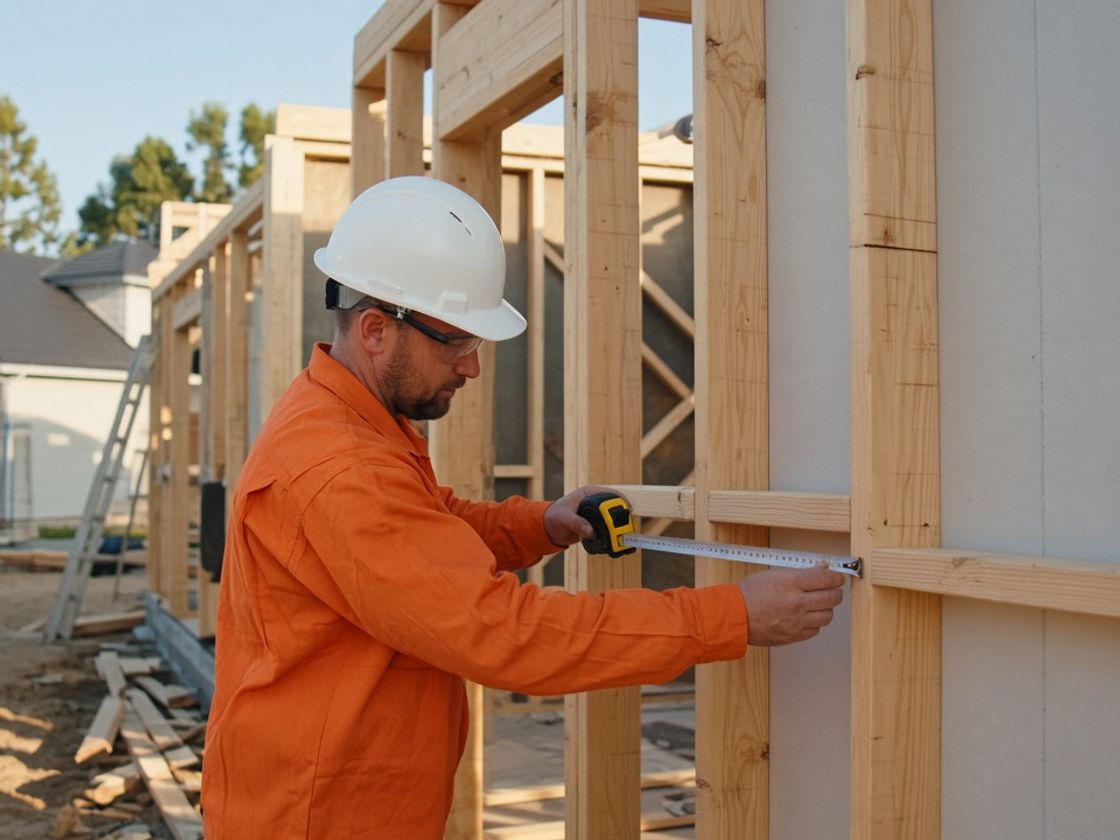
- Read plans and take site measurements
- Cut and shape timber and sheet materials
- Erect wall, floor and roof frames
- Install doors, windows, stairs and fittings
- Build and strip formwork
- Fit cabinetry and finishing
- Work safely at heights and with power tools
- Keep the work area tidy and safe
Skills, licences & tickets
- Certificate III in Carpentry
- Construction induction (white card)
- Reading plans and measuring accurately
- Power and hand tool skills
- Working at heights awareness
- Own tools and a driver licence
A carpenter measures, cuts, shapes and fixes timber and other materials to build and finish structures. This carpenter job description sets out the duties, the qualifications and the pay, so you can see how the trade works.
Carpenters work on houses, apartments, commercial fit-outs and civil projects. Some specialise in framing, formwork or finishing, and others work across the whole build.
What does a carpenter do?
A carpenter reads the plans, measures the site and cuts materials to size. On a new build, they erect frames for walls, floors and roofs, then install windows, doors and stairs. In finishing work, they fit skirting, architraves, cabinetry and other details.
Formwork carpenters build the temporary moulds that hold concrete while it sets. Site safety is central, because carpenters work at heights, with power tools and around other trades.
Types of carpentry
- Framing covers wall, floor and roof structures.
- Formwork builds concrete moulds on commercial and civil sites.
- Finishing covers doors, trim, stairs and fit-outs.
- Maintenance covers repairs and small works.
Skills and tickets employers look for
Employers look for a Certificate III in Carpentry or progress towards it, a white card, a driver licence and your own tools. The construction induction card from WorkSafe Victoria is required before you can work on a construction site. Working at heights and elevated work platform tickets are often added.
Pay, hours and employment types
Carpentry work is offered permanent, contract and casual, and many carpenters work as subcontractors. On-site pay is commonly set under the Building and Construction General On-site Award or an enterprise agreement.
Jobs and Skills Australia reports median full-time earnings of about $1,760 a week and $45 an hour for carpenters and joiners in May 2025, in its carpenters and joiners profile. Pay varies with experience, the type of work and whether you are employed or self-employed.
How to become a carpenter
Most carpenters complete a four-year apprenticeship with an employer and a training provider. Adult apprentices and people with relevant experience can sometimes shorten the path. The carpenter resume template helps you present your tools, tickets and projects.
Related Resources
- Carpenter resume template
- Carpenters and cabinet makers jobs
- Trades and services recruitment in Melbourne
- Licence and ticket tracker
- Carpenters and joiners profile from Jobs and Skills Australia
- Building and Construction General On-site Award summary
Frequently Asked Questions
Do I need a white card to work as a carpenter?
Yes, for construction sites. It shows you have completed the general construction induction training.
How long is a carpentry apprenticeship?
A carpentry apprenticeship usually takes about four years, although the length can vary with prior experience and training arrangements.
What tools do carpenters need?
Employers often expect a set of hand tools, such as a tape, square, hammer, chisels and a hand saw, and may supply power tools. Check what is expected on each job.
Can a carpenter become a builder?
Yes. With experience and the right registration, carpenters can move into site supervision, project management or running their own business.
Build the Record Along With the Frame
A carpenter with the right tickets, tidy tools and a clear work history gets hired faster. When you are ready, see current trade roles on the job board or submit your CV.