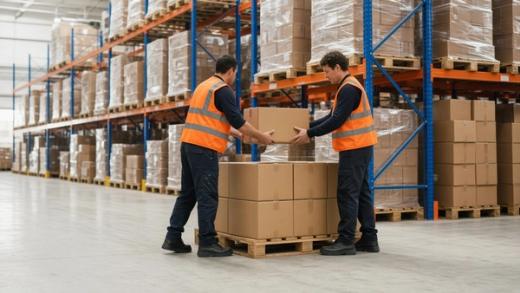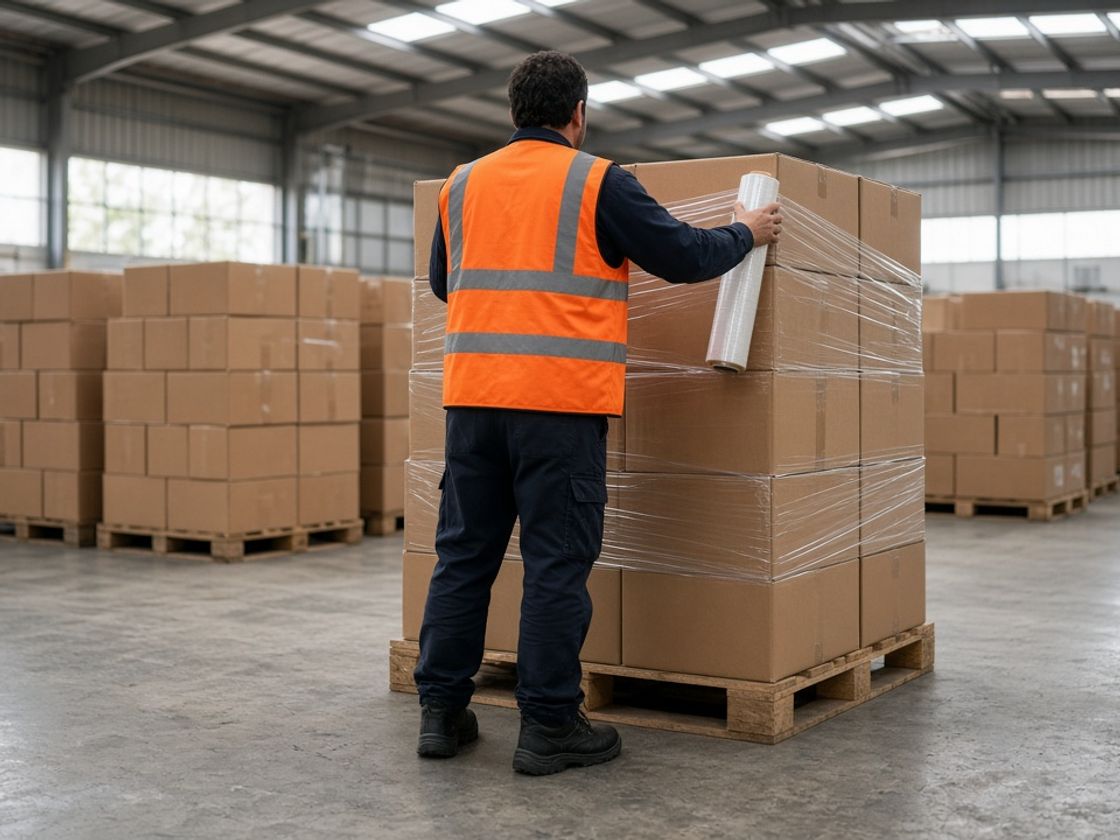
Typical duties
- Unload containers and trucks and sort goods by hand
- Scan inbound goods and move them to the right zone
- Pick orders from a scanner, voice or paper list
- Pack, label and wrap pallets and cartons
- Replenish pick faces from reserve stock
- Load outbound vehicles in dock order
- Report damage, shortages and wrong labels
- Keep aisles, docks and work areas clear and tidy
Skills, licences & tickets
- Comfort with repetitive, physical floor work
- Handheld scanner use, taught on site
- Steel-cap boots, long trousers and hi-vis
- Forklift licence (LF class) or pallet jack competence
- Reading labels and counting accurately
- Good attendance across early, late or night shifts
A warehouse worker handles the daily floor work in a warehouse, third-party logistics (3PL) site or distribution centre. This warehouse worker job description focuses on shifts, entry routes and what the first week looks like, which is how many people first meet the job.
It overlaps with the storeperson role, which leans toward stock control and records. Warehouse worker is the broader floor title, covering throughput work where volume and speed set the day.
What does a warehouse worker do?
A distribution centre runs to the truck. Inbound goods arrive, are scanned and put away, and outbound orders are picked, packed and loaded in time for the carrier. The warehouse worker moves goods through each step.
Sites differ. A 3PL may handle several clients' stock on one floor, while a distribution centre may run one product range at high volume. Planning for the dock cut-off drives the pace of the shift, as the dispatch cut-off planning guide explains.
Typical shift patterns
- Day shift covers receiving and put-away.
- Afternoon and night shifts cover order picking and loading for next-day delivery.
- Weekend and peak rosters fill when volumes rise, such as the lead-up to Christmas.
Skills and tickets employers look for
Employers want people who work safely, count carefully and turn up for every rostered shift. Most warehouse jobs teach the scanner and warehouse system during induction, and the guide to WMS and RF scanner skills shows what employers test. A forklift licence widens your options, and WorkSafe Victoria's high risk work licence page explains how to get one.
Manual handling is the main injury risk on a warehouse floor, and WorkSafe Victoria's warehousing injury hotspots page explains how people get hurt and how to avoid it.
Pay, hours and employment types
Warehouse work is offered as casual, part-time, full-time and labour hire roles. Pay is commonly set by the Storage Services and Wholesale Award or an enterprise agreement, and the award sets rates for shift work and overtime. Casual employees receive a loading, explained in the Fair Work guide to casual employment.
Many people begin through casual or labour hire shifts and are offered longer hours once the site knows them. The warehouse salary benchmarks for Melbourne and Sydney give a market picture.
Your first week
Expect a site induction, a safety walk, a PPE check and a short training session on the scanner. You will probably work beside an experienced team member, and supervisors look at accuracy and safe habits first, and pace builds over the following shifts. The first day warehouse worker guide and the first day on site checklist cover what to bring.
How to become a warehouse worker
You do not need a qualification. Apply for casual or labour hire warehouse shifts with a clean work history, safety boots and reliable transport. Later, add a forklift licence or move toward the forklift driver role.
Related Resources
- Warehouse worker resume template
- Warehouse jobs in Melbourne
- Warehousing and logistics recruitment in Melbourne
- First day on site checklist
- Warehouse and factory interview preparation pack
- Warehousing injury hotspots from WorkSafe Victoria
Frequently Asked Questions
What is the difference between a warehouse worker and a storeperson?
A storeperson focuses on stock records, receiving and counting. A warehouse worker covers the wider floor work, including picking, packing and loading at pace, often in a 3PL or distribution centre.
Can I work in a warehouse with no experience?
Yes. Many casual and labour hire warehouse roles are entry level, and sites train you on their scanner and safety rules.
What shifts do warehouse workers do?
Early, afternoon, night and weekend shifts are all common. Distribution centres often run around the carrier's pick-up times.
Do I need a forklift licence?
Not for hand picking and packing roles. A forklift licence is often preferred and gives you access to more shifts.
Start on the Floor, Build From There
Warehouse floors hire reliable people all year and need more at peak. See current openings on the job board or submit your CV and a recruiter can find you a shift.