WMS skills for warehouse workers, meaning skills with a warehouse management system, come down to two things: following a handheld scanner's prompts accurately, and knowing what to do when the system and the shelf disagree. Most scanner tasks can be taught on the job. What you need to learn at interview is whether the candidate checks, counts and speaks up when something looks wrong.
This guide is for warehouse and operations managers writing an ad or interviewing for system-based roles. It covers reading a CV, what to train, a ten-minute practical, and ad wording that does not turn away good people.
What does "WMS experience" mean on a warehouse CV?
"WMS experience" tells you a candidate has used a warehouse management system, but not which jobs they did in it. Jobs and Skills Australia's profile of the storeperson occupation lists using software to record and obtain the location and quantity of items in stock, alongside checking incoming goods against orders and invoices and labelling goods with storage locations. System use sits inside ordinary warehouse tasks rather than apart from them.
Ask the candidate to walk you through one shift in the last system they used, and listen for five kinds of task:
- Receiving - scanning inbound goods against the paperwork and flagging a shortage or damage.
- Putaway - confirming the location when stock goes onto the rack.
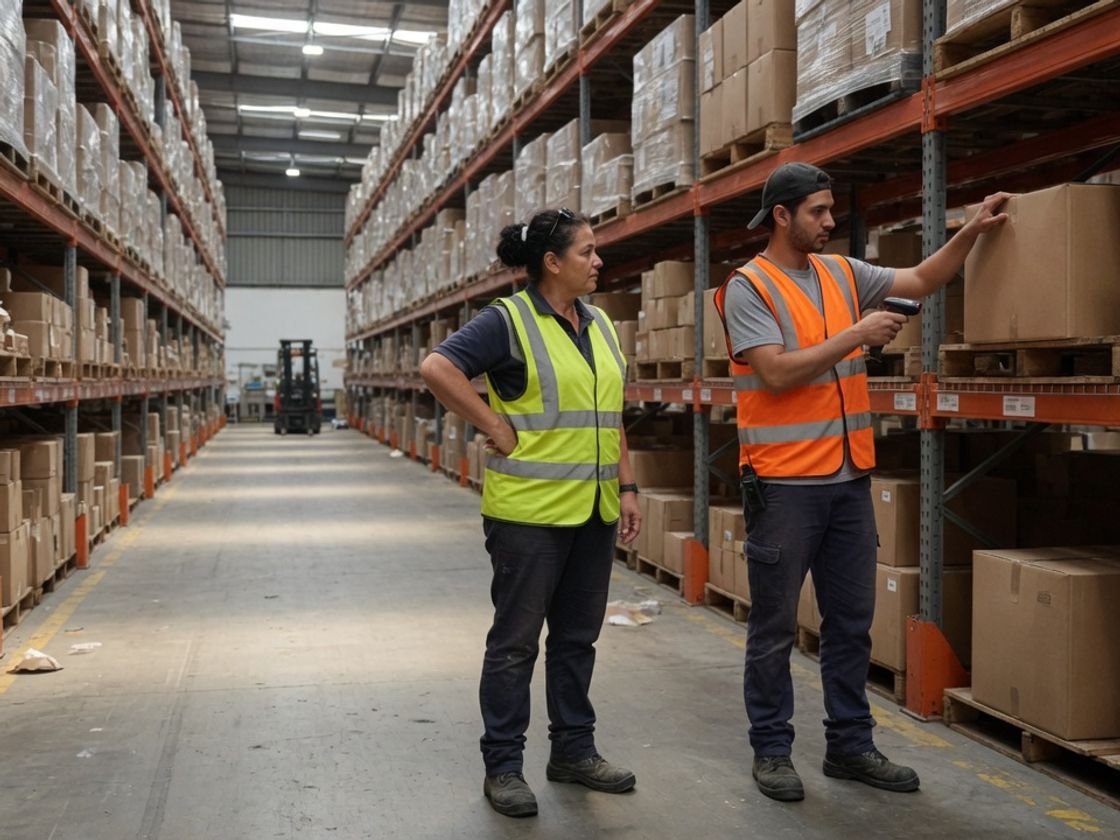
- Picking - going to the right location and confirming the item and quantity.
- Cycle counts - counting one location, entering the figure and recounting when it does not match.
- Exceptions - what they did with an empty location, a wrong label, a short quantity or a damaged carton.
Candidates often name the system rather than the task, so keep asking for the task. Job titles such as system operator or scanner operator also differ between sites. A candidate who has only picked is not a poor hire, just a narrower one, and one who describes exceptions in detail has handled the part of the job that goes wrong.
Which scanner skills can you train, and which do you hire for?
Train the scanner and hire for judgement. RF scanner experience is a plus, but the screens, prompts and label formats at your site will be new to almost everyone.
- Trainable - logging on, moving through menus, scanning a barcode, confirming a location, printing a label and following your site's prompts.
- Hire for - noticing that a scan went through but the item in hand is wrong, stopping rather than guessing when a location is empty, reporting their own mistake, reading numbers carefully and keeping accuracy up when the line is busy.
A speed target on its own can reward skipping checks, so set an accuracy measure beside it. Where your site uses voice picking instead of a screen, the same split applies: the commands can be taught, and confirming the right item and quantity is what you hire for. The guide to hiring pick packers through labour hire covers the role itself and how to brief an agency.
How do you test WMS skills in an interview?
To test WMS skills in an interview, run a supervised ten-minute practical in a training area or test mode, with a short briefing and a few planted problems. Use training stock or a test account, not live orders, so no real stock moves.
- Brief the candidate for a minute or two on the prompts, as you would a new starter.
- Give a pick list across three or four locations (for example, ten lines).
- Plant two problems: a location holding fewer units than the system expects, and a carton whose label does not match the screen.
- Add one receiving line where the delivered quantity differs from the paperwork.
- Score on a short sheet: lines correct first time, problems found, what they did next, and how they asked for help.
Weight the response to problems more heavily than the line count. A candidate who stops and asks about the empty location has shown the habit you need. Give every shortlisted candidate the same task.
Keep the practical short, supervised the whole time and limited to showing skills the job needs. The Fair Work Ombudsman says an unpaid work trial may be unlawful if it runs longer than needed, involves more than a demonstration or is not directly supervised, and time beyond what is reasonably required must be paid. This is general information, so check that page or get advice for your own situation.
How should the job ad word the system requirement?
Describe the tasks and the accuracy you need, and treat a named system as a bonus. The Victorian Equal Opportunity and Human Rights Commission says a good advertisement focuses on the essential skills and abilities for the job and avoids restrictive language such as "join a young, dynamic team". It also says pre-employment tests should relate directly to the genuine requirements of the job.
For example: "Receive, put away and pick stock using a handheld scanner. Scanner experience is helpful. We will train you on our system." Only write the last sentence if it is true. An ad that demands years on one named product can exclude people with the right habits who used a different one.
The same Jobs and Skills Australia profile notes that some people reach the skill level through informal learning and on-the-job training, and lists no licensing or registration requirements for the storeperson occupation. A ticketed task is separate, so give it its own line in the ad and check it on its own, as the article on forklift driver hire describes.
How long does it take to train a new starter on the scanner?
There is no reliable general figure, so measure it at your own site. List the five task types above, record the day each new starter completes them unaided at your target accuracy, and keep the record across your next few intakes. When you work out headcount from volume, show that learning period separately so a new hire is not counted as full capacity on day one.
Scanner training does not replace safety training. WorkSafe Victoria's guidance on hazardous manual handling for transport and warehousing includes training employees on safe handling methods and on using mechanical equipment safely.
If you need casual cover while a permanent hire learns your system, Chandler Personnel provides labour hire and permanent recruitment for warehousing and logistics employers, and the request staff form is the place to send a brief.
Where does a system test fall short?
A system test shows habits on one day, and nothing more. It does not check attendance, licences or the lifting a role involves, and a test mode may differ from your live layout. Treat the first fortnight as the real assessment and sign off each task as the starter shows it.
Related Resources
- Skills matrix for manufacturing and warehouse teams
- Seasonal worker onboarding guide
- Legal considerations when hiring blue collar workers
- Fair Work Ombudsman on unpaid work
- WorkSafe Victoria manual handling guide
Frequently Asked Questions
What does RF scanner experience mean in a warehouse job?
RF scanner experience usually means the candidate has used a handheld scanner linked to a warehouse system to receive, put away, pick or count stock. The phrase does not say which of those tasks, so ask.
Do I need someone who has used my exact WMS?
Usually not. Screens and prompts differ between sites, so almost every new starter learns yours. Hire for accuracy and error handling, then train the system.
How do I test pick accuracy in an interview?
Use a short supervised practical on training stock. For example, give ten pick lines with two planted problems, and score lines correct first time and how the candidate handled the problems. Set your pass mark before the first candidate.
Can I ask a candidate to do an unpaid trial shift?
The Fair Work Ombudsman says an unpaid trial may be unlawful if it is not needed to show job skills, runs longer than necessary or is not directly supervised. The page says a needed trial "could range from an hour to one shift" depending on the job, but a trial may be unlawful if it runs longer than the skill demonstration needs, and time beyond what is reasonably required must be paid. Check the Fair Work page linked above or get advice before you rely on it.
Do warehouse workers who use a scanner need a licence?
Not to use a scanner. Jobs and Skills Australia lists no licensing or registration requirements for the storeperson occupation, but ticketed tasks such as forklift operation need their own licence and are checked on their own.
Test scanner habits, then train the system
WMS skills for warehouse workers are mostly habits: checking the item, counting honestly and stopping when something is wrong. Ask for tasks instead of system names and run the same ten-minute practical for every shortlisted candidate. Then time your next three starters on the five task types and use that figure in your roster plan.