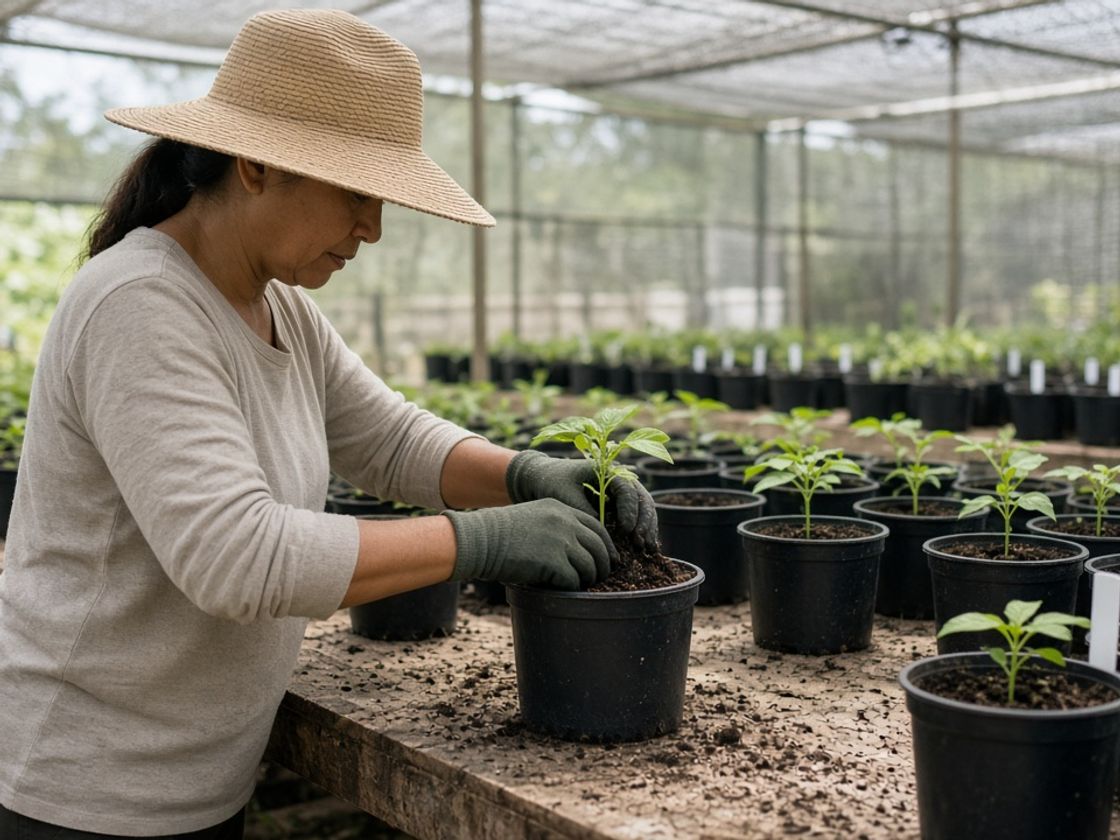
Typical duties
- Take cuttings and sow seed for propagation
- Pot up and pot on seedlings and plants
- Water plants and check irrigation
- Apply fertiliser and monitor plant health
- Weed, prune and tidy stock
- Label, sort and grade plants for sale
- Load plants and fill orders
- Follow chemical, manual handling and sun safety rules
Skills, licences & tickets
- Interest in plants and willingness to learn plant care
- Physical fitness for outdoor and repetitive work
- Manual handling awareness
- Chemical handling training if applying sprays
- Forklift licence is a bonus
- Reliability through seasonal peaks
A nursery hand propagates, pots, waters and tends plants and gets them ready for sale. This nursery hand job description explains the daily tasks, the skills employers look for and how pay works under the Nursery Award.
Nursery hands work in production nurseries that grow plants for wholesale, and in retail garden centres. Work is seasonal, with spring and autumn usually the busiest periods.
What does a nursery hand do?
In a production nursery, a nursery hand takes cuttings, sows seed and pots young plants into larger containers as they grow. They water, feed and monitor plants for pests and disease, and they weed and tidy the benches.
When plants are ready, nursery hands grade, label and move them to the despatch area. They load trolleys and trucks and help fill orders. In a retail nursery, the role also includes helping customers and keeping displays fresh.
Seasonal rhythm
- Spring is busy with potting, planting and sales.
- Summer needs careful watering and heat management.
- Autumn is a second planting and sales peak.
- Winter focuses on propagation, pruning and maintenance.
Skills and tickets employers look for
Employers look for reliable people who work steadily outdoors and take care with plants. A Certificate II in Horticulture helps but is rarely required. If you apply sprays, you need training such as ChemCert accredited chemical training. A forklift licence is useful in larger nurseries where pallets and trolleys are moved.
Pay, hours and employment types
Nursery work is offered casual, seasonal and permanent. The Nursery Award covers employers in the nursery industry, and it sets minimum pay and conditions. Most awards add a 25 per cent loading for casual work, as the Fair Work guide to casual employment explains.
Always confirm your classification, hours and pay rate in writing, and keep your own record of hours worked. The casual pay and payslip check worksheet helps you check each payslip.
How to become a nursery hand
Apply for entry level nursery and horticulture roles and mention your availability and interest in plants. After a season or two you can move into propagation, irrigation, stock control or team leader roles. The general labourer resume template is a good starting point for presenting outdoor work.
Related Resources
- General labourer resume template
- Casual pay and payslip check worksheet
- Weekly hours log and timesheet tracker
- Nursery seasonal hiring guide
- Nursery Award summary from Fair Work Ombudsman
- ChemCert chemical training
Frequently Asked Questions
Do I need experience to work in a nursery?
Not for most entry level roles. Employers train new starters. Reliability, a steady work pace and interest in plants are the main requirements.
Which award covers nursery workers?
The Nursery Award covers employers in the nursery industry. Check that it applies to your employer and classification.
Is nursery work seasonal?
Much of it is. Spring and autumn are the busiest periods, although some nurseries offer year-round roles.
What should I wear for nursery work?
Wear sun protection, sturdy closed shoes and clothing suited to the weather. Your employer should explain any extra protective equipment, such as gloves.
Plant Knowledge Grows Into a Career
Every season you learn more about plants, and that knowledge is what employers promote. When you are ready, see current roles on the job board or submit your CV.