Free downloads
Pick a design.
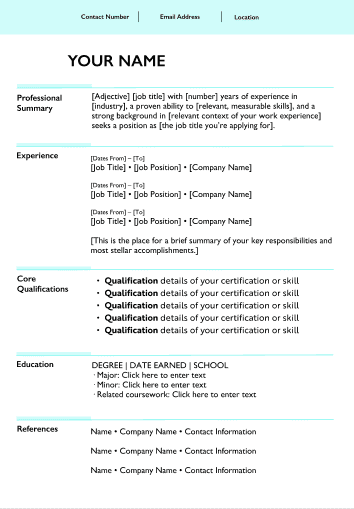
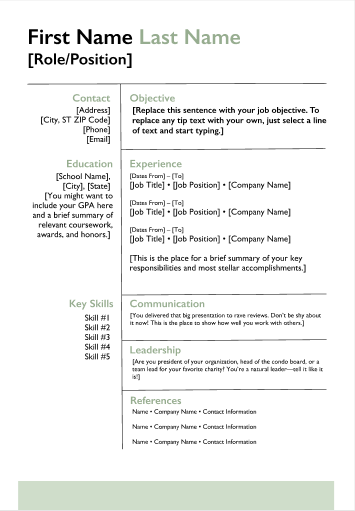
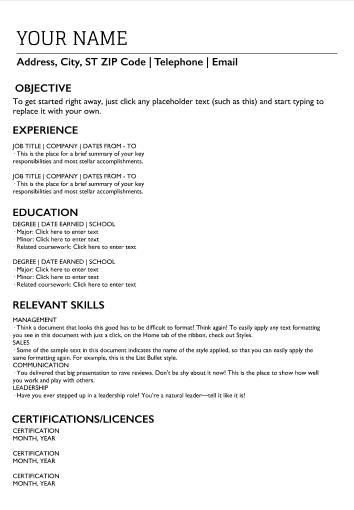
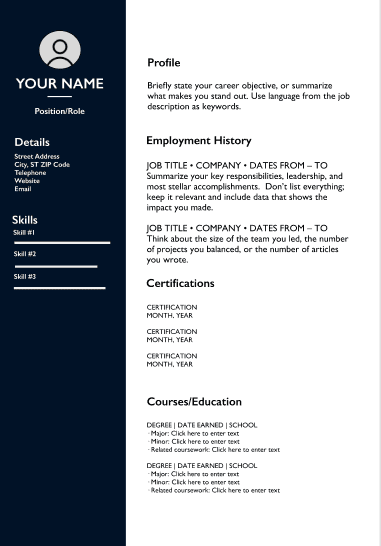
Download the Word file to fill in, or the PDF to see how the finished CV should look.
Design 01
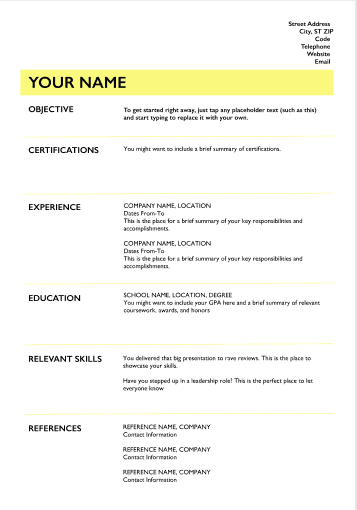
Design 02
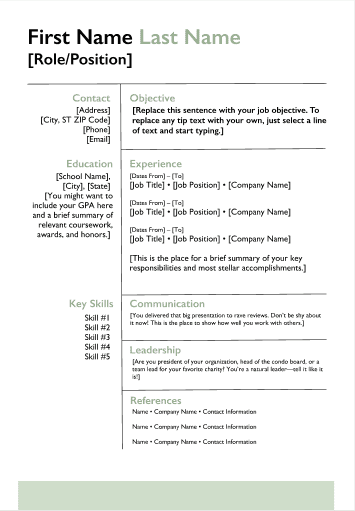
Design 03
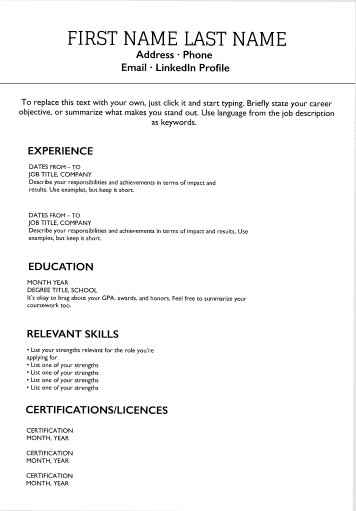
Design 04
Copy and paste
Start from our wording.
Choose the option closest to your own story, copy it into your template, then make it yours. A CV in your own words always reads better than a copy.
Carpenter duties and responsibilities
- Ability to read and interpret blueprints
- Assisting supervisors with structural design, planning, layout, and installation
- Conduct repair work and installation of doors, windows, drywall, cabinets, stairs, and other fixtures as required
- Ability to assess the quality of woodwork and materials
- Ability to operate tools, machines, and other equipment
- Compliance with local building codes, and health and safety regulations
- Provide excellent customer service
- Ability to stand for prolonged periods, climb, pull, and lift heavy objects
Key Sections of a Carpenter resume
Header - This is the first section your recruiter will check. Make sure your name is visible by choosing clear and readable fonts. It is very important that you include your contact information. Your contact number and email address should be provided correctly because these are the best options to reach you. It is also ideal for you to put in your address, so that we can check if your location is suitable for a specific role. Believe it or not, we get CVs with headers that look like they don’t want to be reached at all! Either the font size is too small or the choice of font color does not match with the template, and sometimes, we also get applications with no contact information! Again, make sure your header is visible.
Professional Summary - Briefly state your career objective, or summarize what makes you stand out. You can indicate your years of experience in the specific industry, and include some of your relevant skills. Use language from the job description as keywords.
Work Experience - Include the organizations/companies where you worked, the job title, the dates you were employed and a summary of your key responsibilities and achievements. Include data that shows the impact you made.
Relevant Skills - List a combination of hard and soft skills you’ve developed throughout your career. These are your professional skills which allow you to perform specific work duties. Soft skills indicate how you’ll perform your tasks, while hard skills show what you can do. Hard skills are abilities you learn on the job, through formal education, or additional training. They are measurable and related to a specific job.
Education - In this section, include your most recent degree (or education in progress), the name and location of your school, and the dates attended. It would be helpful if you can also include your field of study and degree major. Additional information you can add would be your relevant coursework.
Certifications - Include the name of the license or certificate, the date you earned it and the institution or training center that awarded it. Make sure you don’t miss this part because this is a main indicator of your eligibility for the role you’re applying for.
Things to include, and things to avoid.
Do
- Use impactful action words
- Highlight most relevant skills and experiences
- Use 3-6 bullet points per job title
Don’t
- Don’t use more than 2 different fonts
- Don’t include unrelated hobbies
- Don’t use negative phrases
- Don’t send in a Word or JPEG file, submit in PDF format
CV questions
Questions candidates ask us.
What are the common qualifications to include in my CV as a Carpenter?
As a certified Carpenter, you'll need to add your Certificate III in Carpentry CPC30211. Employers may be looking for carpenters with a White Card. Make sure to also include other skills and experiences such as your ability to use hand and power tools, manual dexterity, and some soft skills.
Do I need to state my vaccination status?
If you are comfortable to put it in your resume, that would be ideal. It is a required information and you will be asked to submit your vaccination records once successful.
How long should my resume be?
Preferably, your resume with clear and concise details should fit in just 1 page. It can be at least 2 pages if you have extensive experience related to your job objective.
How much work history do I need?
Most experts recommend including 10-15 years of work history on your resume or your last five to six employment positions if within this time frame.
Should I include jobs I’ve had that don’t relate to the job I’m seeking?
Your resume should include sufficient experience to demonstrate your ability to do the job that you are applying for and to show yourself as a person with experience in the specific industry. Directly related experience is considered most valuable, but unrelated jobs can also help you to show that you have acquired necessary skills. If you are unsure which jobs to include, connect with our friendly and knowledgeable recruitment consultant.
Should I include my licence expiry?
Yes, include the expiry of your licences and certifications. This is a way for us to check if you are currently eligible for a specific role or if your licence needs a renewal.
Should I include my location in my CV?
Yes, it would be helpful if you can include your location in your CV. This is an indicator if your location is suitable to the work site.
Should I include my picture in my CV?
It will be up to you if you want to include your photo in the CV, but it is not required for most roles. If you would like to add that in, an appropriate and recent photo of yourself would be preferable.
What Format should my CV be in?
PDF is normally the preferred format for most employers
What if I have no experience?
If you have recently graduated or looking for your first job, you can elaborate on skills you have developed throughout your education and other experiences. You can show how you are driven and focused on building a career in a specific industry.
What is the difference between an Objective and Professional Summary?
A resume objective just states your job goal. An objective statement is a concise, position-centered statement describing the value you can add and the needs you can fulfill. A professional summary provides more detail than an objective statement. Professional summaries identify the type of position you are seeking and provide lengthier descriptions of skills and qualifications. Professional summaries are most helpful for experienced professionals who aim to demonstrate the applicability of skills from a range or depth of past experiences for a specific type of position.
Why do I need a resume?
The purpose of a resume is to stimulate the interest of a potential employer enough to want to interview you. This will give your recruiter an overview of your skills and experience to see if you are eligible for the role you are applying for.
Free CV advice
Want a recruiter to look over your CV?
Send it with a note about the role you’re going for. A consultant will email you feedback, free.