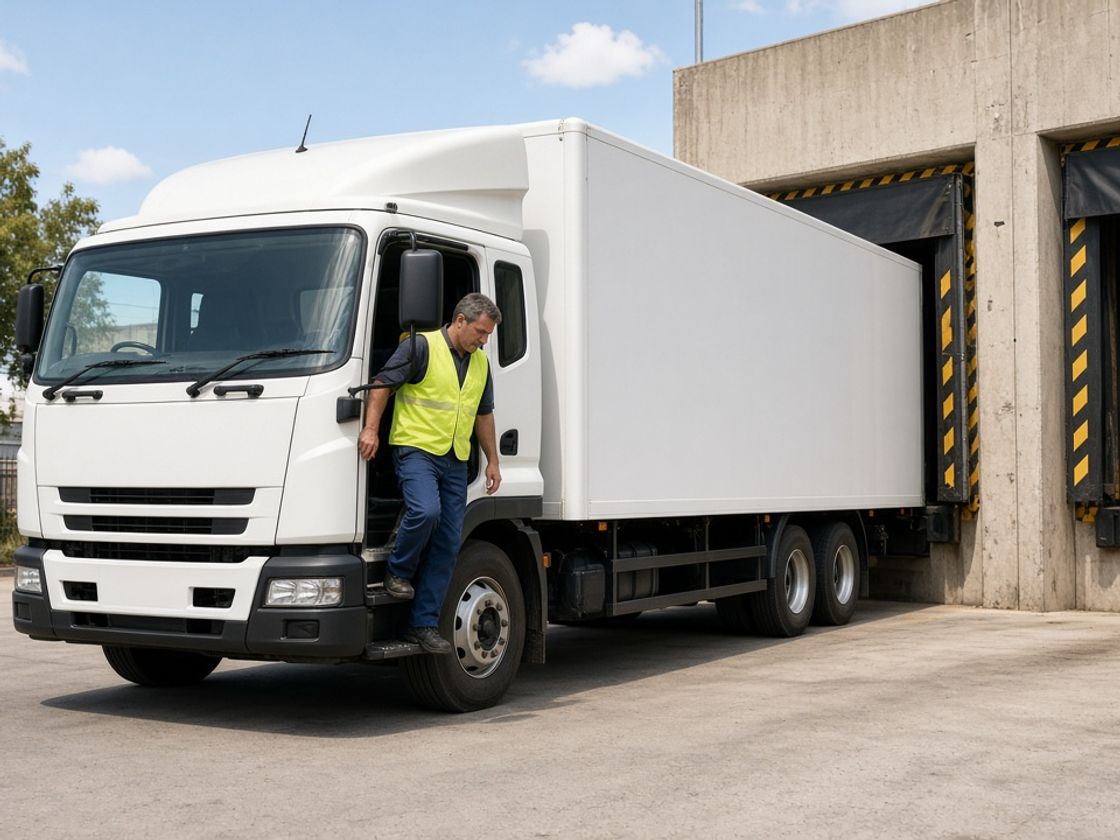
Truck driver labour hire in Brisbane works best when the licence class is matched to the vehicle before anyone books. A driver who holds an LR licence cannot take a heavy rigid truck, and a driver with an MR licence cannot take a B-double. The class is printed on the licence, and the host is the one who checks it.
This guide is for Brisbane warehouse, distribution and yard managers who book drivers for local runs, yard moves or relief cover. It sets out the Queensland classes from LR to MC, how to match them to your fleet, and what to check at the gate. For host checks that apply to any booking, see our guide to labour hire in Brisbane.
What truck driver labour hire covers in Brisbane
Labour hire for drivers means a provider supplies a driver to work for your business. The usual truck driver jobs in Brisbane are local deliveries, yard shuttles, store runs, and cover for leave or peak weeks. You supply the vehicle and the site rules, and the driver supplies the licence class. If the class does not fit the truck, the booking is wrong, whatever the driver's experience.
Chandler Personnel provides labour hire and permanent recruitment for Queensland hosts. Its Queensland warehousing labour hire page covers warehouse and distribution roles, and you can start from the staff request form for Queensland.
Queensland licence classes from LR to MC
The Queensland Government page on licence types, classes and conditions sets out which vehicles each class allows. A licence shows the highest class the driver holds, and the driver may drive vehicles in the lower classes. These are the heavy vehicle classes in order:
- LR (light rigid): a bus or truck, including a prime mover or mobile crane, of not more than 8 tonnes gross vehicle mass (GVM), with a trailer of up to 9 tonnes GVM.
- MR (medium rigid): a bus or truck, including a prime mover, over 8 tonnes GVM with a maximum of 2 axles, with a trailer of up to 9 tonnes GVM.
- HR (heavy rigid): a bus or truck, including a prime mover, over 8 tonnes GVM with more than 2 axles, with a trailer of up to 9 tonnes GVM. It also covers an articulated bus.
- HC (heavy combination): a truck, including a prime mover, over 8 tonnes GVM with a trailer of more than 9 tonnes GVM.
- MC (multi-combination): a B-double or a road train, plus everything in HC.
Licence classes can change, so check the Queensland page when you write a booking rather than relying on this summary.
Matching the class to the vehicle and the run
Start from the vehicle, not the driver. Find the GVM and axle count for each truck in your fleet, then note any trailer and its GVM. A two-axle truck over 8 tonnes GVM sits in MR, the same truck with a third axle sits in HR, and a truck towing a trailer over 9 tonnes GVM moves up to HC.
Higher classes include lower ones. A driver with an HR licence can also take MR and LR vehicles, while a driver with an MR licence can take an LR truck but not an HR truck. Prime movers appear in several classes, so do not stop at the words "prime mover". Mass, axles and what is hitched behind decide the class.
Match the run as well. Local store runs and yard shuttles may involve one or two vehicles, but peak weeks often mix several. If drivers rotate between trucks, book to the highest class in the rotation, or assign each driver to named vehicles.
Gate checks before a driver takes the keys
A short routine at the gate catches most mismatches. Run it the same way for every driver, and keep a dated note of who was checked for which vehicle.
- Sight the licence: the photo matches the person and the class covers the truck.
- Read the condition codes: Queensland says a driver must comply with any condition code at all times. For example, an M code means a current medical certificate must be carried, and an S code means corrective lenses must be worn.
- Ask about the automatic condition: an automatic (A) condition does not necessarily apply to every class on a licence. If your trucks are manual, ask the driver which classes the condition covers.
- Run a familiarisation: walk the driver round the vehicle, show the controls, body type and any coupling or tail-lift they have not used.
- Cover the site rules: loading bays, pedestrian routes, reversing and where to report a problem.
What stays with the host
The vehicle, the yard and the loading all stay yours. WorkSafe Queensland says a business's primary duty of care under the Work Health and Safety Act 2011 includes giving workers the information, training, instruction or supervision needed for safety, and covers everyone who visits your place of work. Its page on business and employer responsibilities sets this out, so a relief driver gets your induction like anyone else.
Heavy vehicle rules apply in addition to the licence class. For a site that loads and dispatches trucks, the Chain of Responsibility loading checklist is the place to start.
If a driver will also run a forklift at the dock, that is a separate licence. The WorkSafe Queensland forklift page lists LF for forklift trucks and LO for order-picking forklift trucks.
The provider check also stays with you. All labour hire providers operating in Queensland need a licence, including interstate providers, and users of labour hire must only engage licensed ones. The overview of the Queensland labour hire licensing scheme explains who must hold a licence, and you can follow our steps for checking a Queensland labour hire licence on the public register.
Casual relief drivers or a permanent hire
Casual truck driver hire suits leave cover, peak weeks and short projects. It also lets you see how a driver handles your yard and vehicles before you decide on more. Permanent recruitment suits runs that repeat every week with the same class and the same trucks.
If a relief driver has proved reliable across several bookings, that is a reason to talk about a permanent role. Chandler Recruitment handles permanent hires. The truck driver job description lists typical duties and licences to draw on when you write the position, and the medium rigid truck driver role page shows how that job is advertised to drivers.
Related Resources
- Queensland warehousing labour hire
- Medium rigid truck driver role
- Truck driver job description
- Chain of Responsibility loading checklist
- Checking a Queensland labour hire licence
- Queensland licence types, classes and conditions
- How the Queensland labour hire licensing scheme works
Common Questions About Truck Driver Labour Hire in Brisbane
1. Which licence does a truck driver need in Queensland?
It depends on the vehicle. LR covers trucks up to 8 tonnes GVM, MR covers two-axle trucks over 8 tonnes, HR covers trucks with more than two axles, HC adds trailers over 9 tonnes GVM, and MC covers B-doubles and road trains. Check the vehicle first, then the class.
2. Can a driver with an MR licence drive a prime mover?
Sometimes. A prime mover is listed in the MR class when it is over 8 tonnes GVM with a maximum of 2 axles. Once it has more axles it needs HR, and once it tows a trailer over 9 tonnes GVM it needs HC, so confirm the exact combination against the Queensland page.
3. Does the host or the agency check a driver's licence?
Ask the provider to confirm the class when you book, and sight the licence yourself at the gate as well. You know the vehicle and the run, so you are best placed to see whether the class on the card fits them.
4. Is a forklift licence part of a truck driver licence?
No. A forklift is a separate high risk work licence class from WorkSafe Queensland, with LF for forklift trucks and LO for order-picking forklift trucks. If the driver will unload with a forklift, say so in the booking and ask for the forklift licence as well.
5. How do I book relief drivers for peak weeks?
Book early and write the request around the vehicle. State the GVM, axle count and any trailer, the site, the dates and start times, and whether a forklift is needed. If drivers will rotate between trucks, name the highest class in the rotation.
Check the Class Before the Keys
Truck driver labour hire in Brisbane is simple once the class follows the vehicle. Write the booking around the GVM, axles and trailer, sight the licence and its conditions at the gate, and keep the provider check on file. Then the keys go to a driver who is licensed for the truck in front of them.