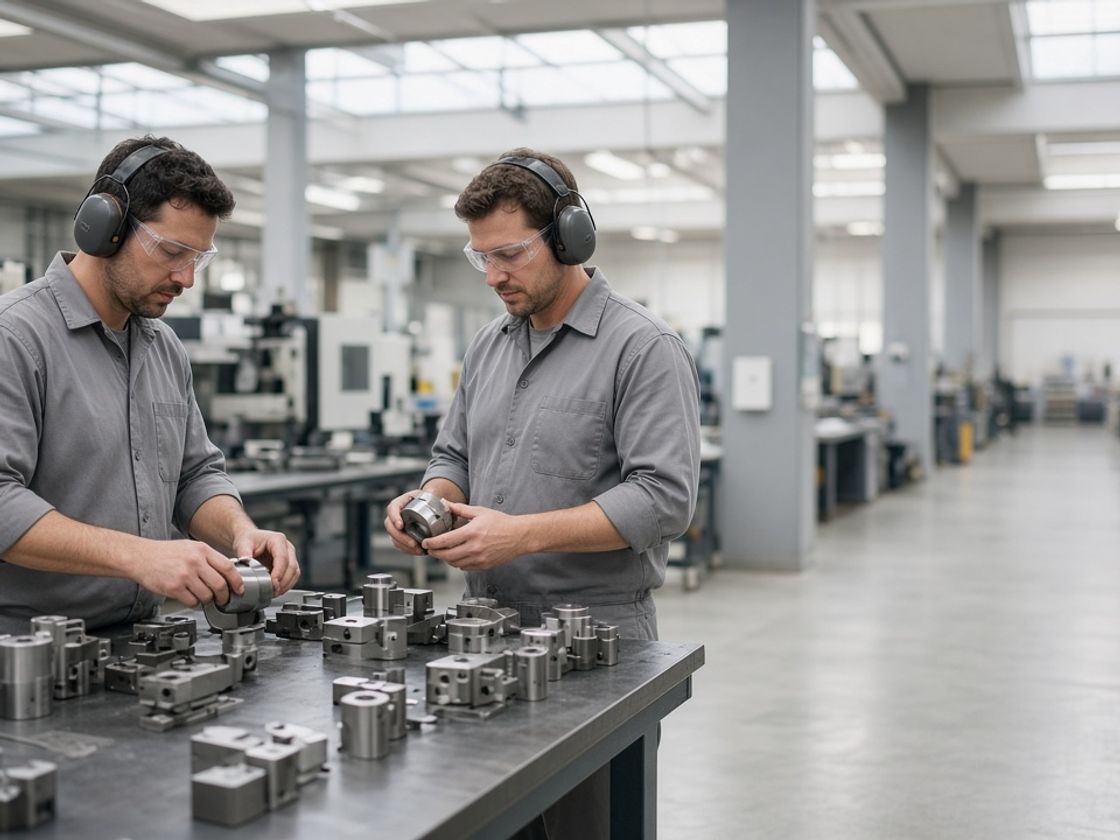
Factory worker labour hire on the Gold Coast works best when the host briefs the line, the shift and the site rules before anyone arrives. This guide is for manufacturers and production managers on the Gold Coast and in the Yatala corridor who need line, assembly or packing workers for a rush order, a seasonal lift or absence cover. It covers which roles suit on-hire, how to plan for hot sheds, who owns task training, and how to move a reliable casual onto the permanent roster.
Two checks sit under all of it: that the provider holds a Queensland labour hire licence, and that your own heat and induction controls are ready for a new starter.
What factory worker labour hire covers on the Gold Coast
Factory worker labour hire means a provider supplies workers to your production floor for line work, assembly, packing and basic material handling, for a set period or a run of shifts. Manufacturers usually reach for it when volume moves faster than the permanent roster: a large order, a seasonal lift, or cover for leave and absence. Some hosts call it production worker labour hire, and job-seekers know the same roles as factory jobs on the Gold Coast.
A factory worker is not the same as a machine operator. A factory worker works at a station, assembling, packing or checking product. A machine operator runs and sets up machinery, and that skilled role is covered in a separate guide on machine operator labour hire in Queensland.
Hosts who have read the Melbourne material can compare it with how Melbourne manufacturing hosts brief a line. This guide adds what changes for manufacturing labour hire in Queensland: the licensing scheme and WorkSafe Queensland's heat guidance. Job seekers can read a separate guide to warehouse work on the Gold Coast.
Chandler Personnel provides labour hire and permanent recruitment to Queensland hosts, and hosts can request factory workers in Queensland through the request-staff form. The manufacturing and production labour hire page gives the general service overview, though its service area details are written for Victoria.
Line roles that suit on-hire and roles that need training
The test is simple: can the task be shown, practised and supervised within a shift? If it can, on-hire usually fits. If it depends on judgement built over weeks, plan for training time or a different arrangement.
- Suit on-hire quickly: packing and palletising at a station, labelling, kitting orders, visual checks against a sample, and simple assembly with a clear work instruction.
- Need host training first: running or setting machinery, changeovers, anything that involves guarding or lock-out, and any task with site-specific hygiene or chemical rules.
- A different request altogether: plant that needs a Queensland licence, such as a forklift. Brief it as a licensed role, not as general line work.
"Line worker" can mean very different things between two sheds. Write the role by task, not by title: the station, the pace, the lifting involved, the PPE, the temperature of the area and the shift pattern. A provider can only match a person to the work you actually describe.
Hot sheds, shift patterns and Queensland heat controls
On the Gold Coast, heat is a planning item for every production floor, not only for outdoor work. WorkSafe Queensland's guidance on managing heat exposure states that there is no workplace exposure standard or limit for heat stress. A safe or unsafe line drawn on air temperature alone is not appropriate, because the task, the environment and the individual all matter.
The guidance asks hosts to assess three things: workplace conditions, job requirements and individual worker attributes. Walk through the shed, ask workers about heat problems, and use the online basic heat stress calculator for a first assessment. Most situations need several controls together:
- The environment: insulate hot surfaces, add ventilation and fans, and use evaporative coolers or air conditioning where practical.
- The work: use mechanical aids to reduce the load, and place rest areas as near to the work as possible.
- Administration: acclimatised workers are at less risk than unacclimatised ones. Schedule strenuous work for cooler parts of the day, build in work-rest intervals in a cool place, and give workers cool water close to the task.
- People: a buddy system lets trained workers watch each other for signs of heat effects.
A worker new to your shed has not yet become acclimatised to it, so plan first shifts with that in mind. A WorkSafe Queensland heat article from February 2026 adds practical points: a heat management plan, cool portable water close to where work is done, a cool rest area that is shaded or air conditioned, suitable first aid, and letting workers self-pace and take regular breaks.
For shift patterns, this means planning the heaviest tasks for the cooler parts of the day rather than midday, wherever the process allows. Tell the provider about hot areas in your request, so the person who turns up has been told what to expect. WorkSafe Queensland also states that training is required for workers likely to be working in hot environments.
Day-one induction and who owns task training
A reliable day one has five parts: a site induction, a heat and first-aid briefing, the right PPE, a named supervisor and a clear first task. A labour hire induction checklist gives hosts a ready list to work from.
In practice the host does most of the task training. You own the machines, the work instructions and the quality standard, so you are best placed to teach them. The provider supplies the person and can tell you what the worker has done before. Keep a list of every worker on your site, including hired ones, as Queensland's licensing scheme recommends for users of labour hire.
Check the provider before day one. Labour hire on the Gold Coast follows the same licence rules as the rest of Queensland. The Labour Hire Licensing Act 2017 commenced on 16 April 2018, and all labour hire providers operating in Queensland need a licence, including those based interstate that supply workers here.
The Queensland labour hire licensing scheme states that users must only engage licensed providers and that penalties apply for using an unlicensed one. A provider that has only applied does not qualify. The Queensland labour hire licence check guide walks through the steps, and the public register can be searched by business name, ABN, address, industry or location.
Moving a reliable casual to permanent
Some casuals prove themselves quickly. Look for steady attendance, consistent quality at the station, safe habits in hot conditions and good feedback from the supervisor. Those are the signals that a permanent role is worth offering.
Plan the move rather than improvise it. Decide the role, the shift pattern and the start date, and check the terms of your agreement with the provider before you make an offer. The temp-to-perm conversion planner sets out the steps in order.
Related Resources
- Manufacturing and production labour hire
- How Melbourne manufacturing hosts brief a line
- Labour hire induction checklist
- Temp-to-perm conversion planner
- Queensland labour hire licence check
- Managing heat exposure at work
- Queensland labour hire licensing scheme
Common Questions About Factory Worker Labour Hire on the Gold Coast
1. What is the difference between a factory worker and a machine operator?
A factory worker works at a station on the line, assembling, packing or checking product. A machine operator runs and sets up machinery, which needs training on your equipment and often more experience. Brief the two roles separately so the provider can match the right person to each.
2. Can labour hire workers start on a production line the same day?
For simple station work they can, once the host has completed the induction, the heat and first-aid briefing, and PPE, and has named a supervisor. Skilled machine tasks should not be rushed into a first day. The provider licence check should be done before the booking, not on the morning.
3. Who trains agency workers on my machines?
In practice, the host does most of it. You own the machines, the work instructions and the quality standard, so task training sits mainly with you. The provider supplies the worker and can share their previous experience, but your own process is best taught on your floor, by your supervisor, during the first shift.
4. How do I check the provider is licensed to supply workers on the Gold Coast?
Search the public register of licensed labour hire providers by business name, ABN, address, industry or location, and print a verification for your records. Any provider operating in Queensland needs a licence, including interstate ones, and a provider that has only applied does not qualify.
5. When should I convert a casual factory worker to permanent?
Convert when the same person has shown reliable attendance, steady quality and safe habits, and you have a permanent role that will last. Check your agreement with the provider first, then use a planned conversion rather than an informal offer.
Brief the Line, Not Just the Headcount
Factory worker labour hire on the Gold Coast goes well when the host describes the station, the heat, the shift and the training in the request. Check the provider's licence on the public register, plan a first shift that respects acclimatisation, and treat the best casuals as future permanent staff.