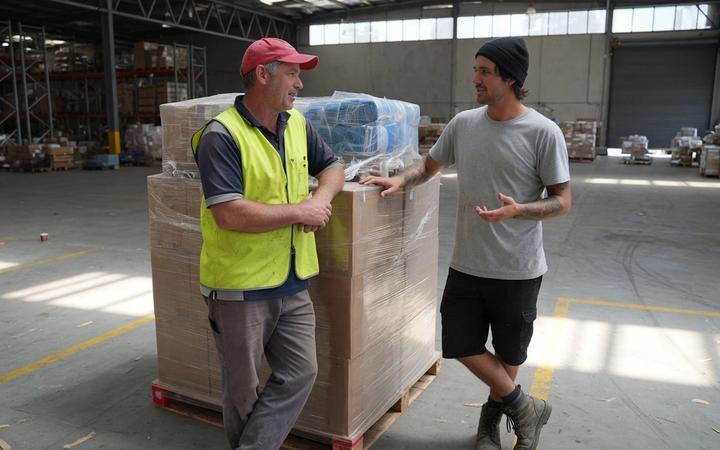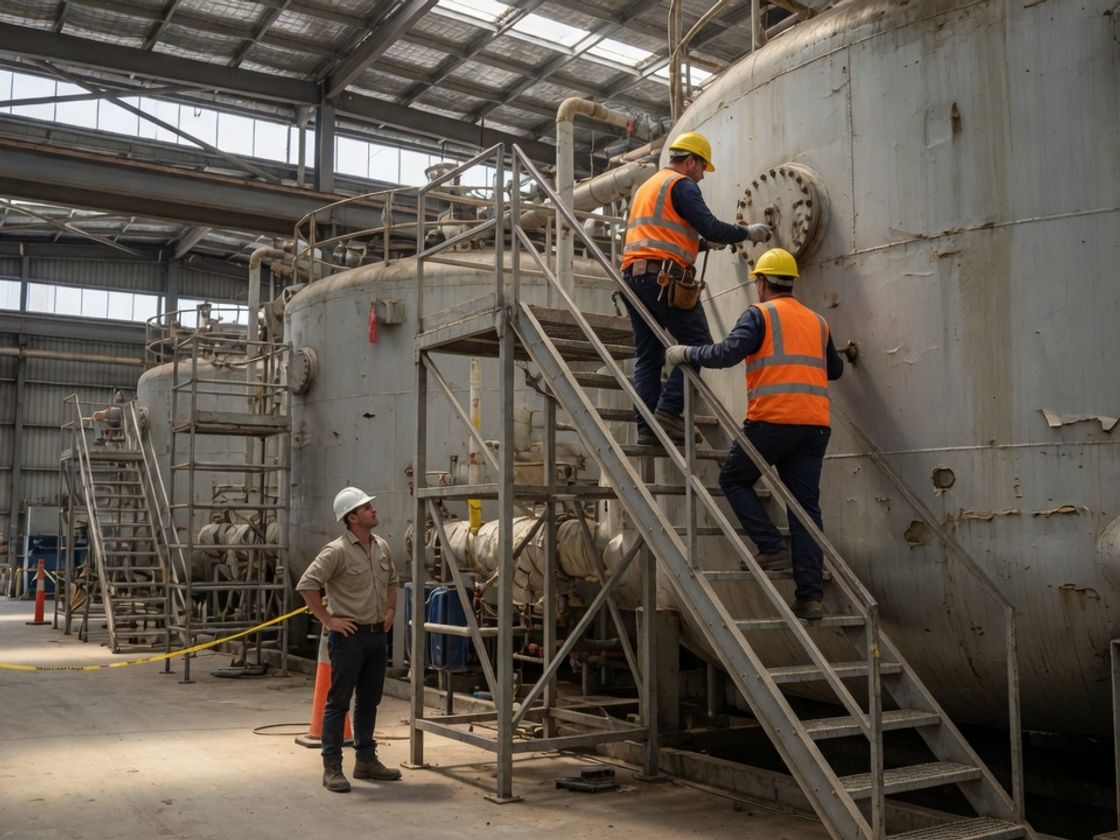
A planned turnaround stops the plant on purpose and fills it with outside crews for a short, intense window. Maintenance shutdown labour hire often means several providers at once: a rigging crew from one, platform operators from another, general labour from a third. Each crew brings its own licence, ticket and induction questions.
This guide is for a maintenance or operations manager planning a non-seasonal maintenance shutdown, not a summer holiday break. It sets out the checks to run on each crew, in order. For the summer break, see our guide to summer shutdown recruitment.
Why a turnaround multiplies the compliance load
WorkSafe says a host employer is taken to be the employer of the labour hire workers placed with it, and owes them the same health and safety duties as any other employee. Plan as if the full set of duties applies to a crew that is only on site for days.
A turnaround multiplies that work because the numbers change. One provider becomes four, one induction becomes several, and the scope shifts as covers come off. The Labour Hire Authority also says hosts can be liable for a provider's contraventions under workplace and migration law, and that they share responsibility for workplace safety. The checks below tell you who is on your plant and what they are cleared to do.
If your downtime comes from a lean in-house maintenance team rather than a planned stop, our guide to reducing production downtime is the better fit. If the turnaround runs through the night, our guide to hiring night shift maintenance trades covers that side.
Licence check for every crew supplier
Victorian labour hire law says providers must be licensed and hosts must only use licensed providers. The Labour Hire Authority says substantial penalties may apply to a host that engages an unlicensed provider, and its host page has the current amounts. Read the checklist on the Labour Hire Authority host page before you book any crew. The Authority has also said it is anticipated that additional construction activities in specific contexts will be covered from late October, subject to a consultation process, so check its law-changes page for the current position.
For a turnaround labour hire licence check, work through these steps for each supplier:
- List every supplier. Include any provider sending even a handful of people, and ask each to tell you about any subcontracting.
- Check the Register. Look each provider up on the Labour Hire Licence Register. Do not rely on paper documentation, which could be illegitimate or out of date.
- Match the business. Confirm the company offering the crew is the one on the Register and note who runs it. If the person approaching you is not named there, confirm their connection and contact the nominated officer listed on the Register.
- Follow each provider. The Authority's Follow My Providers tool sends email and SMS notices when a licence is suspended or cancelled, among other changes. Subscribe for every crew supplier.
- Keep a record. The Authority tells hosts to keep a record of these checks, so date each one.
A check when you book and another in the week the crew mobilises is our suggestion, not a rule.
Machine and ticket matching for the work scope
WorkSafe lists, among host duties, making sure the labour hire worker has the qualifications, certificates, permits and licences relevant to the job. On a turnaround the easiest way to manage that is from the work scope. List the lifting, rigging and access tasks, name the machine for each, and match it to a class on the WorkSafe high risk work licences page, which lists 30 classes.
Classes you may need to match include dogging, rigging (basic, intermediate and advanced), the boom-type platform class (WP) and a crane class. The slewing mobile crane classes are divided by lifting capacity, so check the class against the size of the crane. WorkSafe also says you don't need a high risk work licence to operate earthmoving equipment or a scissor lift, so don't ask for a platform licence where a scissor lift is the machine.
Ask each provider to name the licence class each worker holds against each task before the crew mobilises, and hold any job that has no match. The machine-by-machine map belongs in a separate guide to high risk work licence classes.
Inductions for short placements
WorkSafe's guidance on labour hire induction and training says the provider should induct its workers and that the host should also provide a site-specific induction when an employee starts a new role. It adds that the host must provide training, which varies with the job. Chandler Personnel runs site inductions on behalf of clients; whichever provider you use, ask what its induction covers and plan your own as well.
The same WorkSafe page suggests providers check whether a host's induction addresses:
- Site risks. The general health and safety risks of the site.
- Reporting. Hazard and incident reporting.
- Rules and supervision. Supervision, health and safety policies and safe operating procedures.
- Facilities. First aid and other facilities, security, and issue resolution and consultation.
The page also suggests providers check that attendance is formally recorded and signed by the host's representative and the worker. WorkSafe lists maintaining a training register for the labour hire worker among host duties, so add each crew member to it as they finish the induction.
Consulting each provider when scope changes
A turnaround's scope moves. A cover comes off, a job runs long, a crew is asked to help another. WorkSafe lists, among host duties, not changing a labour hire worker's tasks or location of work without consulting the provider and the worker. It says consultation should begin before the worker is placed, and that further consultation is likely to be required when circumstances change, such as a change in work location or role.
Here is a sequence we suggest for any mid-job change:
- Stop. Hold the change until the next three steps are done.
- Check. Confirm the licence class and training for the new task. A crew booked for pipe support and now asked to work from a boom-type platform needs the platform class (WP) checked first.
- Consult. Talk to the provider and the worker.
- Record. Write down what was agreed and who agreed it.
Settle the rest when you book each crew. WorkSafe says hosts and providers should consult on who provides personal protective equipment, the points of contact between the organisations, and each party's role if an incident happens. It also says the host is likely to be the one to notify WorkSafe of a notifiable incident, and recommends confirming that with the provider.
If you are short of tradespeople for the stop, Chandler Personnel is an independent, Melbourne-based blue collar specialist, and its trades and services recruitment page is a starting point. Plants that also need production labour can look at manufacturing labour hire through Chandler Services, and you can request staff once your dates are set.
Related Resources
- Labour Hire Authority host page
- WorkSafe high risk work licences
- Labour hire induction and training
- Trades and services recruitment
- Summer shutdown recruitment
- Reducing production downtime
- Night shift maintenance trades
Common Questions About Turnaround Crew Compliance
1. Do I need to check each labour hire supplier on a shutdown?
Yes. The Labour Hire Authority says hosts must only use licensed providers, so each supplier needs its own look-up on the Labour Hire Licence Register, even one sending a few people. Keep a dated record of each check and subscribe to Follow My Providers for notices of licence changes.
2. Which high risk work licences come up on a turnaround?
It depends on the work scope. Dogging, rigging, boom-type platform (WP) and crane classes are examples, and WorkSafe lists 30 classes in total. Match each machine and task to a class on the WorkSafe page, and ask each provider to confirm the class its workers hold before they arrive.
3. Who inducts a crew that is only on site for a few days?
Both of you have a part. WorkSafe says the provider should provide an induction and the host should also provide a site-specific induction when an employee starts a new role. The host must provide training too. Record attendance for each person.
4. Can I move a shutdown worker to a different area mid-job?
Consult first. WorkSafe lists not changing a labour hire worker's tasks or location of work without consulting the provider and the worker among host duties. Check the licence class and training for the new task before the move, and record what was agreed with the provider.
5. Do my safety duties apply to a crew that is only on site for a few days?
WorkSafe says a host employer is taken to be the employer of labour hire workers and owes them the same health and safety duties as any other employee. No contract can exclude the host or the provider from their obligation to provide a safe place of work, so plan as if every duty applies. Ask your adviser if you are unsure.
Check Every Crew Before the Plant Stops
A turnaround puts many suppliers, tickets and inductions into a few days, and the host owns a share of every one. Look each provider up on the Register, match each task to a licence class, induct every crew member and consult before anything changes. Start this week with a list of every supplier and the work scope.