Staffing Agency Adelaide: How to Hire Casual and Permanent Workers in South Australia Without Losing a Week to Compliance
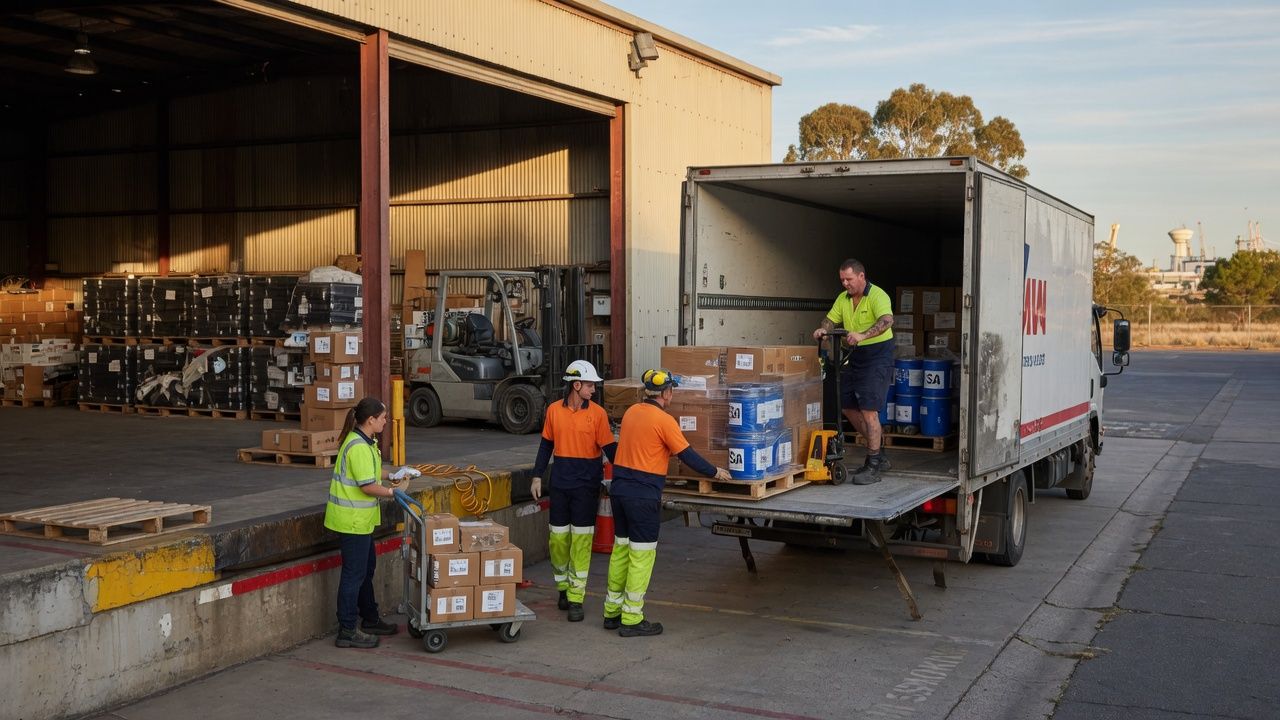
Hiring blue-collar labour in South Australia changed in 2026, and a lot of employers have not caught up. Choosing a staffing agency Adelaide operators can actually use now means checking a licence number before you sign anything, because the state's labour hire licensing scheme was extended to cover every industry, not just the original five. Get that check wrong and the penalty exposure sits with you as the host business, not only with your supplier.
This guide covers what an Adelaide employer needs to know before engaging a labour hire company: the licensing rules, the local industrial geography, the seasonal peaks that decide when your supplier has capacity, realistic pay and penalty rate figures, and how to build a casual-to-permanent pathway that keeps good people instead of recycling them.
Key Takeaways
- From 29 January 2026 South Australia's Labour Hire Licensing Act 2017 applies to all industries, and from 29 July 2026 penalties apply to both unlicensed providers and the host businesses that engage them. Check the Consumer and Business Services Public Register before you raise a purchase order.
- Under the Storage Services and Wholesale Award 2020 (MA000084), a Storeworker grade 1 on commencement is $27.08 per hour ordinary and $33.85 per hour casual, effective from the first full pay period on or after 1 July 2026.
- A forklift ticket is not one licence. SafeWork SA issues LF for counterbalance and reach trucks (TLILIC0003) and LO for order pickers and turret trucks (TLILIC0004). One does not cover the other.
- Casual conversion by employer offer no longer exists. Under the employee choice pathway a casual with six months service (12 months at a small business) gives written notice, and the employer must respond in writing within 21 days.
- For on-hired workers, the labour hire provider is the legal employer, so pathway notices, the Casual Employment Information Statement and payroll compliance sit with the agency rather than with your site.
The Adelaide Industrial Base You Are Actually Hiring Into
Adelaide's blue-collar labour market is not one market. It is four or five overlapping ones, each with a different candidate pool, and a supplier that treats them as interchangeable will send you the wrong people.
Warehousing and distribution
The volume sits in a tight arc north and west of the CBD. Wingfield and Gepps Cross carry older stand-alone sheds, transport yards and waste and recycling operations. Regency Park and Kilburn hold mid-size distribution centres and light manufacturing. Edinburgh Parks, a 500 hectare master-planned estate near RAAF Base Edinburgh, is where the large-format work sits, with occupants including BAE Systems, Airbus, Ingham's, Drakes and Coles, plus rail access through the nearby intermodal terminal. If you are running a distribution centre in any of these precincts, your realistic travel-to-work catchment is Salisbury, Playford, Port Adelaide Enfield and the northern suburbs, and a supplier without a candidate base in those postcodes will struggle to fill a night shift.
Food, beverage, wine and horticulture
South Australia's food and beverage processing sector runs on seasonal throughput: meat and smallgoods, dairy, bakery, juice and packaged produce. Add wine, which concentrates hard into vintage, and the horticulture operations in the Adelaide Hills, Riverland, Barossa and Northern Adelaide Plains. Hygiene discipline, allergen awareness and the ability to work a cold room are the screening questions that matter here, and they are different questions from the ones you ask a general labourer.
Defence, advanced manufacturing and trades
Osborne Naval Shipyard, the Edinburgh Defence Precinct and Technology Park Adelaide have pulled a large share of the state's skilled trades toward long-cycle defence programs. The practical effect for everyone else is that boilermakers, fitters, machinists and mechanical trades assistants are harder to secure and slower to replace than they were a decade ago. Lionsgate Business Park, the former General Motors Holden site at Elizabeth, has absorbed further manufacturing tenants into the same corridor.
Licensing: The First Question to Ask Any Labour Hire Company
South Australia's Labour Hire Licensing Act 2017 is administered by Consumer and Business Services, and it was originally written to cover all industries. Between July 2020 and January 2026 it was narrowed to five sectors: horticulture processing, meat processing, seafood processing, cleaning and trolley collection. From 29 January 2026 it reverted to covering every industry, with a six-month transition to 29 July 2026 for newly affected providers.
Two points matter for you as a host. First, the obligation is not only on the provider. From 29 July 2026, penalties apply to anyone who enters into an arrangement for labour hire services with an unlicensed provider. Second, verification is public and takes about two minutes. Full details of who needs a licence and how the scheme works sit on the SA labour hire licensing page, and CBS can be reached on 131 882.
- SA labour hire licence - What you are looking for: Current licence held by the exact legal entity that will invoice you, not a related trading name; Where to verify: CBS Public Register
- Workers compensation - What you are looking for: Current ReturnToWorkSA registration covering SA-based workers; Where to verify: Certificate of currency from the provider
- High risk work licences - What you are looking for: LF for counterbalance and reach trucks, LO for order pickers and turret trucks, valid five years; Where to verify: Physical SafeWork SA card, sighted and copied
- Award classification - What you are looking for: Which modern award and which grade each worker is being paid against; Where to verify: Written confirmation on the rate schedule
- Right to work - What you are looking for: VEVO check records for visa holders, retained by the provider; Where to verify: Provider audit file, sampled at induction
- Public liability - What you are looking for: Cover appropriate to your site risk, named entity matching the licence; Where to verify: Certificate of currency
Run this list once per supplier per year and keep the evidence in your procurement file. When you request staff from a licensed provider, ask for the whole pack up front rather than chasing it after an incident.
Vintage, Harvest and Why Timing Decides Your Fill Rate
South Australian labour supply is seasonal in a way that Melbourne and Sydney are not. Vintage typically runs from roughly February through April across the Barossa, McLaren Vale, Clare and Adelaide Hills, and it pulls casual labour out of general warehousing and manufacturing for eight to twelve weeks. Stone fruit, cherries and vegetable harvest cycles overlap either side of that window, and the pre-Christmas retail distribution peak lands on the same candidate pool from October.
The operational consequence is simple. If you need 20 pickers in March and you brief your supplier in the last week of February, you are competing for the same people as every cellar door and packing shed in the state. Employers who plan a quarter ahead get committed crews. Employers who call on Friday for a Monday start get whoever is left. A supplier who works across food production recruitment and agribusiness as well as general warehousing can move labour between those peaks rather than leaving you short.
SA Pay and Penalty Rate Context
You cannot judge a quoted hourly charge rate without knowing the award floor underneath it. From the first full pay period on or after 1 July 2026, the national minimum wage is $26.44 per hour, and modern award minimums rose 4.75% in the Fair Work Commission's Annual Wage Review 2026 decision.
- MA000084 Storeworker grade 1, on commencement - Ordinary hourly: $27.08; Casual hourly (incl. 25% loading): $33.85
- MA000084 Storeworker grade 2 (forklift, order picking) - Ordinary hourly: $27.97; Casual hourly (incl. 25% loading): $34.96
- MA000084 Storeworker grade 4 (leading hand) - Ordinary hourly: $29.61; Casual hourly (incl. 25% loading): $37.01
- MA000028 Horticulture Level 1 - Ordinary hourly: $25.74; Casual hourly (incl. 25% loading): $32.18
- MA000028 Horticulture Level 2 - Ordinary hourly: $26.44; Casual hourly (incl. 25% loading): $33.05
Under MA000084, Saturday is 150%, Sunday 200% and public holidays 250% of the base rate for full-time and part-time employees. Casual penalty figures are loading-inclusive at 175%, 225% and 275%, and adding a further 25% to those is the most common payroll error in warehousing. Overtime under this award steps up after two hours, not three. A quoted charge rate should cover the award rate, casual loading, superannuation, workers compensation, payroll tax where applicable and the provider's margin, and a reputable temp staff agency will itemise those components rather than quoting a single opaque number.
Structuring a Casual-to-Permanent Pathway
The cheapest permanent hire you will make this year is someone who has already worked 300 hours on your site. You know their attendance, their attitude and whether they can hold a rate. Build that into the engagement deliberately rather than treating it as an accident.
A workable four-stage model
Stage one is a trial block of two to four weeks on labour hire, with a written scorecard covering attendance, safety behaviour, throughput against your standard and teamwork. Stage two is a decision point at week four where you either extend, convert or release, communicated to the worker. Stage three is an extended engagement of eight to twelve weeks for anyone you are serious about, ideally with a ticket upgrade paid for by you or shared with the provider. Stage four is the permanent offer, with the transfer fee agreed in your rate schedule before the first shift, not negotiated under pressure.
What the law now requires
Casual conversion by employer offer was replaced by the employee choice pathway. A casual with at least six months service, or 12 months at a small business employer with fewer than 15 employees, may give written notice that they believe they no longer meet the casual definition. The employer must consult and respond in writing within 21 days, and may only decline on limited grounds, including that the worker still meets the casual definition or that there are fair and reasonable operational grounds. Separately, the Casual Employment Information Statement must be issued at commencement, then at six months, 12 months and every 12 months after that for employers with 15 or more employees.
For on-hired workers the provider is the legal employer, so that notice goes to the agency and the agency carries the response obligation. That is a genuine administrative saving, but it only works if the provider is competent. When you move a proven worker onto your own payroll, handle it through a structured permanent recruitment process so the terms, classification and probation are documented properly.
Local SA Presence Versus a Remote Call Centre
The difference shows up on the days that go wrong. A consultant who has walked your dock knows whether your racking needs an LO ticket, whether the yard is trafficked by B-doubles, and which suburbs your shift start time is realistically reachable from. A remote coordinator working from a script in another state does not, and you find that out when a worker arrives without steel caps at 5am.
- Site induction and risk understanding - Local SA team: Consultant has attended the site and matches to it; Remote call centre: Matching from a job description only
- 4am no-show - Local SA team: Local after-hours contact, replacement from nearby suburbs; Remote call centre: Queue in another time zone
- Ticket verification - Local SA team: Card sighted in person, LF and LO distinguished; Remote call centre: Emailed photo, class often assumed
- Vintage and harvest surge - Local SA team: Known regional crews booked in advance; Remote call centre: Job board advertising after the fact
- Incident response - Local SA team: Attends site, joins the investigation; Remote call centre: Paperwork by email
Chandler Personnel has operated since 1991 from a Melbourne head office, with teams in Victoria, South Australia and Queensland plus a Springvale branch at 1/2 Warwick Ave, Springvale VIC 3171 supporting Chandler Agribusiness. That mix means the same supplier can handle a Wingfield distribution centre and a Riverland packing shed, and the national warehouse recruitment team works to the same screening standard in both. For a labour hire company, that continuity is what turns a casual pool into a stable crew. Call (03) 9656 9777 to talk through a specific site.
Related Resources
Request Staff: Hire Casual and Permanent WorkersPermanent Recruitment | Chandler PersonnelExpert Warehouse Hiring | Warehousing & Logistics RecruitmentFood Production Recruitment | Chandler PersonnelLabour hire licensing | Consumer and Business ServicesLabour hire licence | SA.GOV.AUMinimum wages increase from 1 July 2026 | Fair Work Ombudsman
Frequently Asked Questions
Does my labour hire provider need a South Australian licence if they are based interstate?
Yes. If they supply workers to a host business in South Australia, they need a licence issued in South Australia. A licence held in Queensland or Victoria is accepted only as evidence of meeting the business knowledge requirement in a South Australian application, not as a substitute for the licence itself.
What happens to me if I use an unlicensed provider?
From 29 July 2026, penalties under the Labour Hire Licensing Act 2017 apply to anyone who enters into an arrangement for labour hire services with an unlicensed provider, not just to the provider. Checking the CBS Public Register before engagement, and again at renewal, is the practical defence.
How much more does a casual cost than a permanent employee?
The casual loading is 25% of the ordinary hourly rate, so a Storeworker grade 1 sits at $33.85 rather than $27.08 from 1 July 2026. Against that you avoid paid annual leave, paid personal leave and notice obligations, and you gain the ability to flex hours week to week. For genuinely variable demand casual engagement is usually cheaper in total; for steady 38-hour work it is not.
Can a worker with a forklift licence operate our order picker?
No. SafeWork SA treats these as separate high risk work licence classes. LF covers counterbalance forklifts and reach trucks under TLILIC0003, and LO covers order picking forklifts and turret trucks under TLILIC0004. A worker needs the specific class for the specific machine, and both licences last five years.
How long does it take to fill a warehouse role in Adelaide?
For a ticketed day-shift warehouse role with a competent supplier and a clear brief, expect suitable candidates within one to three business days and a start within a week. Night shift, cold storage, and roles needing both LF and LO take longer. During vintage, allow several weeks of lead time for any volume request.
Who pays if an on-hired worker is injured on our site?
The provider is the legal employer and carries the ReturnToWorkSA workers compensation policy, so the claim runs through them. Your work health and safety duty as the host business does not transfer, however. You still control the site, the plant and the induction, so joint risk assessment and a shared incident process belong in the agreement.
Conclusion
South Australia's labour market rewards planning and punishes last-minute hiring, and the 2026 licensing changes have raised the cost of choosing a supplier carelessly. Verify the licence on the CBS Public Register, get an itemised rate schedule against the correct award classification, and agree the casual-to-permanent terms before the first shift rather than after you have found someone worth keeping. The next practical step is to brief one supplier properly on your site, your shift pattern and your seasonal peaks, then hold them to a fill rate you have written down.