Key Maintenance Electrician Qualifications to Seek
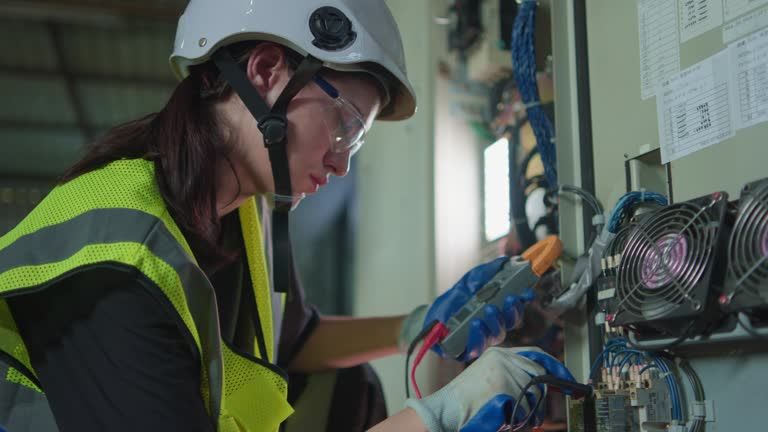
Key Takeaways
- Licensing is Non-Negotiable: Always confirm an unrestricted electrical license and formal trade certification.
- Focus on Diagnostics: Strong troubleshooting and Programmable Logic Controller (PLC) knowledge reduce costly system outages.
- Prioritize Safety First: Look for active certifications in Lockout/Tagout (LOTO), Low Voltage Rescue (LVR), and CPR.
- Match the Industry Environment: Industrial settings require different skill sets compared to standard commercial work.
- Partner with Specialists: Working with experienced trade recruiters simplifies the hiring process and helps you secure verified talent.
Understanding the Role of a Maintenance Electrician
Before reviewing applicant resumes, you must understand how a maintenance electrician differs from an installation electrician. An installation electrician fits out new buildings or sets up new wiring systems. A maintenance electrician focuses on keeping existing machinery, control systems, and power supplies running without interruption.
Your candidate must understand routine inspection methods, repair routines, and emergency fixes. They monitor electrical infrastructure to prevent unexpected failures before they cause site delays.
Their typical daily responsibilities include:
- Performing planned service checks on motors, pumps, circuits, and control panels.
- Diagnosing electrical faults on active production lines.
- Repairing or replacing worn wiring, relays, switches, and components.
- Testing safety systems like emergency stops, breakers, and isolation units.
- Updating maintenance logs to meet compliance rules.
Keeping up with scheduled equipment maintenance prevents unexpected production stops and keeps workers safe on the plant floor.

Core Technical Maintenance Electrician Qualifications
When reviewing candidates, start by checking their core technical credentials. Electrical work carries real hazards, so correct formal training is mandatory.
- Standard Electrical Career Pathway | Cert III Electrotechnology -> Apprenticeship -> A-Grade License |
1. Unrestricted Electrical License
The candidate must hold a valid, unrestricted electrical license issued by the relevant state authority. In Victoria, for example, this is known as an A-Grade Electrical License issued by Energy Safe Victoria (ESV). This license confirms the holder has completed all necessary hours, trade exams, and field assessments to work independently.
2. Trade Qualification (Certificate III)
Applicants should hold a formal trade qualification, such as a Certificate III in Electrotechnology Electrician (or an equivalent international credential recognised by trade assessment bodies). This four-year combination of classroom learning and on-the-job apprenticeship forms the foundation of their technical knowledge.
3. Programmable Logic Controller (PLC) Knowledge
Modern factories rely heavily on automated systems. Electricians who understand PLCs can connect laptops to diagnostic software, read control logic, and find software or sensor glitches fast. Look for certifications or proven work experience with major PLC platforms like Siemens, Allen-Bradley, Omron, or Schneider.
4. High-Voltage (HV) and Specialized Endorsements
If your facility uses transformers, high-voltage switchgear, or complex sub-stations, general electrical knowledge is not enough. You must look for specific endorsements:
- High Voltage Switching Operator Certificate: Required for switching high-voltage networks safely.
- Hazardous Areas Training: Required if your plant processes explosive dusts, gases, or chemicals (e.g., EEHA certification).
- Instrumentation Endorsement: Helpful for plants using delicate sensors, flow meters, and automated valves.
Key Safety Certifications and Licenses
Safety is a central part of any electrical job. Hiring someone without updated safety credentials creates legal and physical risks for your business.
- Certification | Description | Renewal Frequency


Pro Tip for Hiring Managers: Always demand physical or digital copies of valid safety cards before booking a candidate for an onsite trial or final interview. Check expiration dates carefully, especially for CPR and LVR, which require annual renewal.
Practical Skills and Troubleshooting Capabilities
Formal paper qualifications are necessary, but practical skill decides how quickly your facility recovers from a breakdown. During the interview stage, test the candidate's diagnostic process.
Electrical Blueprint and Schematic Literacy
Can the candidate read complex circuit diagrams, ladder logic diagrams, and single-line drawings? Ask applicants to explain a wiring schematic during the interview. A candidate who struggles with schematics will take much longer to locate short circuits or open loops on your machinery.
Testing Instrument Knowledge
A capable maintenance professional uses diagnostic tools with confidence. Make sure your applicant knows how to operate:
- Digital Multimeters: For checking voltage, resistance, and current flow.
- Insulation Resistance Testers (Meggers): For identifying broken motor insulation.
- Thermal Imaging Cameras: For spotting hot spots in control panels before parts fail.
- Oscilloscopes or Signal Generators: For checking complex electronic outputs on sensitive drives.
Preventive Maintenance Experience
Replacing broken parts is only half the job. A reliable electrician knows how to run preventative checks to stop breakages from happening in the first place. Ask them how they build inspection schedules, monitor vibration or thermal signs, and manage spare parts inventories.

Industrial vs Commercial Electrician Credentials
Not all electrical backgrounds are equal. Bringing a commercial electrician into a complex industrial plant can lead to slow troubleshooting and safety issues if they lack heavy machinery experience.
COMMERCIAL EXPERIENCE INDUSTRIAL EXPERIENCE
- Building lighting - 3-Phase power (415V+)
- Office power points - Variable Speed Drives (VSDs)
- Standard distribution boards - Heavy electric motors & pumps
- Basic fire alarm systems - PLC control panels & sensors
When evaluating applicants, match their background to your operating site:
- Commercial Electricians usually work with single-phase power, standard lighting, exit signs, office fit-outs, and simple distribution boards.
- Industrial Electricians handle three-phase power systems, high-voltage equipment, heavy electric motors, Variable Speed Drives (VSDs), conveyor belts, and automated packaging gear.
If your facility operates machinery or heavy production lines, focus on candidates with direct industrial background. Through specialized manufacturing recruitment, you can easily target candidates who already have experience in your specific plant type.
How to Hire Maintenance Electrician Melbourne Experts
If you operate in Victoria, learning how to hire maintenance electrician Melbourne workers requires an understanding of the local market and compliance expectations. Melbourne's manufacturing, warehousing, and logistics sectors rely heavily on skilled maintenance personnel. Demand for these workers remains very high across key industrial regions like Dandenong, Campbellfield, Truganina, and Laverton.
To attract high-quality local trade workers, consider these steps:
- Offer Competitive Shift Rates: Industrial maintenance often requires shift rotations, night work, or weekend on-call duty. Offer clear penalty rates and shift allowances to stand out.
- Highlight Facility Standards: Skilled trade workers prefer clean, safe, and organized workplaces with modern equipment and reliable tools.
- Streamline the Hiring Steps: Quality candidates receive job offers quickly. Delaying your interview process by weeks often means losing top talent to competitors.
- Partner with Trade Staffing Specialists: Finding passive job seekers can be tough. Working with recruitment partners who understand local regulatory standards speeds up the hiring process.
If you need fast access to pre-screened candidates, using trades recruitment services allows you to fill unexpected vacancies quickly. For long-term staffing stability, setting up a clear pipeline through permanent recruitment helps build a dependable in-house team.
Working with Other Trades in Production
Electrical systems do not operate in isolation. In most industrial plants, electrical maintenance professionals work side-by-side with mechanical fitters, boilermakers, and plant operators.
- Total Maintenance Team

Understanding how electrical and mechanical components interact helps prevent misdiagnoses during breakdowns. For instance, when a conveyor stops, the issue could be an electrical fault in the motor driver, or a mechanical jam in the gearbox.
Electricians who communicate well with mechanical teams resolve issues faster. In many factories, hiring managers also look for candidates with dual-trade background or cross-skilled training. Understanding the scope of maintenance fitter jobs helps electrical staff collaborate effectively on complex mechanical-electrical overhauls.
Step-by-Step Screening Checklist for Candidates
Use this practical screening checklist when interviewing prospective maintenance electricians to confirm they possess the required skills and experience:
Step 1: Initial Resume Review
- Confirm valid, unrestricted Electrical License details.
- Verify Certificate III in Electrotechnology (or equivalent).
- Check for relevant industry experience (industrial vs. commercial).
- Look for stable employment history or clear reasons for contract changes.
Step 2: Safety Credential Check
- Verify White Card status.
- Check dates for CPR / Low Voltage Rescue (must be within 12 months).
- Confirm LOTO, Working at Heights, and Confined Space certificates.
Step 3: Technical Interview Questions
Ask practical, situational questions during the interview process:
- "Walk me through your diagnostic steps when an electric motor trips its overload switch repeatedly."
- "How do you isolate a control panel safely before starting work?"
- "Describe a time when a PLC showed a fault code on a production line. How did you find the root cause?"
- "How do you prioritize repairs when two production lines break down at the same time?"
Step 4: Practical Trade Test or Scenario Assessment
- Provide a circuit schematic and ask the candidate to trace a fault.
- Present a real-world scenario involving a sensor failure and evaluate their logic step-by-step.
Step 5: Reference Checks
- Speak with past supervisor or maintenance manager references.
- Ask directly about safety records, punctuality, fault-finding speed, and teamwork skills.
Frequently Asked Questions
What is the most important qualification for a maintenance electrician?
An unrestricted electrical license (such as an A-Grade License in Victoria) is the single most important credential. It legally permits the individual to perform electrical work without direct supervision and guarantees they have completed formal trade training.
What is the difference between an electrician and a maintenance electrician?
A general electrician often focuses on new installations, laying cables, mounting fixtures, and wiring new structures. A maintenance electrician focuses on continuous operations, troubleshooting broken systems, fixing machinery, and maintaining automated controls on existing industrial equipment.
How often should safety credentials like LVR and CPR be updated?
In Australia, CPR certification requires updating every 12 months. Low Voltage Rescue (LVR) also requires annual updates to remain compliant with industry standards and workplace health and safety rules.
Why is PLC experience important for industrial electricians?
Programmable Logic Controllers (PLCs) run automated machinery in modern manufacturing plants. An electrician who can read PLC programs can trace inputs and outputs fast, finding whether a breakdown is caused by a broken sensor, wiring failure, or mechanical fault.
How can a business verify an applicant's electrical license?
You can verify electrical licenses directly through state regulatory portal databases (such as Energy Safe Victoria or NSW Fair Trading). Enter the candidate's license number and full name to confirm the license is current, unrestricted, and free of formal disciplinary conditions.
Conclusion
Hiring the right technical staff protects your machinery, keeps your operational costs under control, and keeps your workforce safe. By checking for proper maintenance electrician qualifications - including unrestricted licenses, updated safety tickets, PLC diagnostic capabilities, and practical field experience - you safeguard your business against costly downtime.
Finding reliable trade personnel takes time and focus. At Chandler Personnel, we take the stress out of recruiting by connecting you with qualified, pre-screened professionals ready to support your plant operations.
Need Skilled Trade Talent for Your Workplace?
Chandler Personnel connects Australian businesses with qualified maintenance electricians, fitters, and skilled industrial workers. Contact our recruitment team today to find the right talent for your facility.