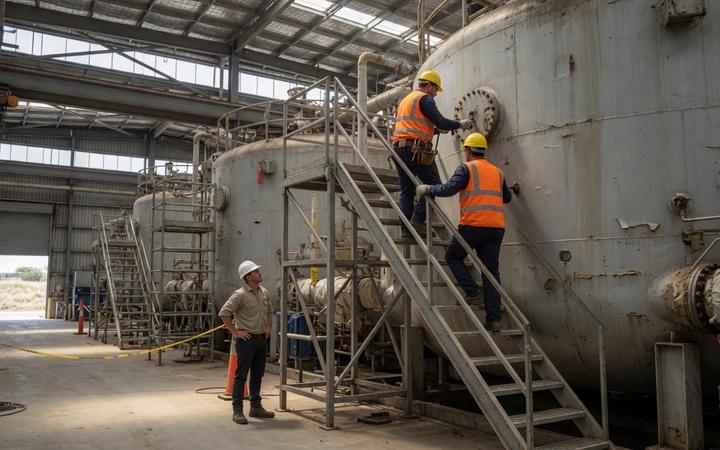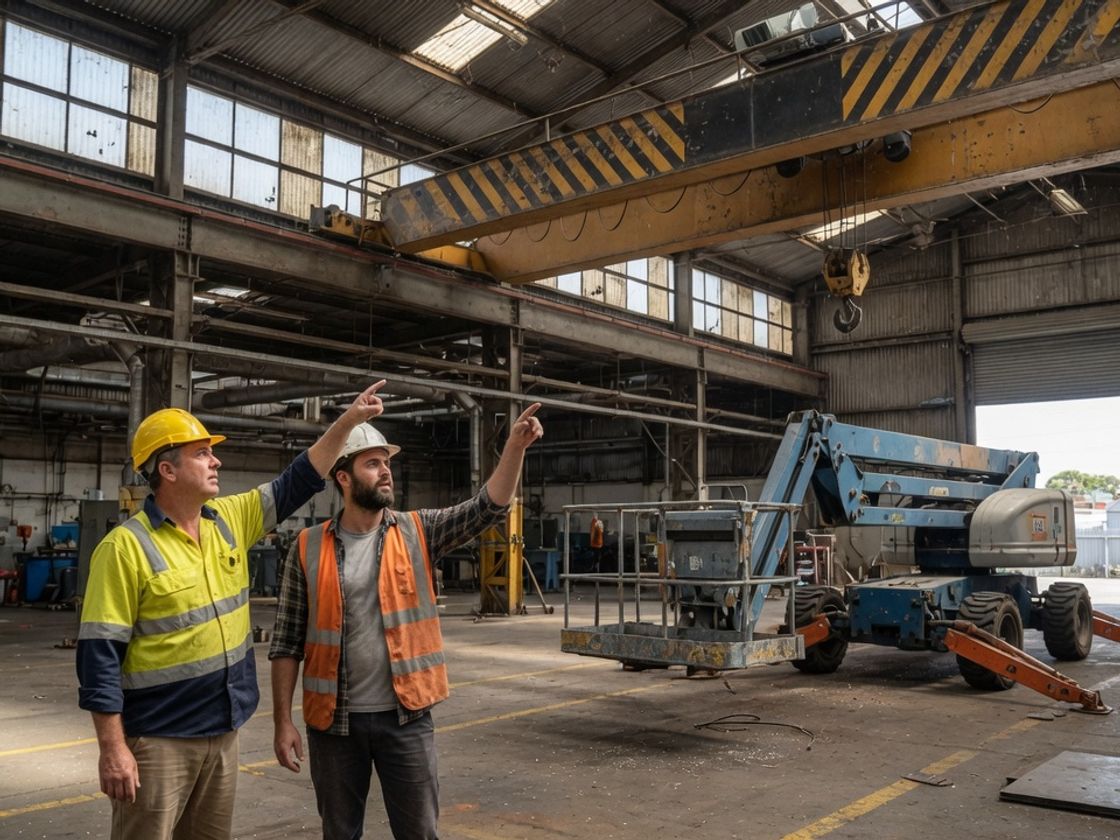
A shutdown crew arrives on Monday, a racking install starts on Wednesday, and the warehouse expansion needs a second forklift on the floor. Any of those jobs may involve plant that only a licensed operator can run. This guide maps common plant, warehouse and shutdown machines to the high risk work licence classes that WorkSafe Victoria lists, so a host can name the class before the machine moves.
It is written for Melbourne plant, warehouse and maintenance managers who bring in labour hire. It sticks to the class names and codes WorkSafe publishes for HRWL classes in Victoria, and it tells you what to ask to see.
Why a host looks at the class before the machine moves
WorkSafe Victoria issues high risk work licences, and its high risk work licence page lists 30 classes covering types of plant and equipment. Under the Occupational Health and Safety Act, a labour hire worker is treated as the host's employee as well as the provider's. In its guidance for hosts, WorkSafe lists making sure the worker has the qualifications, certificates, permits and licences relevant to the job. So the host's part is easy to state: ask to see the class before the machine moves.
Two licences are easy to mix up. A high risk work licence belongs to the operator and comes from WorkSafe. The labour hire licence belongs to the provider and is checked on the Labour Hire Licence Register. Both are worth checking, and neither replaces the other. For the operator side, the post on how to check a licence online shows how to look one up.
Forklifts, order pickers and telehandlers
These are the classes for forklifts and similar warehouse plant. WorkSafe lists them by name and code:
- Forklift truck operation (LF). The class for a forklift truck.
- Order-picking forklift truck operation (LO). Listed as its own class, separate from LF.
- Non-slewing telehandler operation (TV). WorkSafe's label for this class is "over 3 tonnes".
- Reach stacker operation (RS). A further class, listed on its own.
Because LF and LO are separate classes with separate codes, ask for the class that matches the truck on your floor. The post on agency forklift operators goes further into the difference between a licence and competence. If you also run a warehouse and need crew for it, Chandler Personnel, an independent Melbourne-based blue collar specialist, lists warehousing and logistics among its sectors.
Platforms, cranes and hoists
Lifting and access plant has the longest list. The page names these classes:
- Boom-type platform (WP). A boom-type platform needs a licence. A scissor lift does not (see the last section).
- Other cranes. Tower crane (CT), self-erecting tower crane (CS), derrick crane (CD), portal boom crane (CP), bridge and gantry crane (CB), vehicle loading crane (CV) and non-slewing mobile crane (CN).
- Slewing mobile cranes. Four classes by size: up to 20 tonnes (C2), up to 60 tonnes (C6), up to 100 tonnes (C1) and open or over 100 tonnes (C0).
- Hoists. Materials hoist, cantilever platform (HM), and hoist for personnel and materials (HP).
- Concrete-placing boom (PB). Listed as its own class.
The list gives names and codes. If your plant has an overhead bridge or gantry crane, the class on the list is bridge and gantry crane (CB). If a crane is hired in for a lift, name the class when you book the operator, not when the crane arrives.
Dogging, rigging and scaffolding on shutdown work
Shutdown work tends to mix lifting, access and plant. WorkSafe lists dogging (DG), rigging at three levels (basic RB, intermediate RI and advanced RA) and scaffolding at three levels (basic SB, intermediate SI and advanced SA). For plant with boilers or turbines, it also lists standard boiler operation (BS), advanced boiler operation (BA), turbine operation (TO) and reciprocating steam engine operation (ES).
WorkSafe's list gives names and codes only. It does not say which level a particular lift or structure needs, so put that question to WorkSafe before the crew starts, not on the day. If you source shutdown crew through a provider such as Chandler Personnel, which recruits across trades and services, put the class names on the crew request so the provider knows what to match.
For the hiring side of a planned stop, see the post on summer shutdown recruitment. If the shutdown is fabrication-heavy, the post on hiring boilermakers covers the tickets and weld tests for that trade.
Equipment that does not need a licence, and what else still applies
Which licence for a scissor lift? None. WorkSafe says you don't need a high risk work licence to operate earthmoving equipment (for example an excavator) or a scissor lift. That removes the licence check.
It does not remove the host's other duties. WorkSafe's host page lists making sure the worker has the right skills and knowledge to perform the work safely, and providing training, instruction, information and supervision. Its induction guidance says the host should also provide a site-specific induction when an employee starts a new role.
Use this short list when a licensed machine is involved:
- Class. The class named on the licence matches the machine.
- Expiry. WorkSafe says the licence is valid for five years, so read the expiry date.
- Old certificates. WorkSafe says competency certificates and older certificates issued under previous Victorian legislation have expired and cannot be used to perform high risk work.
- Your machine. Ask what the operator has run before, and give a site-specific induction on yours.
When you request staff for a job with licensed plant, name the machine and the class in the request. Chandler Personnel runs site inductions on behalf of clients, and the same list applies whichever provider you use.
Related Resources
- WorkSafe high risk work licences
- WorkSafe Victoria guidance for hosts
- Agency forklift operators
- How to check a licence online
- Summer shutdown recruitment
- Hiring boilermakers
- Trades and services recruitment
Common Questions About High Risk Work Licence Classes
1. Do I need a high risk work licence to use a scissor lift?
No. WorkSafe Victoria says you don't need a high risk work licence to operate earthmoving equipment (for example an excavator) or a scissor lift. A boom-type platform is different, because it has its own class (WP). Even where no licence is needed, the host's duties on skills, training, induction and supervision still apply, so confirm the operator is trained on your lift.
2. How many licence classes does Victoria have?
WorkSafe Victoria lists 30 classes of high risk work licence. They cover scaffolding, rigging, dogging, boilers, turbines, steam engines, cranes, hoists, reach stackers, boom-type platforms, concrete-placing booms, forklifts, order-picking forklifts and non-slewing telehandlers over 3 tonnes. Each class has its own name and code, so always ask for the class, not just "a ticket".
3. How long does a high risk work licence last?
WorkSafe says the licence is valid for five years. Read the expiry date on the licence rather than assuming, and keep a note of it for each operator and class. WorkSafe also says competency certificates and older certificates issued under previous Victorian legislation have expired and cannot be used to perform high risk work.
4. Can an interstate high risk work licence be transferred to Victoria?
WorkSafe says a holder of a valid licence from another Australian state or territory, who lives in Victoria, can apply to transfer it within 12 months of their current licence expiry date. A person who does not live in Victoria needs reasonable grounds to apply for a Victorian transfer. Ask the operator whether a transfer has been completed, and check WorkSafe's page for the current process.
5. Does a licence prove the operator can use my machine?
No. A licence shows the class the operator has been licensed in. WorkSafe lists making sure the worker has the right skills and knowledge to perform the work safely as a host duty, and says the host should provide a site-specific induction when an employee starts a new role. Ask what machines the operator has run, supervise the first shift and record the induction you gave.
Name the Licence Class Before the Machine Moves
WorkSafe's list of high risk work licence classes is a set of names and codes, and checking a licence against it takes a minute before the machine moves. List the machines on your next job, write the WorkSafe class beside each, and mark the ones that need no licence but still need training. Put that list on the crew request, and ask to see each licence before the first shift.