A pre-employment skills test works best when its format matches the skill. Use an online test for knowledge you can check on a screen, such as safety rules, numeracy and reading a drawing. Use a short, supervised practical for anything the person has to do with their hands, and pay for any trial that runs past a brief demonstration.
This guide helps a hiring manager at a Melbourne warehouse, workshop or plant choose between the two and build a short marking sheet. It is general information only, so check the linked government pages or get advice for your own situation.
When does an online skills assessment for trades roles make sense?
An online skills assessment makes sense when what you need to know is knowledge, not hands-on technique. Good subjects are safety signs and site rules, numeracy for counting and measuring, reading a drawing or work order, and basic trade theory. It is quick to run, every applicant gets the same questions, and it can cut a large pile of applications to a short list.
It has limits. A screen test cannot show how a person handles a grinder or a pallet jack, and an unsupervised test may not be the applicant's own work. It can also disadvantage people who read slowly or in a second language when reading is not part of the job. Treat the score as one input and confirm it in person.
When is a practical skills test for a warehouse or trade worth running?
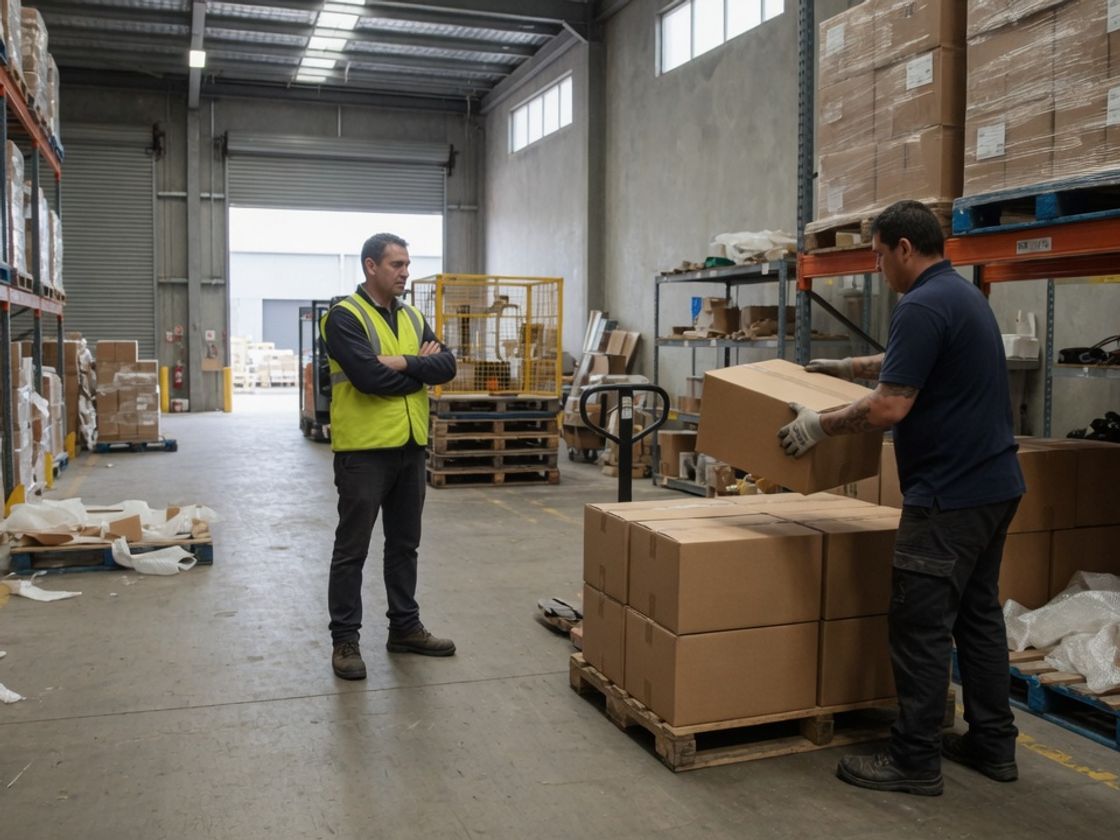
A supervised practical test is worth running when the job turns on what the person can do and the short list is small enough to give each finalist real time. For example, a Melbourne warehouse hiring a picker could ask finalists to pick and label a mock order of ten lines while a team leader watches. A fabrication shop could ask a candidate to set up and cut a simple part from a drawing. A practical test shows technique, pace and safe habits in a way a form cannot.
Keep it short and close to the real work, and tell the candidate in advance what to expect. Trade-specific content is covered in the guides to fitter and turner recruitment and interview questions for a maintenance fitter. Here the focus is the method of testing.
How do you tie the test to the job and mark it fairly?
Start from the inherent requirements of the role, meaning the tasks the person must be able to do, and test only those. The Australian Human Rights Commission's guide to preventing discrimination in recruitment suggests focusing on the essential requirements of the job, treating candidates consistently and keeping records of your decisions. A short marking sheet does all three.
- List the three to five tasks the job really requires, taken from the position description.
- Write what a pass looks like for each task in plain words, for example "reads the pick slip correctly and applies the right label".
- Choose a simple scale. A pass or fail, or a score from 0 to 2, is easier to apply consistently than a 10-point scale.
- Add a separate safety line, and decide beforehand that an unsafe act ends the test.
- Record the scores and the reasons on the same sheet for every candidate, with the assessor's name and the date.
Once someone is hired, carry the result into your skills matrix for manufacturing and warehouse teams so it informs training and cover decisions.
What reasonable adjustments should you plan for?
Plan reasonable adjustments before the first candidate arrives, because the test is part of your selection process. According to the Australian Human Rights Commission's disability discrimination guide for employers, the Disability Discrimination Act makes it unlawful to discriminate in recruitment, including interviewing and other selection processes. The same guide says it may not be against the law to refuse a job to someone who cannot perform the inherent requirements because of their disability, but the employer must consider whether reasonable adjustments could help.
An adjustment is reasonable if it does not impose unjustifiable hardship, and the guide lists changing recruitment and selection procedures as one example.
For example, you might offer extra time on an online test or set the practical task at a lower bench. Invite candidates to raise any need when you book the test. Change the method, not the standard the job requires.
What are the unpaid trial shift rules?
The Fair Work Ombudsman describes an unpaid work trial as "a demonstration by someone working under supervision to show they have the skills for the job". It says an unpaid trial may be unlawful where it isn't necessary to demonstrate the skills the job requires, or has continued for longer than actually needed. How long that is depends on the work and "could range from an hour to one shift". It may also be unlawful where it involves more than only a demonstration of the person's skills, or where the person is not directly supervised.
Any period beyond what is reasonably required to demonstrate the skills must be paid at the appropriate minimum rate of pay. The page's lawful example is a trades assistant applicant who, after the interview, followed a tradesman while the tradesman watched that he worked safely and used the right tools. To assess someone further, it says an employer could employ them as a casual and/or for a probationary period and pay them for all hours worked.
A sensible way to stay inside these limits is to keep the practical on mock tasks, not live orders, and to stop when the skill has been shown. If you need more than that, pay for it, and confirm your own situation with the Fair Work Ombudsman.
Does a skills test replace checking a licence or ticket?
No. A skills test shows how a person works on the day, but it does not show that they hold the licence a task legally requires. WorkSafe Victoria requires businesses and people performing high risk tasks to get a licence, a permit or make an official notification before starting work. The same page links to a tool for validating a digital licence at myWorkSafe.
For a forklift role, ask to see the licence, check the class and the expiry date, and validate it on the WorkSafe site if it is a digital licence, before the person operates anything. WorkSafe says plastic cards cannot be validated online. A strong practical result does not change that.
Related Resources
- Fair Work Ombudsman guide to unpaid work
- WorkSafe Victoria high risk work licence classes
- Trades and services recruitment and labour hire
- Warehousing and logistics recruitment and labour hire
- Request staff form
Frequently Asked Questions
Is a pre-employment skills test legal in Australia?
Employers can test skills, but the test is part of the selection process, and the Australian Human Rights Commission says the Disability Discrimination Act covers selection processes. Tie each task to the inherent requirements of the job and plan adjustments. This is general information, so check the linked sources or get advice for your own situation.
How long can an unpaid trial shift be?
The Fair Work Ombudsman gives no fixed number. It says the time depends on the nature and complexity of the work and "could range from an hour to one shift". That is not a safe allowance: a trial may be unlawful if it runs longer than the demonstration needs. Any time beyond what is reasonably required to demonstrate the skills must be paid at the appropriate minimum rate of pay.
Should I use an online test or a practical test for warehouse staff?
Use both if the volume is high, and in that order. An online test can screen for safety knowledge and numeracy, then a supervised practical can check picking and handling. With only a handful of applicants, go straight to the practical.
How long should a practical skills test take?
Only as long as the skill needs. As an illustration, 20 to 40 minutes may be enough for a pick-and-label task, but that figure is a judgement, not a rule. The Fair Work Ombudsman's test is whether the trial runs longer than is actually needed to demonstrate the skills.
What should I do if a candidate asks for an adjustment?
Ask what would help them show their skills, then consider whether you can provide it without unjustifiable hardship. Keep a note of the request and what you decided, and mark against the same standard as every other candidate.
Choose the pre-employment skills test the job needs
The right pre-employment skills test is the shortest one that checks what the job really requires: online for knowledge, supervised practical for hands-on skill, and a paid engagement for anything longer. If you need extra hands while you build the test, Chandler Personnel provides labour hire and permanent recruitment for trades and services employers in Melbourne. Before your next hire, write the three or four tasks the role requires, match each to a test format, and put them on one marking sheet.