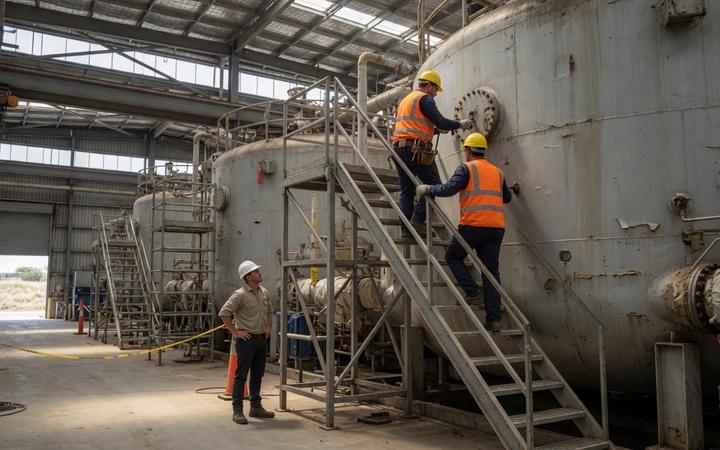
Six to eight weeks before a peak, an operations manager has to decide how the extra crew will be engaged, and the fixed term vs casual question comes first. It is a legal choice as much as a payroll one, because the Fair Work Act sets tests for who counts as a casual and how long a fixed term contract can run. The labour hire points are about Victoria. Costs are in the post on comparing labour hire with overtime.
Three ways to staff a peak, and the question each answers
- Casual. Can you offer work as it arises, with no firm commitment that it will continue, and can people say no?
- Fixed term. Do you want people committed for the whole peak, with a known end date, inside the Act's limits?
- Labour hire. Do you want a licensed provider to supply and pay the workers?
When a casual is genuinely casual
Section 15A of the Fair Work Act gives the casual employee definition in two parts. The employment relationship must be characterised by an absence of a firm advance commitment to continuing and indefinite work, and a casual loading or specific casual rate must apply under a fair work instrument or the contract. The wording here follows the Act as compiled on 7 July 2026, so check the current version before you rely on it.
No firm advance commitment to continuing work
The Act says to assess this on the real substance, practical reality and true nature of the employment relationship. A firm advance commitment can sit in the contract or in a mutual understanding between you and the worker, and that understanding can be inferred from how the contract is performed. The Act lists four considerations:
- Choice. Whether you are free to offer or not offer work and the worker is free to accept or reject it, in practice as well as on paper.
- Future work. Whether continuing work of that kind is reasonably likely in your business.
- Permanent colleagues. Whether full-time or part-time employees do the same kind of work.
- Pattern. Whether the worker has a regular pattern of work.
No single consideration decides the question. A regular pattern does not of itself show a firm advance commitment, so a worker on the same shifts every week can still be a casual. But a roster both sides expect to continue is where a mutual expectation can form.
The casual loading condition and the information statement
The loading or rate itself sits in the award, agreement or contract that covers the worker, so check it there. Under section 125B you must also give each casual the Casual Employment Information Statement, which the Fair Work Ombudsman prepares. It is due before, or as soon as practicable after, the worker starts, then as soon as practicable after 6 months, after 12 months and after each further 12 months. A casual who later believes they no longer meet the test can notify you, and the guide to casual conversion for seasonal workers who return covers that stage.
Fixed term contracts and the two year limit
Section 333E speaks to seasonal work directly. Its note says a fixed term contract includes one for a specified period, for a specified task or for the duration of a specified season. So a fixed term contract for seasonal work that ends with the season can be caught by these limits:
- Two years. A contract with an end date more than 2 years away is caught.
- Renewals. The contract plus any extension cannot add up to more than 2 years, and it cannot give a right to renew more than once.
- Consecutive contracts. A new contract can be caught if it follows an earlier fixed term contract for the same or substantially similar work with substantial continuity of the employment relationship in between, and the two periods add up to more than 2 years or the new contract has a renewal or extension option.
If a contract breaks the limits, the term that ends it on a set date is taken to have no effect (section 333G), which can bring notice, redundancy and unfair dismissal rules into play. Ending a seasonal contract has its own guide.
Exceptions to the fixed term limits
Section 333F(1) lists the cases where the limits do not apply: a distinct task involving specialised skills, a training arrangement, essential work during a peak demand period, emergencies or a temporary absence of another employee, earnings above the high income threshold, certain government-funded or governance positions, a modern award that permits the circumstances, and contracts prescribed by the regulations.
Whether your peak counts as a peak demand period is a question for the Fair Work Ombudsman or your adviser. If you rely on an exception in a civil penalty case, the Act puts the evidential burden on you, so write down why it fits.
The Fixed Term Contract Information Statement
Under section 333K you must give each fixed term employee the Fixed Term Contract Information Statement before, or as soon as practicable after, the contract is entered into. The Fair Work Ombudsman prepares it, and the Act marks the duty as a civil remedy provision.
Labour hire as the third route
With labour hire, a provider supplies the workers. The Labour Hire Authority's host guidance describes a provider as a business that supplies individuals to work as part of a host's business and is obliged to pay them for that work. Under Victoria's licensing law hosts must only use licensed providers, so check the provider on the Labour Hire Licence Register first. A separate guide covers licence checks across states.
Safety duties stay with you. According to WorkSafe Victoria's host page, a host is taken to be the employer of a labour hire worker under the Victorian Occupational Health and Safety Act, with the same duties as for any other employee.
Chandler Personnel has a labour hire division, Chandler Services, and a permanent recruitment division, Chandler Recruitment. It also runs site inductions on behalf of clients. For a peak crew in Victoria, see the labour hire in Melbourne page.
Matching the contract to the demand pattern
- Shift-by-shift demand with real choice. Casual fits when people can decline and a loading applies. For this pattern, see the post on building a pool of seasonal casuals.
- A fixed crew for a known stretch. A fixed term contract with a clear end date fits, inside the limits or an exception. Staff who return each year are the ones the consecutive contract rule can catch.
- Headcount that moves week to week. Labour hire carries the variation once you have checked the licence.
- A role that never stops needing to be filled. That is a permanent role, as in the post on turning contractors into long-term permanent hires. The flexible workforce model guide covers the year-round mix.
South Australian employers can read the post on casual and permanent hiring through an Adelaide staffing agency.
Related Resources
- Fair Work Act on legislation.gov.au
- Labour hire in Melbourne
- Request seasonal staff
- Comparing labour hire with overtime
- Building a pool of seasonal casuals
- Turning contractors into long-term hires
- How the hiring process works
Frequently Asked Questions
Can I put a seasonal worker on a fixed term contract?
Yes. Section 333E says a fixed term contract includes one for the duration of a specified season. It must stay within the limits, which are no more than 2 years including renewals and no caught consecutive contracts, unless a section 333F exception applies. Give the worker the Fixed Term Contract Information Statement.
Is a worker who does the same shifts every week still a casual?
Possibly. The Act says a regular pattern of work does not of itself indicate a firm advance commitment to continuing and indefinite work. But it is one of four considerations, and the test is the real substance of the relationship.
Do I have to give casual employees an information statement?
Yes. Section 125B requires the Casual Employment Information Statement before, or as soon as practicable after, a casual starts, then as soon as practicable after 6 months, after 12 months and after each further 12 months. A small business employer does not have to give the 6 month or repeat statements.
Can I re-engage the same seasonal worker on another fixed term contract next season?
It depends. Section 333E(4) and (5) ask whether the earlier contract had an end date, whether the new one is for the same or substantially similar work, and whether the employment relationship had substantial continuity in the gap. If so, and the periods add up to more than 2 years or the new contract has a renewal option, the limit can apply. The Act also bars ending a contract or delaying re-engagement in order to avoid these limits (section 333H). Take advice first.
Who is the employer when I use a labour hire company?
For pay, the provider. For safety in Victoria, you as well. The Labour Hire Authority describes the provider as the business obliged to pay the worker for work done in your business. On safety, WorkSafe Victoria says the host is taken to be the employer, so you owe the same duties as for any other employee.
Pick the contract before the peak starts
The contract you choose sets what you can ask of people on day one and what you owe them at the end. Decide the route for each part of the crew, then write down why it passes the casual test or stays inside the fixed term limits. When you are ready, you can request seasonal staff, or read how the hiring process works first.