Cross docking moves freight dock to dock, from an inbound truck to an outbound truck with little or no time in storage, so the shift is built around arrivals rather than racks. This guide is for operations and warehouse managers who are adding or running a cross dock lane in a warehouse and have to staff it hour by hour.
What makes a cross docking shift different
In a standard warehouse, freight goes to a rack and waits for an order. In a flow-through warehouse, you transfer freight from the inbound truck to a lane for its outbound truck, often within the same shift. There is no buffer, so a late inbound truck or a missing label shows up straight away as a delayed outbound truck.
Three things change for the person running the shift:
- Work arrives in bursts. The crew is idle between trucks and stretched when two arrive together.
- Freight has a destination before it is unloaded. Every pallet has to be matched to an outbound load at the door.
- The floor is tight. Lanes sit close to the doors, so forklifts, pallets and pedestrians share a small area.
Truck booking and driver waiting times are covered in the post on dock booking and driver waits. The work below starts once the truck is at the door.
Staff to arrivals, not to the average
A daily total of pallets tells you very little about a cross dock. What matters is how many pallets arrive in each window and how long you have before the outbound truck leaves. Build the roster from two lists: inbound arrival times with expected pallet counts, and outbound cut-offs with the pallets each must carry.
For each window, divide the pallets to move by the time available to get the pallets needed each hour. Then divide that by what one operator and one checker clear in an hour on your own floor, taken from your own records. The answer is the crew for that window.
Example: three truck arrivals in one morning
Here is an example with illustrative numbers. A crew works 6 am to 2 pm. Truck one arrives at 6 am with 24 pallets and truck two at 6:30 am with 24 pallets. Both feed an outbound truck that leaves at 8 am. Truck three arrives at 9 am with 12 pallets for a 10 am departure.
Averaged over the 8-hour shift, 60 pallets is 7.5 pallets an hour, which looks easy. In practice, 48 pallets have to be unloaded, checked and laned in the two hours before 8 am, which is 24 pallets an hour. The 9 am truck needs 12 an hour. A roster built on the average leaves the first two hours short and the rest of the shift quiet.
The fix is a roster that follows the arrivals. Start the crew before the first truck, add casual or labour hire cover for the 6 to 8 am window, and schedule breaks outside the arrival peaks. Check the minimum engagement and break rules in your own award or enterprise agreement before you roster short peak shifts.
Chandler Personnel is available 24 hours a day, which matters on a dock where the busy hours may start before dawn. Its warehouse labour hire in Victoria and wider warehousing and logistics staffing are where to look for peak cover.
Set up staging lanes and label checks
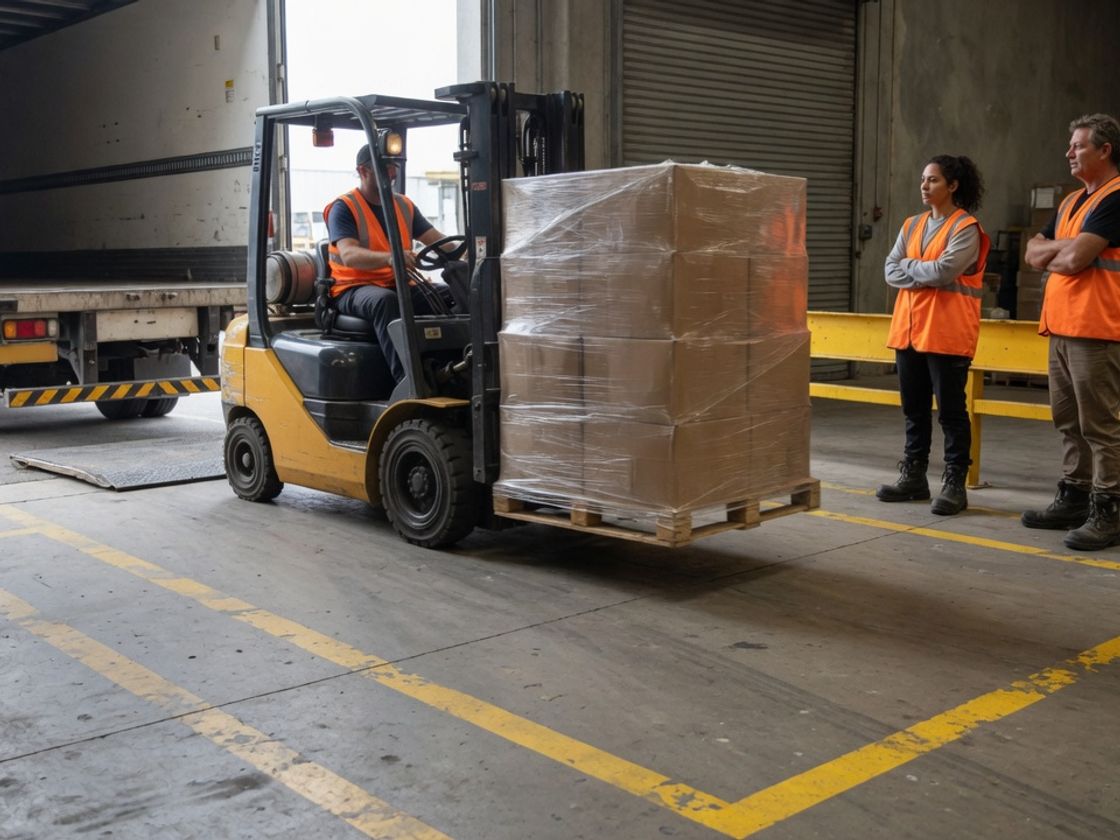
A staging lane is the marked floor space where freight waits for its outbound truck.
- One lane per outbound load. Mark each lane with the truck, route or customer it feeds, and keep the sign at forklift eye level.
- Limit the lane's size. A lane that fills up shows you the plan is behind, instead of freight spreading across the floor.
- Check the label at the door. Scan or read each pallet label against the outbound allocation before the pallet moves.
- Park exceptions separately. A pallet with no label, a damaged label or no destination goes to a marked exception spot, not into a lane.
- Count at the lane. Before the outbound truck is loaded, count the pallets in the lane against the load list.
Floor markings tell people where freight goes. WorkSafe Victoria's forklift guidance lists floor and road markings as an administrative control, which it describes as a low level of protection and a less reliable control, so use fixed barriers for the safety side (covered below).
Skills a flow-through crew needs
Every person on a flow-through crew has a defined role in the flow.
- Forklift operators. Forklift operation is high-risk work under Part 3.6 of Victoria's OHS Regulations, according to WorkSafe Victoria's forklift guidance, so check each operator's licence before they start. For cover, see forklift drivers, and read the post on booking an agency forklift operator for the licence and competency checks.
- Checkers. They read labels, use a scanner and count accurately. They are the people who catch a wrong lane before it becomes a wrong delivery.
- A shift lead. One person watches the arrival board and the lanes together and moves people to where the work is.
Chandler Personnel runs site inductions on behalf of clients, so a client can ask the provider to cover the lane layout and the label routine in the site induction for each new starter.
Keep forklifts and people apart on a tight floor
A cross dock puts forklifts, pallets, drivers and checkers within a few metres of each other. WorkSafe Victoria's forklift guidance says collisions with pedestrians usually happen when there is no physical separation between forklifts and pedestrians.
- Write a traffic management plan. WorkSafe says the plan should identify how all pedestrians, including transport drivers, are protected from forklift movements.
- Show it on a diagram. WorkSafe says the diagram should be displayed prominently and show forklift operating areas, travel paths, pedestrian-only zones and driver safety zones.
- Keep pedestrians out of loading areas. The guidance says operating procedures for loading and unloading areas should keep pedestrians out.
- Give drivers a safe place to wait. WorkSafe says driver safety zones should have fixed physical barriers such as bollards or steel railings, placed so drivers can see their trucks being loaded.
WorkSafe also says to review the plan when the workplace layout or forklift tasks change, and to consult employees, including labour hire workers. Adding a cross dock lane is likely to change one or both, so review the plan and consult your crew, including labour hire workers. Read the WorkSafe forklift guidance for the full list of controls.
Related Resources
- Warehousing and logistics staffing
- Warehouse labour hire in Victoria
- Dock booking and driver waits
- Forklift drivers
- Forklift driver hire
- WorkSafe forklift guidance
Common Questions About Staffing a Cross Dock
1. What is cross docking in a warehouse?
Cross docking is moving freight from inbound trucks to outbound trucks with little or no storage in between. Freight is unloaded, checked, placed in a staging lane for its outbound load and loaded again, often within the same shift. Because nothing sits in racking, the timing of arrivals and departures drives the work.
2. Is cross docking suitable for a small warehouse?
It can be, if you know where freight is going before it arrives and have floor space for marked lanes close to the doors. If freight arrives with no allocation, or the floor is too tight to keep forklifts and people apart, it is a poor fit. Trial it on one door or one customer first.
3. How do I staff a cross dock shift?
List the inbound arrival times and the outbound cut-offs, and work out the pallets to move in each window. Divide by the time available, then by what your own operators and checkers clear in an hour. Staff each window separately, with cover for the peaks and breaks outside them. Do not use the daily average.
4. What skills do cross dock workers need?
Operators need the right licence for the forklift they drive, and checkers need to read labels, use a scanner and count. Every worker needs to know the traffic plan, the lane layout and the label routine, which a site induction can cover for new starters.
5. How do I keep pedestrians safe around forklifts at a cross dock?
Start with a traffic management plan that shows how all pedestrians, including transport drivers, are protected. Use fixed physical barriers and driver safety zones, and keep pedestrians out of loading and unloading areas. Review the plan when the layout changes and consult your workers. WorkSafe Victoria's forklift guidance sets out the controls.
Staff the arrivals, not the average
A cross dock shift succeeds or fails in the hours when trucks arrive and leave. List your arrivals and cut-offs for one real day, work out the pallets an hour in each window, and build the roster around the peaks. Then walk the floor with the traffic management plan in hand and check that every lane, door and driver waiting area is separated from forklift travel paths.