Warehouse housekeeping is the daily job of keeping aisles clear, floors clean and pallets out of walkways, and a short end-of-shift tidy is the simplest way to do it. This guide is for supervisors of Victorian warehouses who want a routine they can run every shift, a named owner for every zone and a way to include casual and labour hire workers from their first day.
Why warehouse housekeeping is a safety control
WorkSafe Victoria's slips, trips and falls page names tripping over objects, pallets or mobile equipment among the most common causes of slips, trips and falls in transport and warehousing. Its controls for that work are plain housekeeping: store mobile plant, pallets and materials away from walkways, and clean up spills immediately and fix the causes of spills.
WorkSafe's warehousing injury hotspots page adds that work areas and access areas should be free of debris, level, well lit and in good condition, with walkways clearly defined. It also lists good housekeeping practice, such as removing unnecessary items, providing sufficient storage and putting items away. Lifting and reaching are a separate subject, covered in a separate guide on manual handling.
A five-step routine for the end of every shift
5S is a lean housekeeping method, not a WorkSafe Victoria requirement. Its five steps give a crew a fixed order for the end-of-shift tidy, and each step is plain enough to brief in a minute.
Sort and set
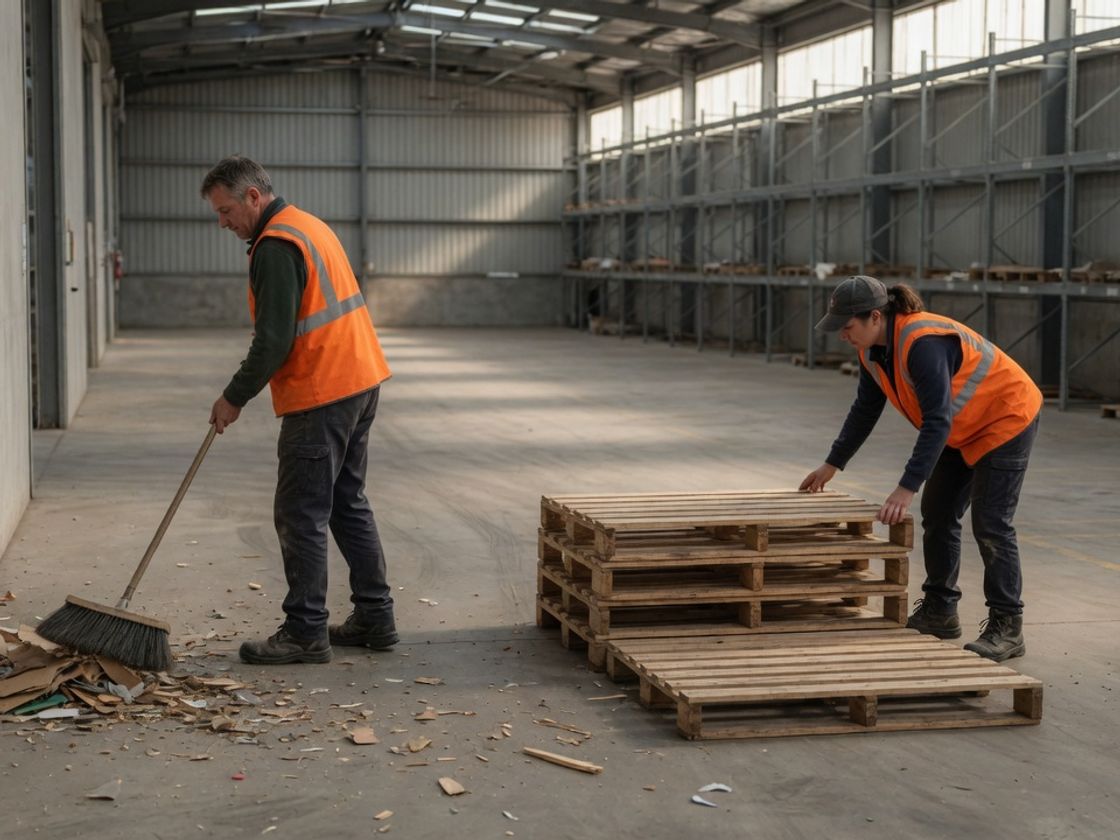
- Sort. Remove what does not belong in the zone: empty pallets, packaging, broken equipment and anything left over from the shift. WorkSafe's under-2-metres guidance lists empty pallets as low obstacles where employees walk, and untidy work areas as a trip hazard.
- Set in order. Give every pallet stack, trolley, bin and piece of mobile plant a marked home, and keep the walkways between them clearly defined.
Shine, standardise and sustain
- Shine. Sweep up debris, wipe up spills at once and report what caused them. Report a failed light or a damaged floor patch so it is fixed.
- Standardise. Write the routine on one page for each zone, in the same order every shift, with a sign-off line for the zone lead.
- Sustain. Review the page when something changes in the zone, such as a new product line or a layout change, and ask the crew what slows the tidy down.
Example: setting the length of the tidy
Here is an example with illustrative numbers. A supervisor times one tidy on a normal shift and it takes 10 minutes. The 10 minutes is an illustration, not a recommended time, because zone size, product and crew all change the answer. The supervisor sets the allowance from their own timing, tells the crew, and writes it onto the roster as working time. Pay rules for that time depend on your award, so check it before you set the roster.
Give every zone an owner
Split the floor into zones that one team can see from end to end, such as goods-in, the pick aisles, the pack benches and dispatch. Give each zone an owning team, so the goods-in crew tidies goods-in and the dispatch crew tidies dispatch. Mark the boundaries on a floor plan.
Shared areas need an owner too. Main walkways, the dock apron and the spaces between zones belong to nobody unless you assign them. Give each shared area to a named team, and write it on the same floor plan.
WorkSafe's guidance is written for employers and other duty holders, so deciding who owns each zone is your job: make the decision and write it down.
Keep pallets and mobile plant out of walkways
The most useful single rule is WorkSafe's: store mobile plant, pallets and materials away from walkways. WorkSafe's guidance on slips, trips and falls under 2 metres backs it with a short list of solutions: provide dedicated storage areas and adequate storage racks, do not block walkways, keep aisles and passageways free from clutter, and remove or put barriers around low obstacles.
Turn that into three habits on the floor:
- A home for empties. Mark a bay for empty pallets, and a parking spot for each trolley and each piece of mobile plant.
- A stop rule. Anything found in a walkway goes back to its home, or is moved clear and reported to the zone lead straight away.
- A last walk. The zone lead walks the zone at the end of the tidy and signs the one-page routine.
Include casual and labour hire workers from the first shift
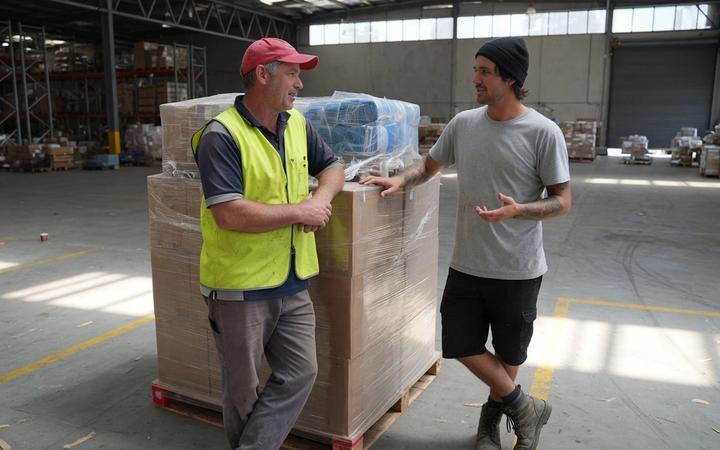
A casual or labour hire worker may spend one shift in your zone, so the tidy has to be part of the first-day brief rather than something picked up over time. Tell them on arrival which zone they are in, who the zone lead is, where the empty pallet bay is and what the end-of-shift tidy involves. Show them the walkway markings on the floor.
Chandler Personnel runs site inductions on behalf of clients, so a client can ask the provider to cover the zone owners and the tidy routine in the site induction. It also drives out to factories to check on workers. If you are adding people to a crew, Chandler Personnel has pages on warehousing and logistics staffing and on hiring general labourers. You can also look at the OHS scorecard on the Chandler Personnel website.
Night and weekend crews need the same routine, and the guide to 24/7 shift safety covers safety on round-the-clock shifts.
Name the zone lead for every shift and put the tidy on the roster
Name one lead per zone per shift, and write the name on the shift board or the start-of-shift sheet. The lead runs the tidy, signs off the one-page routine and tells the next shift's lead about anything left open, such as a spill under repair. When a lead is absent, name the cover before the shift starts.
Then put the tidy on the roster. Write it as the last block of the shift, with the allowance you timed, so nobody has to choose between finishing the tidy and leaving on time. When you plan headcount, add the tidy as an allowance for indirect work, and the guide to warehouse labour planning shows where an allowance for housekeeping sits in the sums.
Related Resources
- Warehousing and logistics staffing
- OHS scorecard
- Warehouse labour planning
- 24/7 shift safety
- General labourers
- WorkSafe slips, trips and falls
- WorkSafe warehousing injury hotspots
Common Questions About Warehouse Housekeeping
1. What is 5S in a warehouse?
5S is a lean method for keeping a work area organised. Its five steps are sort, set in order, shine, standardise and sustain. In a warehouse they become an end-of-shift routine: remove what does not belong, give everything a marked home, clean and report problems, write the routine down and review it. It is not a WorkSafe Victoria requirement.
2. How long should an end-of-shift tidy take?
There is no standard answer, so work it out by method. Time one tidy on a normal shift, set the allowance from that timing, and write it into the roster as working time. Review the allowance when the zone, the product or the crew changes. Check your award for any pay rules that apply to that time.
3. Who is responsible for housekeeping in a warehouse?
WorkSafe Victoria's slips, trips and falls page is written for employers and other duty holders, and its page on preventing slips, trips and falls under 2 metres says that if you find a risk of injury from a trip, you must control it so far as reasonably practicable. So the responsibility sits with the employer. Inside the business, give each zone to the team that works in it, name a lead for each zone on each shift, and write the owners down, including for shared walkways.
4. How do I stop pallets being left in walkways?
Store pallets away from walkways, as WorkSafe Victoria advises, and make that easy. Mark a bay for empty pallets and a parking spot for each trolley and piece of mobile plant. Anything found in a walkway goes back to its home, and the zone lead walks the zone at the end of the tidy.
5. Should housekeeping time be built into the roster?
Yes. Write the tidy onto the roster as working time at the end of the shift, using the allowance you timed, so it is planned rather than squeezed in. When you plan headcount, include it in the allowance for time that is not direct picking or packing. Check your award for any pay rules that apply.
Make the tidy part of the shift
Clear walkways come from a routine that is short, owned and rostered. Time one tidy on your next normal shift, name a lead for each zone and write the allowance onto the roster. Then brief the next casual starter on their zone before their first pallet.