A spare parts inventory works when it is built around what stops the line, not around what is easy to buy. Below is a simple way for maintenance and plant managers to rank maintenance spares, set minimum stock for the critical few and decide who runs the store, including cover for a shutdown week.
Many stores hold plenty of cheap, common MRO inventory (maintenance, repair and operations items) and too little of the one part that takes weeks to arrive. The fix is a shorter list with a clear owner, not a bigger shelf.
Start with what stops the line
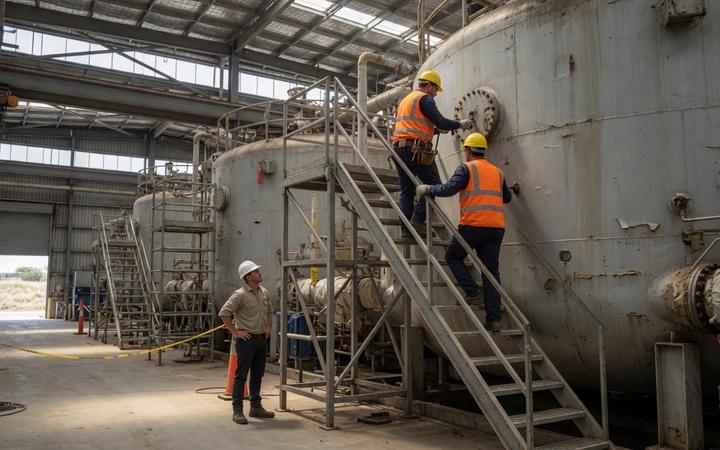
A maintenance store has one job, which is to keep the plant running when something breaks. That makes the first question about the plant, not the catalogue. Walk the site with the maintenance lead and list what stops production when it fails, starting with the lines that earn the money: the packing line, the main conveyor, the press, the compressor.
For each one, list the parts that would leave you unable to run tomorrow if they failed tonight. Those are your critical spares. Everything else is a convenience purchase.
Who belongs in a maintenance team is covered in our post on building a maintenance team, and ways to keep running when that team is short are in the one on reducing downtime with a short crew.
Rank your spare parts inventory by criticality and lead time
Ask three questions of every part on the list. What stops if it fails? How long does it take to arrive? Is there a repair or a workaround? Hold stock only when the answers are that the line stops, the wait is longer than you can afford, and nothing else will do.
The wait you can afford is a site decision. Some plants can lose a shift and others cannot lose an hour. Write that number down before you rank, because it moves parts from one side of the line to the other. This ranking is a working method, not a standard, so adjust the three questions to suit your plant.
Example: ranking six spare parts by what stops the line
This example uses hypothetical parts and lead times for a packing site that can afford to be stopped for one shift.
- Main conveyor drive motor. The whole line stops, delivery takes eight weeks and there is no workaround. Hold one.
- PLC input card. The line stops, delivery takes six weeks and nothing else fits. Hold one.
- Heat sealer element. The pack line stops, delivery takes five days and there is no substitute. Hold one.
- Standard pump bearing set. One pump stops, but a standby pump takes over and a local supplier delivers next day. Order on demand.
- Conveyor roller. The line runs slower with one roller out, and an idle roller can be swapped in. Order on demand.
- Hydraulic hose. The press stops, but a local hydraulic shop makes one up the same day. Order on demand.
Three parts earn a place on the shelf and three do not. The three you hold are the ones where waiting is not an option.
Set min-max for the critical few and leave the rest
A critical spare is used rarely, so usual use is close to zero and lead time does most of the work. For a part like the drive motor, a minimum stock of one makes sense. When you fit the spare, you order its replacement the same day, so the shelf is full again before the next failure is likely. The maximum can be the same number, because a second unit of an expensive part ties up cash for little gain.
The reorder steps in the business.gov.au guide to managing inventory start from usual use and delivery time, and ask you to think about supplier reliability. For critical spares, lead time and supplier reliability do most of the work. A supplier who is sometimes late is a reason to hold one more, or to name a second supplier.
Our separate guide on reorder points for PPE and consumables covers the step-by-step min-max method for items a site uses up every week, such as gloves, tape and labels. Belts, seals and other parts used often can follow the same method. For everything off the critical list, write the supplier and lead time next to the part number and order on demand. A short list that is kept current beats a long one nobody trusts.
Who runs the store
Every maintenance store needs one named owner. In a larger plant that is a storeperson. In a smaller one it is a nominated leading hand with set store hours. The owner receives and shelves parts, books them out, counts the shelves and reports what has reached its minimum.
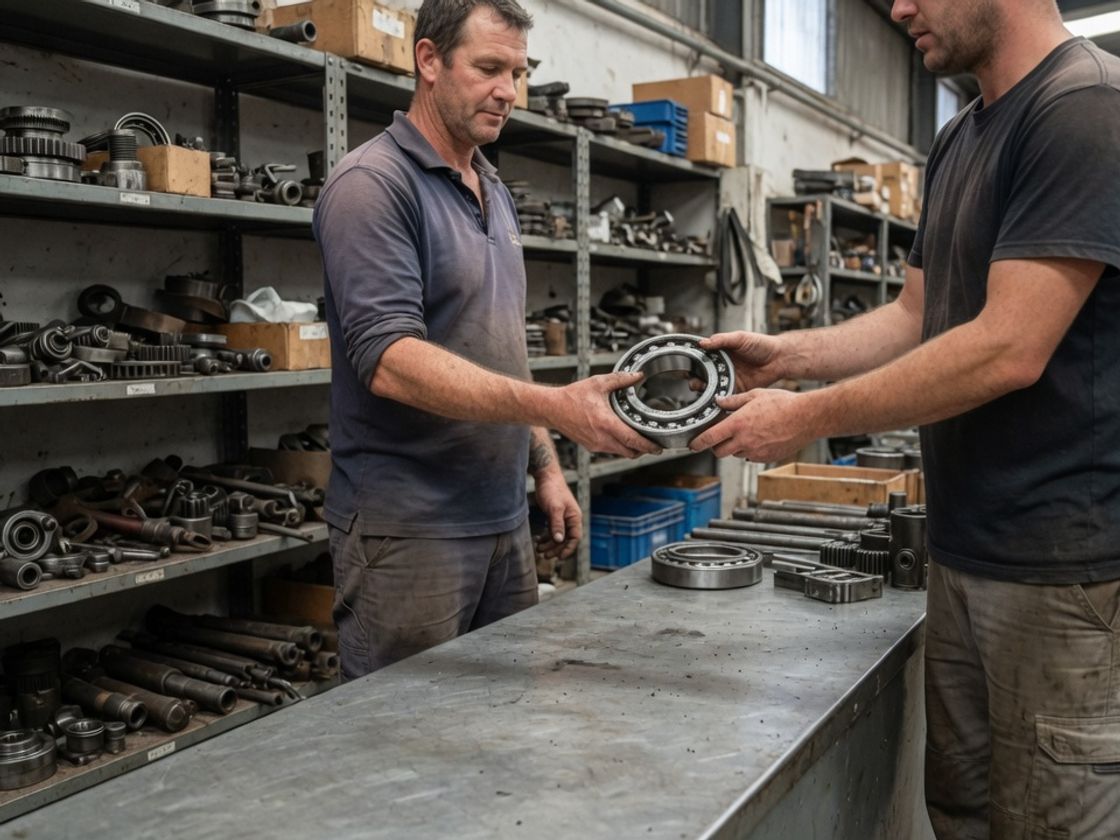
- Book-out. Every part leaves against a name, a job and a date. A sheet at the store door is enough, and if you track parts in a CMMS, the skills to look for are in our post on CMMS skills for technicians.
- Returns. Unused parts go back on the shelf and the sheet is closed.
- Counting. business.gov.au says most businesses do a stocktake monthly or quarterly. A short critical list is quick to count monthly, and the rest can follow the longer cycle.
- Access. Lock the store outside set hours, so booking out is the easy path and not the slow one, and agree how the on-call fitter gets in and books out on a night breakdown.
The case for a full-time storeperson rests on how many parts move, not on plant size. If technicians lose time at the counter, or parts keep going missing, the role is worth considering.
Kit the parts for a shutdown week
A shutdown week is the one time the store is under real pressure. Kit the parts by job: for each task on the shutdown plan, pull the gaskets, seals, bearings and fasteners into one labelled box with the job number on it. Start early enough to cover your longest supplier lead time, so a missing part shows up as a purchase order and not as a delay on day two.
The store owner then issues a kit, not a list of parts, and takes back the leftovers at the end of the job. Technicians spend their time on the plant and not at the counter.
A shutdown is also where a temporary storeperson makes sense, because book-outs spike for a short, planned period.
Chandler Personnel can supply labour hire or permanent staff through trades and services recruitment and manufacturing and production labour hire. For the trade roles in a shutdown, our guide to shutdown recruitment in Victoria is the place to start. Chandler Personnel runs site inductions on behalf of clients, so you can ask the provider to cover your book-out routine in the site induction.
Related Resources
- Trades and services recruitment
- Manufacturing and production labour hire
- Reducing downtime with a short crew
- Building a maintenance team
- CMMS skills for technicians
- Shutdown recruitment in Victoria
- Business.gov.au on managing inventory
Common Questions About Stocking Maintenance Spares
1. What spare parts should a maintenance team keep in stock?
Keep the parts whose failure stops production, that take longer to arrive than you can afford to be down, and that have no repair or workaround. Rank every part on those three questions. Parts that fail the test, such as items a local supplier can deliver within the downtime you can afford, are better ordered on demand.
2. How do I decide the minimum stock for a critical spare?
Start from lead time and supplier reliability, because usual use is close to zero. For a rarely used part, a minimum of one is common sense, with the replacement ordered the day the spare is fitted. Add a second unit only if the supplier is unreliable or the part is hard to source.
3. Do I need a full-time storeperson for a maintenance store?
Not always. A nominated leading hand with set store hours can run a small store. A full-time storeperson is worth considering when many parts move across several shifts, technicians lose time at the counter, or parts keep going missing. The deciding factor is how many parts move, not the size of the plant.
4. How do I stop tradespeople taking parts without booking them out?
Make booking out the easy path. Keep the store locked outside set hours, with a named after-hours key holder, put the book-out sheet where the parts are, and record a name, a job and a date for every part. Count the shelves regularly and raise differences as a process fix, not a blame exercise.
5. Can labour hire cover the maintenance store during a shutdown?
Yes, a labour hire storeperson is a sensible cover for a planned shutdown, when book-outs spike for a short period. Give them a clear book-out routine, a labelled kit for each job and a named supervisor, and ask the provider to cover the routine in the site induction.
Stock what stops the line
A good spare parts list is short, ranked and owned by one person. Hold stock for the parts that stop the line and take too long to arrive, and order the rest on demand. Kit the shutdown parts early and plan the store cover before the plant goes down. This week, walk your main line with the maintenance lead and rank its ten most likely failures.