A reorder point is the stock level that tells you it is time to order more, and for PPE and daily-use items it is the simplest way to stop a new starter waiting for gloves. Below is a no-software method, written for site and stores supervisors, for gloves, tape, labels, wrap and the other small items every shift uses up. The PPE points are about Victoria, so check the rules in your own state if you work elsewhere.
The method suits sites where headcount moves, because a casual or labour hire intake can push weekly use up quickly. Spare parts are a different problem, covered in a separate guide on maintenance stores.
Why running out of small items stops a whole shift
The cheapest items in the building cause some of the longest waits. A line stops when the labels run out, a dispatch bench stalls without tape, and a new starter stands idle because there are no gloves in their size.
Stock-outs usually trace back to three causes. Nobody owns the store. The order goes in when the shelf looks empty, which is too late if the supplier takes a week or two. And the quantity was set for last month's headcount. Good PPE stock control fixes the last two, and a named owner fixes the first.
Chandler Personnel provides labour hire for manufacturing and production and warehousing and logistics sites, and a store sized for the new crew helps them work from the first shift.
Work out the reorder point in three steps
To set a reorder point by hand, the steps business.gov.au lists in its guide to managing inventory are to work out how many items you usually use in a week or month, check how long new stock takes to arrive, and think about busy times of year, supplier reliability and upcoming sales. The guide's own example is 10 chairs sold a week with a two week delivery, so you order when stock drops to 20.
For a store, the same logic becomes three steps.
- Step 1: usual use. Count the pairs of gloves, rolls of tape or boxes of labels the site uses in a normal week.
- Step 2: lead time. Ask the supplier how long an order takes to arrive, then add the time you take to place it.
- Step 3: buffer. Add extra for busy periods and supplier reliability. The amount is the supervisor's judgement, and a supplier who is sometimes late needs a bigger buffer.
Weekly use times the lead time in weeks, plus the buffer, gives your minimum, the level at which you order. The maximum is the most you are willing to hold, set by shelf space and the weeks of stock you accept. Pairing the minimum with a maximum is a practical addition to the business.gov.au steps.
Example: a glove reorder point with a two week lead time
This example uses hypothetical round numbers. A site uses 40 pairs of gloves a week and the supplier takes two weeks to deliver, so 80 pairs go during the wait. Add a one week buffer of 40 pairs and the minimum is 120 pairs. The shelf holds five weeks of gloves, so the maximum is 200 pairs.
When the count reaches 120, order the gap up to the maximum (80 pairs) plus what you will use while you wait (80 pairs). The order is 160 pairs. The delivery lands when 40 pairs are left and brings the store back to 200.
Adjust the levels when headcount swings
Weekly use moves once casual or labour hire crew join, so track use per person. Suppose the 40 pairs a week in the example serve a crew of 20, which is 2 pairs per person. If an intake of 10 casual workers takes the crew to 30, weekly use rises to 60 pairs. The new minimum is 60 times 2 plus a one week buffer of 60, which is 180 pairs, and a five week maximum is 300 pairs. At 60 pairs a week, an order placed at the old minimum of 120 would leave the shelf empty on the day the delivery arrived.
Order before the intake starts, because the lead time runs from the day you order, not the day the crew arrive. How many of those people are permanent, casual or labour hire is covered in our post on setting the permanent and casual mix.
When you request staff, tell the provider which PPE items and sizes to expect before the first shift, and give the same list to whoever runs the store. Chandler Personnel runs site inductions on behalf of clients, so you can ask the provider to cover PPE issue and use in the site induction.
Keep PPE sizes and issue records straight
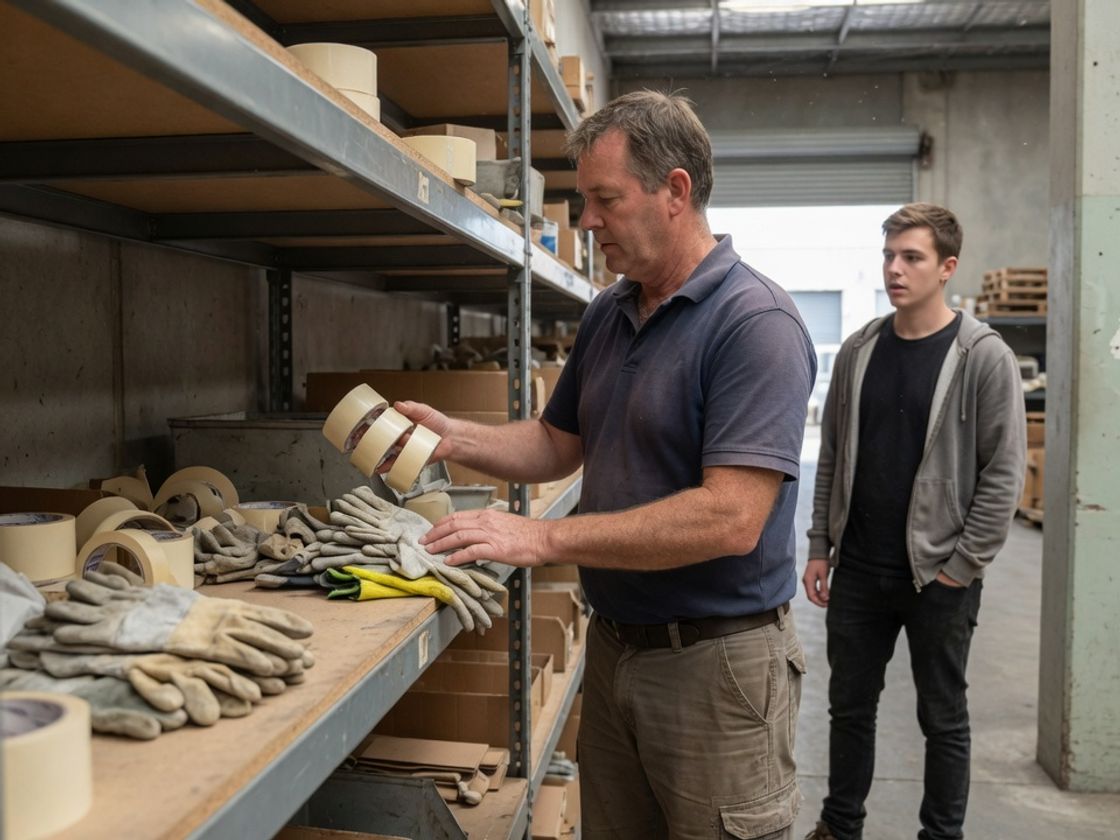
Tape and labels only need a count. PPE needs a count by size, because a shelf full of large gloves still fails the person who needs a small pair. Give each size of gloves, boots and overalls its own minimum, and adjust after the first intake.
Keep a simple issue record with the person, the item, the size and the date. It gives you real use per person for Step 1, and it shows each starter was issued their PPE before they began the job.
Once PPE is in the store, employers have three jobs with it, according to the Victorian government PPE guidance:
- Instruction. Employees must be instructed in how to use the PPE, and should be told why it is necessary before they start the job it is provided for.
- Storage. Employers must make sure PPE is stored clean and in working condition, easy to find when needed and safe from interference and damage.
- Damaged items. PPE should be inspected regularly and before use. Damaged or defective items must be reported at once, then tagged to prevent use until repaired, or thrown away and replaced.
In practice that means a clean, labelled shelf, a tag and a reject bin, and replacements counted in the same levels as everything else. The wider first-week routine sits in our guide to onboarding seasonal workers.
Who checks the store and when
Put one name against the consumables inventory and write it on the shelf. A supervisor, leading hand or storeperson all work. When the check belongs to the whole crew, nobody does it.
Set a fixed check day. Weekly is a sensible starting point, with a quick midweek look at fast lines such as gloves and labels. In the first days of an intake, look daily until you have real figures for use per person. Each check is the same: count each line against its minimum, order anything at or below it, pull out damaged PPE, and reset the levels after any change in headcount. If you keep running short, check more often or raise the buffer.
Related Resources
- Request staff
- Manufacturing and production labour hire
- Warehousing and logistics staffing
- Seasonal worker onboarding
- Permanent and casual mix
- Business.gov.au on reorder points
- Victorian government PPE page
Common Questions About Min-Max Levels for PPE and Consumables
1. How do I calculate a reorder point?
Multiply weekly use by the supplier's lead time in weeks, then add a buffer for busy periods and late deliveries. As an example, 40 pairs of gloves a week, a two week lead time and a one week buffer give 40 times 2 plus 40, which is 120 pairs.
2. What is a min-max system?
A min-max system gives each item two numbers. The minimum is the level at which you place an order. The maximum is the most you want to hold. When stock reaches the minimum, you order enough to get back to the maximum, allowing for what you use while you wait.
3. How much PPE should I keep in stock for new starters?
Work it out by method, not by a fixed quantity. Take the PPE each starter uses in a week, multiply by the number of starters and by the lead time in weeks, then add a buffer the supervisor sets for sizes and late deliveries. Recalculate once the first intake shows real use.
4. Who is responsible for providing PPE in Victoria?
Employers must provide PPE where hazards cannot be eliminated or reduced by other controls, according to the Victorian government's SafeWork page. For labour hire workers, agree who supplies which items in the order, before the first shift, and put the items and sizes in writing.
5. How often should the consumables store be checked?
Weekly is a sensible starting point for items every shift uses, with a quick midweek look at the fastest-moving lines. Check daily in the first days of an intake. Fix the day, name the person and keep the counts on one sheet so the routine runs whoever is on shift.
Never let a starter wait for gloves
A minimum level turns a guess into a number, and a named owner turns the number into an order. Move the levels whenever the crew changes size, and send your provider the PPE items and sizes before the first shift. This week, count the gloves, tape and labels on the shelf and work out the first minimum for each.