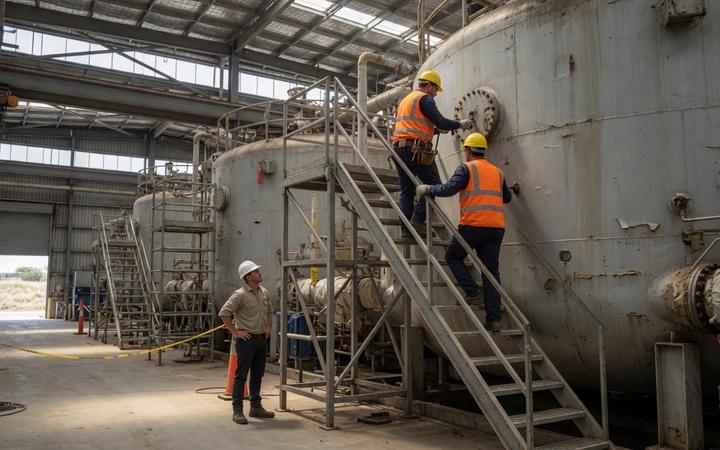
Digital onboarding for casual workers moves new-starter paperwork from clipboards to phones and a shared system, and most of the steps can be done electronically. A new casual must still be given two information statements, can sign electronically in the right circumstances, and can complete the tax and super forms online through the ATO. A screen cannot show someone how to use a pallet jack, so that part stays on site.
This is general information, not legal advice, so check the linked government pages or get advice for your own situation.
What paperwork must a new casual be given, and when?
A new casual must be given the Fair Work Information Statement and the Casual Employment Information Statement, each before they start or as soon as possible after. The Fair Work Ombudsman sets this out on its pages for the Fair Work Information Statement and the Casual Employment Information Statement.
Both can be given by email or as a link to the Ombudsman's page. Employers must give the version in place when the statement is due, so a link suits a paperless process.
The Casual Employment Information Statement is also due again later. Small business employers, with fewer than 15 employees, give it again after 12 months. Other employers give it after 6 months, after 12 months, and then every 12 months. For example, a larger plant starting a casual on 3 November would diarise early May and the following November.
Is an electronic signature valid for an employment contract in Australia?
Generally yes, but neither government page cited here mentions employment contracts by name. The Attorney-General's Department says the Electronic Transactions Act 1999 treats electronic signatures as just as valid as wet-ink signatures for most Commonwealth processes. The method must identify the signer, indicate their intention to approve the document, and be as reliable as is appropriate in the circumstances.
Methods that can qualify include a signature drawn on a screen, an emailed acceptance, an "I accept" box on an online form and a signing platform. The department adds that when you send a document to a private individual or business, you might need their consent to the method. A first-day casual has no earlier dealings to infer it from, so put a short line on the first screen, such as "I agree to sign my onboarding documents electronically".
The Victorian Government's justice website says that for most legal documents electronic signatures can be used under the Electronic Transactions (Victoria) Act 2000, and that the receiving party must agree to the method. Both sources note exceptions, so read your award or enterprise agreement for any rule about signing.
The guide to inducting non-English speaking workers covers language support, which matters for the contract too, because a tap on a button proves little if the worker could not read the screen. Keep a record of when and how each person signed.
How do an online TFN declaration and super choice work?
A new employee can complete the TFN declaration and super standard choice online in ATO online services, linked to myGov. The ATO's page on new employees says the worker needs your ABN, their employment type and the details of the fund they want.
The worker then prints the employee tax and super details summary and gives it to you, and you enter the details into payroll and keep a copy. The ATO says not to ask for it by email, because email is not a secure channel.
If a worker does not provide a TFN, special withholding rules apply, so check the ATO's payer obligations page before the first pay run. For casuals supplied by a provider, the ATO's hiring a new worker page says the labour hire firm is responsible for PAYG withholding and super guarantee contributions, so the provider will usually collect these forms. Confirm the split with any provider in writing. Chandler Personnel provides labour hire and permanent recruitment for manufacturing and production employers.
Where should signed copies be stored, and for how long?
Signed onboarding documents belong in one access-controlled place. The Fair Work Ombudsman's record-keeping page sets 7 years for time and wages records, which include details such as the commencement date, whether the employee is casual and a record of the employee's super fund choice. Those records must be readily accessible to a Fair Work Inspector, legible, in English and not changed except to correct an error. The pages cited here set no period for the information statements or the signed contract, so ask your adviser before discarding them.
TFN declarations follow ATO rules. The ATO's payer obligations page says to store and dispose of them by secure methods, and that scanned copies must be clear and unaltered.
Record the date and method you gave each information statement, plus the diary date for the next one.
What can a digital induction for new starters cover before day one?
A pre-start digital induction can carry policies, site rules and short knowledge checks, as long as someone still inducts the worker on site. WorkSafe Victoria's induction checklist says all new workers should be given an induction when they first start, and its first items are showing them how to use equipment safely and how to wear protective gear.
The same WorkSafe induction page lists video and online training among the ways people learn, so some of the reading and short videos can go on a phone before the shift, as a business choice rather than a WorkSafe requirement. For labour hire, WorkSafe's labour hire page says both the provider and the host should provide an induction, and the host a site-specific one.
The safety content is covered in the guide to seasonal worker onboarding, and warehouse roles that load or pack freight also need the chain of responsibility induction content.
What still has to happen in person, and in what order?
The equipment demonstration, protective gear, site walk-around and supervisor introduction stay in person. The right-to-work check is also separate from any signed form: the ATO says a foreign national other than a New Zealander needs a visa with permission to work.
Not every casual has a smartphone, data or ease with forms on a small screen. Keep an assisted option at the gate, such as a tablet and a few minutes with a supervisor. A sound sequence looks like this:
- Send the offer and contract with a short electronic-signing consent line.
- Send both information statements as links, and record the date.
- Ask for the TFN and super forms, with the printed summary brought on day one.
- Complete the right-to-work check as its own step.
- Send the pre-start induction module and keep the completion record.
- Run the on-site induction, file everything and set the diary dates.
Related Resources
- Fair Work Information Statement
- Casual Employment Information Statement
- ATO online forms for new employees
- Electronic signatures guidance
- Employer record-keeping
- Seasonal worker onboarding guide
- Manufacturing and production labour hire
Frequently Asked Questions
Do casual employees have to be given the Fair Work Information Statement?
Yes. The Fair Work Ombudsman says every new employee must be given it before, or as soon as possible after, they start. A new casual must also be given the Casual Employment Information Statement at the same time.
Is a typed name or tick box a valid electronic signature?
It can be. The Attorney-General's Department lists an "I accept" box and an emailed statement of acceptance among the methods that can work, provided the method identifies the signer, shows their intention and is reliable enough.
Can a new casual complete the TFN declaration online?
Yes. The ATO says new employees can complete it through ATO online services linked to myGov, then print the summary for the employer.
How long do I keep onboarding records?
The Fair Work Ombudsman says time and wages records, which include details such as the commencement date and employment type, must be kept for 7 years. TFN declarations follow a separate ATO rule, and the pages cited here set no period for the information statements or a signed contract, so check with an adviser before you discard them.
Who collects TFN and super forms for a labour hire worker?
The ATO says that where you have a contract with a labour hire firm, the firm is responsible for PAYG withholding and super guarantee contributions. That usually makes the provider the collector of those forms, but confirm the split in your service agreement.
Paperless onboarding that still holds up
Digital onboarding for casual workers works when each document is matched to its rule: two information statements on time, a signature method that shows who signed, ATO forms as the ATO describes them, and records stored securely for the required period. The equipment demonstration and site walk-around stay on site. Start by listing your current paper steps, mark which can move online, and test the new flow on your next two starters before using it for a full intake.